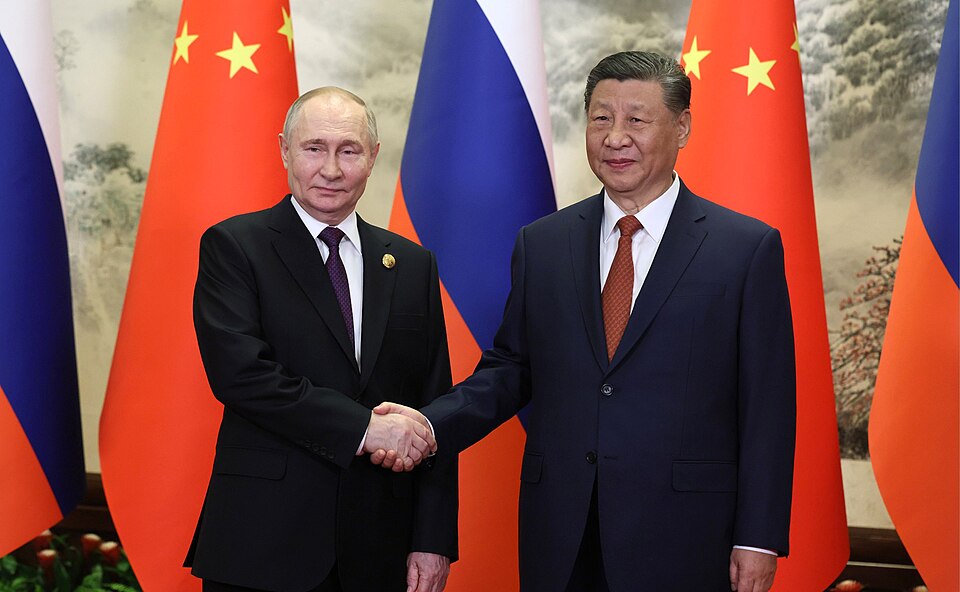
The global energy landscape is undergoing a significant reconfiguration, driven by the deepening economic and strategic partnership between China and Russia. What began as a response to geopolitical shifts has rapidly matured into a durable alliance, fundamentally redrawing traditional supply routes and financial flows across Eurasia. For energy investors, understanding this evolving dynamic is paramount, as it introduces new layers of complexity and opportunity into market projections, influencing everything from crude prices to the long-term viability of infrastructure projects. This analysis delves into the core elements of this partnership, its immediate market implications, and critical upcoming catalysts that demand investor attention.
The New Eurasian Energy Axis and Market Realities
The strategic pivot of Russian energy exports eastward, particularly towards China, has become a defining feature of the post-2022 global energy architecture. This shift is not merely a short-term adjustment but a structural transformation, evidenced by the bilateral trade volume reaching an all-time high of $240 billion in 2023. Russia’s vast energy resources—oil, natural gas, and coal—now predominantly flow to China through key arteries like the Power of Siberia pipeline, securing China’s energy needs while providing Russia with critical market access amid Western sanctions. This reorientation directly impacts global supply balances and liquidity. As of today, Brent Crude trades at $90.61, marking an 8.83% decline within a day range of $86.08 to $98.97. Similarly, WTI Crude stands at $83.11, down 8.84% with a daily span of $78.97 to $90.34. This sharp daily downturn follows a broader trend; Brent crude has already fallen by $14, or 12.4%, from $112.57 on March 27 to $98.57 by April 16. Such significant price movements underscore the volatility inherent in global energy markets, where geopolitical realignments like the China-Russia axis, combined with other supply-demand factors, can trigger rapid value shifts. Investors must recognize that while this partnership aims for stability for its participants, its impact on the broader market can introduce new forms of price sensitivity.
Beyond Energy: Diversification and Sovereign Resilience
The China-Russia partnership extends far beyond crude and natural gas, encompassing a broad spectrum of economic sectors designed to build mutual resilience and reduce reliance on Western financial and logistical systems. Chinese automotive, machinery, and electronics exports have efficiently filled market gaps in Russia, illustrating a pragmatic and swift adaptation to new trade realities. Concurrently, agricultural trade has seen significant expansion, with Russian wheat and seafood finding new markets in China, complemented by Chinese fertilizers and agricultural equipment bolstering Russian farming output. Perhaps most crucially, financial cooperation has deepened, with cross-border settlements increasingly conducted in yuan and rubles. This strategic move aims to insulate both economies from potential external financial pressures and currency fluctuations, offering a blueprint for economic sovereignty in a multipolar world. For investors, this diversification signals a long-term commitment to a parallel economic system, impacting global trade flows, currency valuations, and the competitive landscape for multinational corporations. Companies with exposure to these newly fortified trade corridors or those positioned to benefit from increased yuan/ruble-denominated transactions could see unique growth opportunities.
Geopolitical Connectivity and Investor Outlook
A striking aspect of the China-Russia partnership is its emphasis on infrastructure as a tool for diplomacy and economic integration. Initiatives like China’s Belt and Road Initiative (BRI) and Russia’s Eurasian Economic Union (EAEU) are increasingly complementary frameworks, aiming to connect East Asia to Europe through a robust network of transport and logistics. The China-Mongolia-Russia Economic Corridor, for instance, is a flagship project linking industrial centers in northern China with Siberia’s resource-rich territories and Russia’s western transport hubs. This connectivity has tangible benefits, dramatically reducing transit times for goods; trains carrying Chinese products can now reach European destinations in as little as two weeks, a significant improvement over traditional maritime routes. This focus on physical infrastructure and logistical efficiency creates new trade arteries and reinforces the strategic importance of Eurasia. Our proprietary reader intent data reveals that investors are increasingly asking “what do you predict the price of oil per barrel will be by end of 2026?” This question highlights a keen interest in long-term market stability. The evolving China-Russia supply chain could provide a degree of stability to their respective economies, but its overall effect on global supply-demand balances and crude pricing remains a critical variable for investors to monitor through the remainder of 2026 and beyond.
Navigating Upcoming Catalysts: OPEC+ and Inventory Signals
Against the backdrop of this evolving geopolitical energy map, investors must remain acutely focused on near-term market catalysts. The most immediate and impactful events are the upcoming OPEC+ meetings. The Joint Ministerial Monitoring Committee (JMMC) convenes today, April 17th, followed by the full OPEC+ Ministerial Meeting tomorrow, April 18th. Our readers are keenly interested in “What are OPEC+ current production quotas?” and these meetings will provide crucial clarity on future output levels, directly influencing global supply and, consequently, crude prices. Given today’s significant drop in Brent and WTI, any decision from OPEC+ regarding production cuts or increases will likely have an amplified effect on market sentiment and short-term price trajectories. Beyond OPEC+, the weekly inventory reports from the American Petroleum Institute (API) on April 21st and April 28th, and the official EIA Weekly Petroleum Status Reports on April 22nd and April 29th, will offer vital insights into U.S. crude and product stockpiles, providing demand signals. Furthermore, the Baker Hughes Rig Count on April 24th and May 1st will indicate drilling activity and future supply potential from North America. For investors aiming to position themselves strategically, closely monitoring these scheduled events is essential to interpret market signals and anticipate potential price movements in a rapidly shifting global energy landscape.