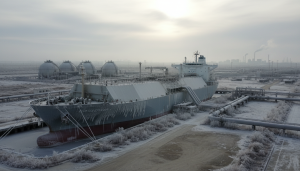
Global crude benchmarks saw modest gains as fresh geopolitical anxieties emanating from the Middle East refocused investor attention on the fragile equilibrium in the region. This renewed tension between Israel and Iran has once again highlighted the inherent vulnerabilities within global energy supply chains, prompting a cautious sentiment across the oil market.
West Texas Intermediate (WTI) crude for August delivery advanced by 0.5%, settling firmly at $65.45 per barrel in New York trading. Simultaneously, the international benchmark, Brent crude for September settlement, climbed by 0.6% to conclude the session at $67.11 a barrel. Trading volumes, however, showed a tendency towards moderation, a common pattern observed in the lead-up to the upcoming July 4th holiday in the United States, which typically sees reduced market participation.
Geopolitical Flashpoints Reignite Market Caution
The primary catalyst for this upward movement in oil prices stems from escalating concerns surrounding Iran’s nuclear ambitions. Market participants are intensely scrutinizing reports regarding the status of Iran’s near-bomb-grade uranium stockpiles and the implications of its recent decision to restrict communication with crucial United Nations nuclear watchdog officials. These developments carry significant weight, as they directly influence the potential for further retaliatory actions, including the prospect of additional US military strikes. President Donald Trump has unequivocally stated the United States’ commitment to intervene should Iran fail to de-escalate its nuclear program, adding a layer of unpredictable risk to the already volatile geopolitical landscape.
While the immediate flow of crude from the Middle East has thus far remained uninterrupted, the mere specter of potential supply disruptions is sufficient to sway trader behavior. The hypothetical risk of constrained crude access from a region vital to global energy security compels many to adopt a ‘wait-and-see’ posture, creating an environment ripe for price sensitivity. This heightened state of uncertainty was clearly reflected in the derivatives market during the peak of recent tensions, where a record volume of combined options contracts for both WTI and Brent changed hands. This surge in options activity underscores the proactive strategies investors employed to hedge against or speculate on the outcomes of rapidly unfolding geopolitical events.
Macroeconomic Crosscurrents and OPEC+ Strategy
Beyond the immediate geopolitical concerns, the broader macroeconomic environment continues to present a mixed bag of signals for the oil market. In the United States, the demand outlook experienced a slight darkening following data indicating a contraction in factory activity for the fourth consecutive month in June. This sustained manufacturing slowdown suggests underlying weakness in industrial demand for energy. Conversely, the labor market exhibited persistent strength, potentially underpinning consumer-driven fuel demand and offering a degree of counterbalancing optimism.
The intensity of Middle Eastern developments momentarily overshadowed critical deliberations within the Organization of the Petroleum Exporting Countries and its allies (OPEC+). The influential producer group is widely anticipated to endorse a fourth consecutive monthly increase in supply during its upcoming discussions on Sunday. This move, as projected by a recent Bloomberg survey, aligns with the strategic objectives of Saudi Arabia, the de facto leader of OPEC, which continues its concerted efforts to reclaim and solidify its market share amidst evolving global demand dynamics. The addition of more barrels to the market, while intended to stabilize prices and meet demand, introduces another complex variable into the supply-demand equation.
Navigating Volatility and Future Outlook
The current market sentiment reflects a lingering unease from the significant volatility experienced in the preceding quarter. Over the last three months, oil prices shed nearly 10% in a tumultuous period marked by sharp fluctuations. April witnessed a substantial price drop in response to President Trump’s announced tariff plans, only to see a dramatic surge in June following Israel’s military engagement with Iran. These gains were subsequently erased as hostilities eased, creating a sense of “whiplash” for many market participants. This period of extreme price swings is further evidenced by a key gauge of implied volatility, which recently declined to its lowest level since June 10, precisely before Israel initiated its aerial campaign against Iran.
As Ole Hansen, head of commodities strategy at Saxo Bank, aptly observed, “There is no doubt traders are still suffering from the recent whiplash, which may lower liquidity in the short term.” This observation highlights the psychological impact of past volatility on current trading behavior, potentially leading to more cautious positioning and reduced trading activity in the immediate future.
With geopolitical tensions simmering and macroeconomic data offering conflicting signals, the market’s immediate focus is now squarely on the intricate interplay between the peak summer demand season and the anticipated incremental supply from OPEC+. The strength in refined products markets, which incentivizes refiners to process crude into fuels, provides a crucial underpinning for crude demand. Furthermore, President Trump reiterated his administration’s intention to replenish the Strategic Petroleum Reserve (SPR) “when the market is right,” though a specific timeline for such purchases remains undefined. This potential future demand injection from the SPR could offer additional price support down the line, adding another layer of consideration for long-term investors tracking energy policies.
Investors should continue to monitor these multifaceted drivers – geopolitical stability, global economic health, and strategic supply management by major producers – as they collectively dictate the trajectory of oil prices in the coming months.