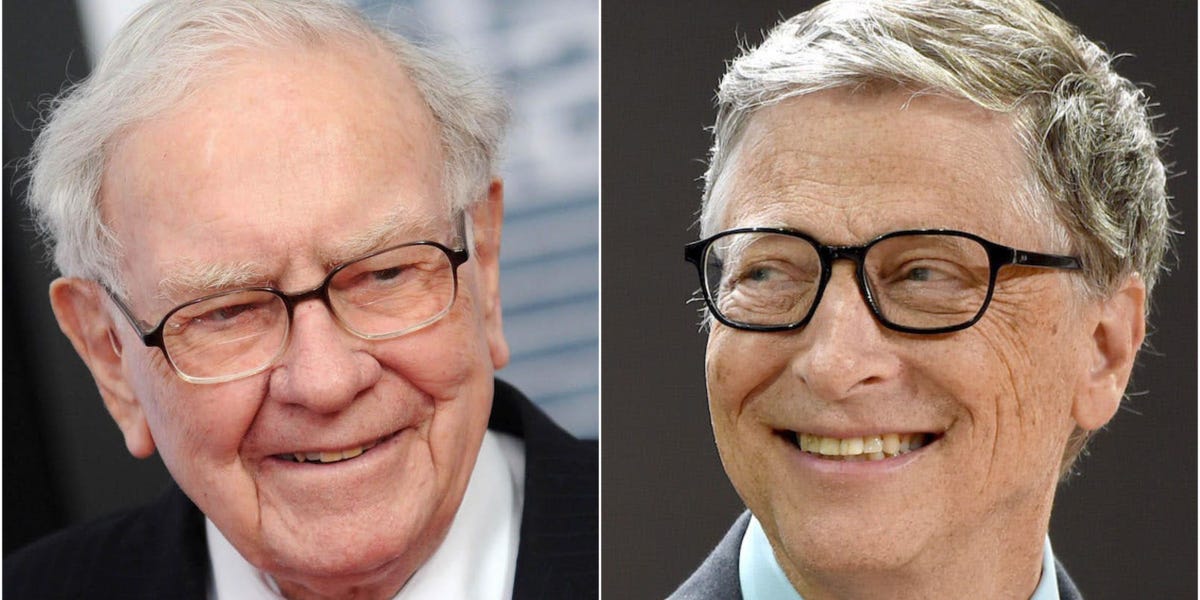
The End of an Era: Gates & Buffett’s Diverging Paths and What It Means for Energy Investors
For decades, the names Bill Gates and Warren Buffett have resonated with unparalleled influence across technology, philanthropy, and global finance. Their alliance, forged over thirty years ago, represented a formidable convergence of intellect and capital, notably through their intertwined efforts at the Bill & Melinda Gates Foundation. However, recent developments suggest a significant cooling of this storied relationship, prompting keen observation from investors worldwide, particularly those navigating the dynamic energy sector. This evolving dynamic signals more than a personal shift; it highlights potentially divergent investment philosophies at the highest echelons of wealth, with profound implications for capital allocation in traditional and renewable energy markets.
A Partnership’s Fading Light
The genesis of their remarkable friendship dates back to their initial encounter, quickly evolving into a powerful philanthropic partnership. Warren Buffett, the venerated “Oracle of Omaha,” pledged a substantial portion of his vast fortune to the Gates Foundation, committing to donate 99% of his wealth over his lifetime, with the majority directed towards the organization. Between 2006 and 2021 alone, Buffett channeled an impressive $2.6 billion annually to the foundation, culminating in approximately $36 billion in total contributions. This colossal financial backing significantly bolstered the foundation’s already substantial $50 billion endowment, amplifying its global impact.
However, cracks began to appear in the façade of this enduring collaboration. A pivotal moment arrived in May 2021 with the announcement of Bill Gates’ divorce from Melinda French Gates. Just a month later, in June 2021, Buffett tendered his resignation from the Gates Foundation board, marking an end to his direct governance role. While he reaffirmed his commitment to the foundation’s mission and ongoing financial support, his departure signaled a structural shift. This move was not isolated; Buffett subsequently stepped down from all other corporate boards, maintaining his directorship solely at Berkshire Hathaway. Curiously, Bill Gates himself had already exited the Berkshire Hathaway board in March 2020, further indicating a gradual disentanglement of their formal ties. These events, while rooted in personal circumstances, carry weight in the investment community, particularly when considering the sheer scale of the capital involved and the leaders’ historical influence on market trends and philanthropic endeavors.
Buffett’s Enduring Energy Conviction
Despite the shifts in his philanthropic engagements, Warren Buffett’s investment strategy, particularly in the energy sector, remains steadfast and remarkably clear. With a net worth estimated at $118.5 billion as of May 2022, Buffett continues to wield immense influence through Berkshire Hathaway. The conglomerate’s energy footprint is colossal, boasting over $100 billion invested in energy assets as of the same period. Berkshire Hathaway Energy, a subsidiary, operates across 12 states, serving an astounding 23.5 million customers. Its portfolio spans crucial infrastructure, including extensive natural gas pipelines, alongside significant investments in renewable energy sources such as wind, solar, and hydropower.
More recently, Buffett has doubled down on traditional fossil fuels, notably increasing Berkshire Hathaway’s stake in Occidental Petroleum throughout 2022. This aggressive accumulation in a major upstream oil and gas player underscores his belief in the long-term value proposition of conventional energy, even as global narratives pivot towards decarbonization. This contrasts sharply with his measured divestment from certain technology giants like Apple in recent quarters, reinforcing a disciplined, value-oriented approach that prioritizes tangible assets and predictable cash flows – characteristics often found in established energy companies. For oil and gas investors, Buffett’s continued, and even expanded, exposure to this sector serves as a powerful signal of confidence in the enduring demand for hydrocarbons and the strategic importance of energy infrastructure.
Gates’ Vision: Climate, Clean Energy, and Breakthrough Technologies
In stark contrast to Buffett’s traditional energy plays, Bill Gates, with a net worth of $129.5 billion as of May 2022, has increasingly channeled his focus and capital towards climate change mitigation and the advancement of breakthrough energy technologies. His initiatives, such as Breakthrough Energy Ventures, actively fund companies at the forefront of decarbonizing various industrial sectors. Gates’ commitment extends to direct involvement in projects like TerraPower, a company dedicated to developing advanced nuclear energy solutions, highlighting his conviction that innovative, carbon-free energy sources are critical for the planet’s future.
This distinct investment philosophy underscores a fundamental divergence in how these two titans envision future energy markets. While Buffett sees enduring value in existing energy infrastructure and commodity producers, Gates is actively shaping and investing in the energy transition. For investors in the oil and gas space, this presents a critical dichotomy: should capital be allocated to optimize returns from existing fossil fuel assets, or should it aggressively pivot towards the nascent, yet potentially disruptive, technologies championed by Gates? The contrasting strategies of these two financial giants encapsulate the broader debate raging across the global energy investment landscape.
Philanthropic Behemoth in Transition: Implications for Capital Allocation
The Bill & Melinda Gates Foundation, a philanthropic powerhouse, now faces a future shaped by these evolving relationships. With an endowment of $50 billion before Buffett’s historic contributions, its investment portfolio is immense and globally influential. While Buffett’s financial support is expected to continue, his direct oversight has ceased. This raises questions about the foundation’s long-term investment strategy. Will its capital allocation increasingly reflect Bill Gates’ intense focus on climate change and clean energy, potentially shifting away from more diversified holdings? Such a pivot, given the foundation’s scale, could significantly impact the flow of institutional capital into specific energy sub-sectors.
For energy investors, observing the Gates Foundation’s future investment mandates will be crucial. A more aggressive lean into climate-centric investments could accelerate funding for renewable energy projects, energy storage, and carbon capture technologies. Conversely, any significant reduction in exposure to traditional energy holdings, even if indirect, could send ripples through capital markets, influencing ESG (Environmental, Social, and Governance) investing trends and the valuation of conventional oil and gas assets. The foundation’s choices, driven by its principals’ evolving priorities, will serve as a bellwether for how substantial institutional capital navigates the complexities of the energy transition.
Investment Implications for the Energy Sector
The undeniable cooling of the Gates-Buffett partnership, coupled with their increasingly distinct investment trajectories, offers invaluable lessons and signals for oil and gas investors. On one hand, Buffett’s unwavering commitment to companies like Occidental Petroleum and his extensive natural gas pipeline assets within Berkshire Hathaway Energy affirm the long-term viability and cash-generating potential of traditional energy infrastructure. This strategy suggests that despite global decarbonization efforts, demand for crude oil and natural gas will persist, offering robust returns for value-focused investors.
On the other hand, Bill Gates’ fervent dedication to climate tech and advanced energy solutions like nuclear power highlights the enormous capital flowing into the energy transition. This signals significant opportunities in renewable energy development, grid modernization, and innovative technologies designed to reduce carbon footprints across various industries. For oil and gas companies, this dichotomy underscores the urgent need for strategic adaptation: either doubling down on efficient, low-cost production of essential fuels or aggressively diversifying into new energy ventures.
The divergence in investment philosophy between these two titans provides a microcosm of the broader debate gripping the energy sector. Investors must consider whether to align with Buffett’s pragmatic, value-driven approach to existing energy assets or Gates’ forward-looking, disruptive investment in the energy future. Ultimately, a balanced portfolio might involve exposure to both robust traditional energy plays and promising clean energy innovations, recognizing that the global energy landscape will likely undergo a prolonged and multifaceted transformation. The end of the Gates-Buffett philanthropic era, while a personal chapter, undeniably marks a significant point of reflection for every investor navigating the complex and evolving world of energy finance.