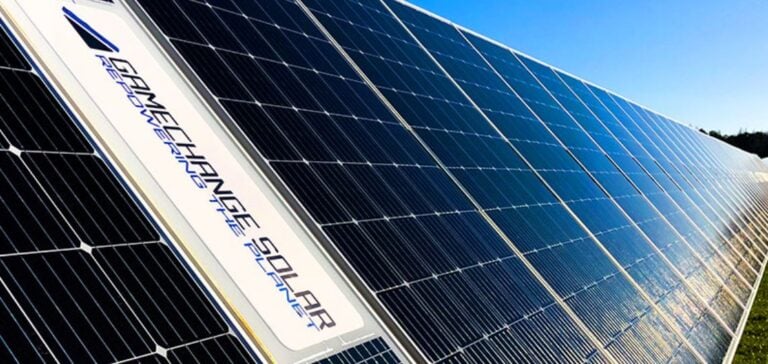
The global energy landscape continues its dynamic evolution, with significant shifts evident across both traditional hydrocarbon markets and emerging renewable sectors. While investors grapple with immediate volatility in crude prices, the long-term transition towards cleaner energy sources is accelerating, exemplified by GameChange Solar’s strategic entry into the New Zealand utility-scale solar market. This move, through the 23 MWp Dannevirke Solar Farm in partnership with Bright Fern Energy, signals a crucial milestone for Oceania’s renewable energy ambitions and offers a compelling counterpoint to the short-term gyrations dominating the fossil fuel narrative.
Oil Market Volatility Underscores Renewable Stability
The current state of the global oil market presents a stark reminder of its inherent volatility, compelling investors to seek diversified portfolios. As of today, Brent Crude trades at $90.38, marking a significant 9.07% decline within the day, with WTI Crude mirroring this trend at $82.59, down 9.41%. This immediate downturn follows a broader retreat, with Brent having fallen from $112.78 just two weeks prior on March 30th to $91.87 yesterday. Such sharp price movements, also reflected in gasoline prices which currently stand at $2.93, down 5.18%, highlight the unpredictable nature of an oil-centric investment strategy. Against this backdrop, the steady growth and long-term predictable returns offered by utility-scale solar projects, like the Dannevirke farm, gain increasing appeal. Investors are increasingly evaluating how exposure to stable, long-term energy contracts in renewables can mitigate the impact of such pronounced commodity price swings.
Upcoming Events and the Long View on Energy Transition
While the immediate future of crude markets will be shaped by critical events like the upcoming OPEC+ Joint Ministerial Monitoring Committee (JMMC) meeting on April 18th and the full Ministerial Meeting on April 19th, alongside regular API and EIA inventory reports throughout the next two weeks, the trajectory of renewable energy development marches on, driven by entirely different catalysts. The Dannevirke Solar Farm, scheduled for commissioning in March 2026, exemplifies this long-term commitment. This project is just the first of three fully consented solar farms Bright Fern Energy plans to advance into construction within the next 18 months, aligning with New Zealand’s ambitious 2050 net-zero emissions target. This forward-looking pipeline provides a clear investment horizon, less susceptible to the geopolitical machinations and supply-demand imbalances that frequently dictate traditional oil market sentiment. For investors, these projects represent tangible progress towards a decarbonized future, offering growth opportunities independent of the weekly inventory builds or OPEC+ quotas that dominate the headlines for fossil fuels.
Addressing Investor Questions: Hedging Against Future Oil Price Uncertainty
Our proprietary reader intent data reveals a consistent theme among investors this week: a deep concern for future oil prices, with questions like “What do you predict the price of oil per barrel will be by end of 2026?” dominating queries. This uncertainty underscores a fundamental shift in investment strategy, where traditional energy investors are actively seeking ways to hedge against potential downturns or capitalize on the energy transition. The expansion of utility-scale solar, as seen with GameChange Solar’s entry into New Zealand, provides a robust answer. Such projects offer predictable revenue streams over decades, often backed by power purchase agreements, which contrast sharply with the speculative nature of forecasting crude prices two years out. Investing in the infrastructure of the energy transition, including advanced solar tracking systems and resilient project development, offers a pathway to long-term value creation that is decoupled from the daily volatility of the oil barrel.
Technological Innovation De-risks Solar Investment
The Dannevirke Solar Farm is not merely another solar installation; it’s a showcase of advanced technological integration designed to optimize performance and mitigate risks in challenging environments. The deployment of GameChange Solar’s Genius Tracker™ 1P system, featuring a four-string configuration and one-in-portrait design, is enhanced by innovative solutions like SpeedClamp™ technology. This system significantly reduces installation time and costs, directly impacting project economics and improving return on investment. Furthermore, the inclusion of HailStow™ technology, which automatically adjusts panel tilt to minimize damage during hailstorms, addresses a critical operational risk often overlooked by investors. By reducing potential physical damage and, consequently, insurance premiums, HailStow™ de-risks the project’s financial profile. These engineering adaptations, including detailed cut-and-fill assessments to optimize land use, demonstrate a sophisticated approach to solar development, making such ventures more attractive and reliable for institutional investors looking for robust, long-term assets.
Strategic Implications for Global Energy Portfolios
GameChange Solar’s inaugural project in New Zealand is more than just a local success story; it represents a strategic beachhead in Oceania’s burgeoning solar market and a microcosm of the global energy transition. New Zealand, despite its current reliance on hydropower and wind, is poised for significant solar expansion, with grid-connected generation estimated to triple over the next decade. This expansion, driven by national decarbonization goals, creates fertile ground for advanced solar technologies. For investors, this signifies an opportunity to engage with a growth sector that is fundamentally reshaping energy supply. Companies like GameChange Solar, which bring both technological prowess and a deep understanding of project execution to new markets, are crucial enablers of this transition. As traditional oil and gas companies navigate a volatile market and increasing pressure for sustainability, diversifying into the upstream of renewable energy development – the technology providers, project developers, and infrastructure builders – offers a compelling pathway for long-term growth and resilience within a dynamic global energy portfolio.


