Fusion’s Horizon: A Distant Promise in the Evolving Energy Landscape
The global energy sector continually scrutinizes advancements across the entire spectrum of power generation. While the immediate focus often centers on current supply-demand dynamics and geopolitical influences impacting hydrocarbon markets, long-term technological leaps can reshape future investment strategies. Recent breakthroughs in fusion power research, particularly across European laboratories, offer a fascinating, albeit distant, glimpse into potential revolutionary shifts that investors in traditional oil and gas must monitor.
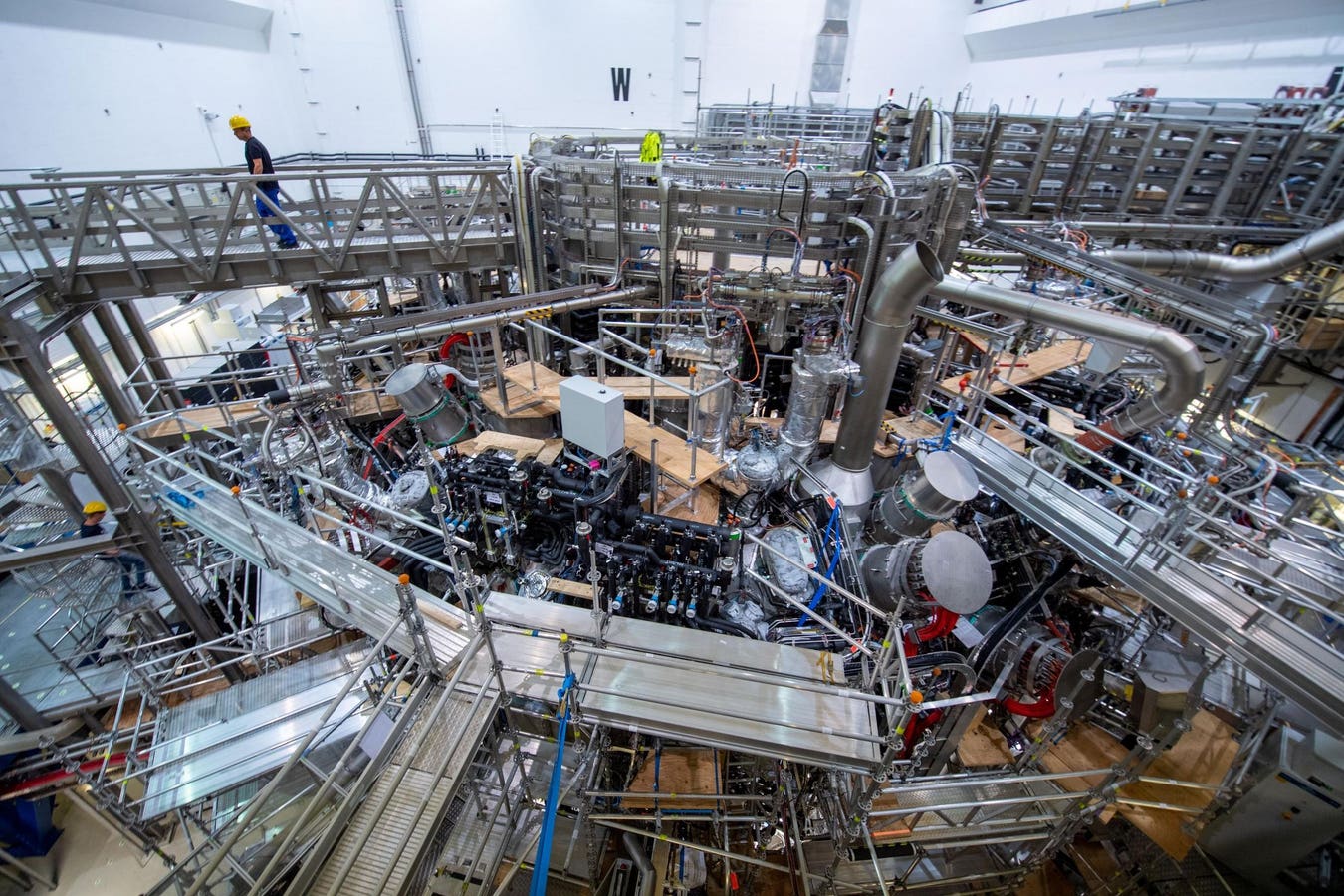
Two distinct fusion experiments have recently marked significant progress, setting new records for plasma containment—a critical hurdle in harnessing this elusive energy source. At Germany’s Max Planck Institute, the Wendelstein 7-X stellarator successfully held superheated hydrogen isotopes, plasma hotter than the sun’s surface, for an impressive 43 seconds. This achievement represents a substantial improvement over prior attempts and underscores the potential of its unique design, which utilizes magnetic fields generated by superconductors to control the ultra-hot plasma.
Concurrently, the Joint European Torus (JET), an experimental reactor that concluded its operational phase at the close of 2023, also achieved a notable containment record, sustaining its plasma for nearly a full minute. While JET’s final experimental data are still pending full publication, the preliminary indications are highly encouraging. These twin successes, though from different experimental approaches—Wendelstein 7-X employing a stellarator design and JET a tokamak—collectively signal a renewed momentum in the quest for sustained fusion reactions.
For investors, understanding the scale of this challenge is paramount. Containing plasma for mere seconds or a minute, while scientifically significant, remains leagues away from the continuous, stable operation required for commercial power generation. The researchers behind the Wendelstein 7-X project have now set an ambitious new target: containing the plasma for a full half-hour. This illustrates the immense engineering and scientific hurdles still ahead. While fusion holds the ultimate promise of clean, virtually limitless energy, its commercial viability and widespread deployment are decades, if not generations, away. Therefore, while these advancements warrant attention as long-term disruptors, they do not pose an immediate threat to the investment thesis in established hydrocarbon assets or the current energy mix, which will continue to rely heavily on oil and gas for the foreseeable future.
Policy Headwinds for Renewables: A Shift Benefiting Traditional Energy
In stark contrast to the distant prospects of fusion, more immediate and tangible shifts are occurring within the policy landscape impacting renewable energy, with direct implications for the competitiveness of traditional oil and gas. The recent passage of the “One Big Beautiful Bill Act” through both houses of Congress signals a significant recalibration of federal support for the clean energy sector, creating a more challenging environment for renewable projects and, by extension, bolstering the relative attractiveness of fossil fuel investments.
The most impactful provision of this new legislation is the accelerated phase-out of federal tax credits that have, for years, served as a cornerstone of renewable energy financing. These credits historically allowed wind and solar developers to offset 30% or more of their project costs, effectively subsidizing their economic viability and enabling aggressive expansion. The rapid removal of such substantial financial incentives will undeniably cool investor enthusiasm and escalate the financial hurdles for new clean energy developments across the nation.
While the legislation could have been even more detrimental—a proposed excise tax of 20% on wind and solar projects utilizing Chinese components was ultimately dropped in the Senate—the core blow to federal tax credit support remains. This creates an environment of heightened uncertainty for renewable energy investors and developers. Sandhya Ganapathy, CEO of EDP Renewables North America, a key player in the wind and solar plant operations sector, articulated this concern, stating that the bill “severely hamstrings the U.S. ability to meet skyrocketing power demands and dilutes its economic competitiveness on the global stage.”
For investors focused on the oil and gas sector, this policy shift represents a clear tailwind. The reduction in federal subsidies for renewables effectively levels the playing field, removing a significant competitive advantage that clean energy projects previously enjoyed. As the economic viability of new wind and solar initiatives diminishes, capital allocation may naturally pivot back towards more proven and now relatively more attractive traditional energy ventures. This legislative action highlights the persistent influence of policy on energy markets, reaffirming that the investment climate for oil and gas can benefit substantially from shifts in government support for alternative energy sources. The implications are clear: reduced competition from subsidized renewables translates into a more robust market outlook for established hydrocarbon producers and infrastructure, at least in the near to medium term.
The uncertainty surrounding federally subsidized tax equity financing for renewables could lead to a significant slowdown in new project starts, impacting the overall pace of the energy transition in the United States. This pause or deceleration in renewable deployment could extend the demand horizon for fossil fuels, supporting prices and investment in exploration, production, and midstream infrastructure. Oil and gas companies, therefore, find themselves in a comparatively stronger position, as the legislative environment creates a more favorable economic backdrop for their operations and future capital expenditures.
Beyond Energy: A Glimpse at Biological Innovation
While the primary focus for OilMarketCap.com remains the dynamic energy markets, it is occasionally worth noting broader scientific advancements that capture public interest. In a recent development unrelated to energy, an international research consortium has engineered a protein with the capacity to deactivate specific immune cells. This breakthrough holds potential implications for the treatment of autoimmune diseases such as multiple sclerosis and type 1 diabetes, offering a novel approach to modulating the body’s immune response.