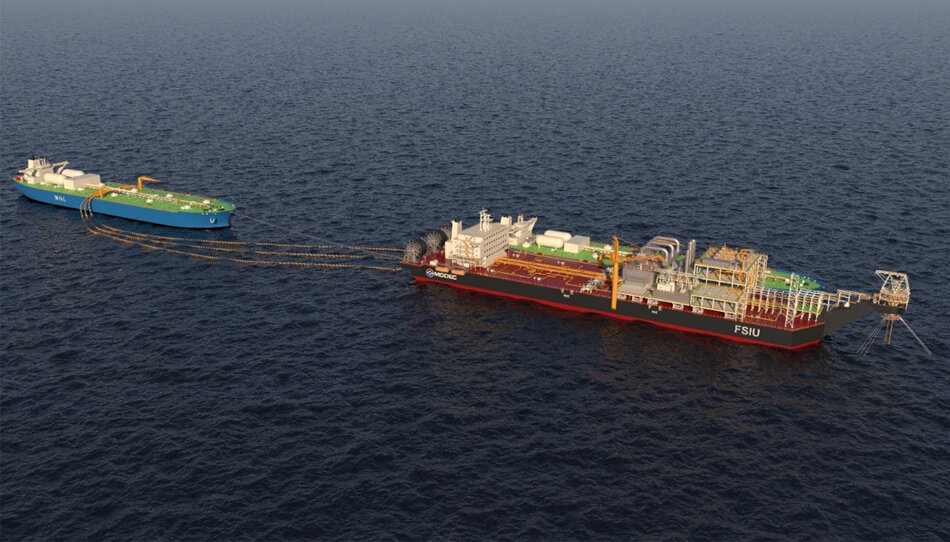
The energy landscape is undergoing a profound transformation, and while traditional oil and gas markets continue to grapple with supply-demand dynamics, the imperative for decarbonization is driving significant innovation. A prime example of this evolution is the recent advancement in offshore carbon capture, utilization, and storage (CCUS) with the development of a novel Floating Storage and Injection Unit (FSIU). This new concept, designed to receive, store, and inject liquified CO2 (LCO2) directly into subsea reservoirs, promises to dramatically streamline the carbon sequestration process, bypassing the need for extensive onshore infrastructure. For investors navigating a complex and often volatile energy market, understanding such technological leaps is crucial for identifying long-term growth opportunities in the burgeoning low-carbon economy.
FSIU: Redefining Offshore Carbon Sequestration Economics
The core innovation of the FSIU lies in its integrated approach to carbon management. Engineered for a substantial CO2 injection capacity of 10 million tonnes per annum (MTPA) and equipped with a minimum total tank storage capacity of 100,000m³, this unit is a true enabler for large-scale offshore sequestration projects. By eliminating the necessity for an onshore LCO2 receiving plant and lengthy pipelines to injection wells, the FSIU significantly reduces both capital expenditure and project timelines. This modularity is a testament to the engineering prowess, drawing on established expertise in floating production storage and offloading (FPSO) systems. Key features, such as dual loading capabilities — allowing for tandem loading at the aft for carriers up to 90,000 m³ and simultaneous side-by-side loading at midship for vessels up to 50,000 m³ — ensure uninterrupted injection operations and operational flexibility. Furthermore, the unit’s commitment to minimizing its own operational footprint is evident through the integration of a carbon capture system on its topside diesel engine generators. Crucially, collaborative efforts with partners like Mitsui OSK Lines (MOL) for LCO2 transportation interfaces, and Mitsubishi Shipbuilding Co. Ltd. (MSB) for hull development, underscore a holistic approach to the CCUS value chain. The stated target of achieving sequestration costs of $5/tCO2 or less is a critical benchmark, potentially making large-scale carbon capture economically viable across a broader spectrum of industries.
Navigating Volatility: CCUS as a Strategic Portfolio Diversifier
In a market often characterized by rapid shifts, the long-term investment thesis for CCUS gains particular prominence. As of today, Brent crude trades at $90.38, reflecting a significant downturn of 9.07% within the day, with its range spanning $86.08 to $98.97. This daily fluctuation follows a notable trend over the past two weeks, where Brent has shed $20.91, dropping from $112.78 on March 30th to $91.87 on April 17th. Such volatility, also mirrored in WTI crude at $82.59 (down 9.41% today) and gasoline at $2.93 (down 5.18%), highlights the inherent risks in portfolios heavily weighted towards traditional fossil fuels. For investors asking about the future price of oil per barrel by the end of 2026, or seeking stability amidst the noise, the FSIU concept presents an appealing diversification avenue. Investments in advanced decarbonization solutions like this FSIU offer exposure to a growth sector underpinned by global climate commitments, providing a counter-cyclical hedge against the often-unpredictable swings of the conventional crude market. Companies pioneering these solutions are positioning themselves for sustained growth independent of day-to-day commodity price movements.
Upcoming Catalysts and the Long-Term Investment Horizon
While the immediate horizon is marked by events that typically dictate short-term oil price movements, such as the upcoming OPEC+ Joint Ministerial Monitoring Committee (JMMC) meeting tomorrow, April 18th, followed by the full Ministerial meeting on April 19th, and subsequent API and EIA weekly inventory reports, the FSIU represents a different kind of catalyst. These traditional events will undoubtedly trigger market reactions, influencing trading strategies and potentially shifting production quotas as investors keenly watch for signals regarding future supply. However, the development of the FSIU points to a deeper, structural shift. It signals a maturation of the CCUS market, moving from conceptual stages to deployable, large-scale solutions. The progress on the FSIU, with its integrated design and economic viability target, acts as a forward-looking indicator for the energy transition. For investors tracking sector-specific advancements, this development suggests that the CCUS space is moving beyond pilot projects towards industrial-scale implementation, driven by technological breakthroughs and strategic collaborations. The focus here shifts from the immediate impact of OPEC+ decisions to the multi-year trajectory of decarbonization, offering a compelling long-term investment narrative.
Investor Focus: Opportunities in the Decarbonization Supply Chain
Our proprietary reader intent data reveals a strong investor interest in forecasting future oil prices and understanding the performance of specific players like Repsol, alongside questions about OPEC+ production quotas. This indicates a dual focus on macro market trends and specific investment opportunities. The FSIU concept directly addresses the latter by opening up new avenues within the energy sector’s decarbonization supply chain. Companies like MODEC, MOL, and Mitsubishi Shipbuilding are at the forefront of this emerging market, leveraging their established expertise in offshore engineering, maritime transport, and shipbuilding respectively. Investing in these entities, or others contributing to the FSIU’s components and broader CCUS infrastructure, allows investors to capitalize on the growing demand for carbon management solutions. The FSIU’s ability to facilitate large-scale, cost-effective offshore CO2 storage ($5/tCO2 target) makes it a critical enabler for industries struggling to meet emissions targets. As the world pushes for net-zero, the market for innovative, deployable CCUS technologies will only expand, offering robust growth potential that is distinct from the cyclical nature of traditional oil and gas production.