The intricate dance of global oil markets often hinges on subtle economic windows, and for US crude producers eyeing the lucrative Asian market, that window is currently narrowing. Proprietary data from OilMarketCap.com, combined with recent market intelligence, paints a clear picture: the historically robust arbitrage opportunity for US crude oil sold into Asia is under significant pressure. This squeeze is driven by a confluence of factors, primarily elevated Very Large Crude Carrier (VLCC) freight rates and a strengthening West Texas Intermediate (WTI) price relative to global benchmarks. For investors, understanding these dynamics is crucial for navigating potential shifts in profitability for producers, refiners, and shipping companies alike. This analysis delves into the underlying causes, explores current market realities, and looks ahead to key events that will shape the future of this vital trade route.
Arbitrage Under Siege: Freight Costs and WTI’s Ascent
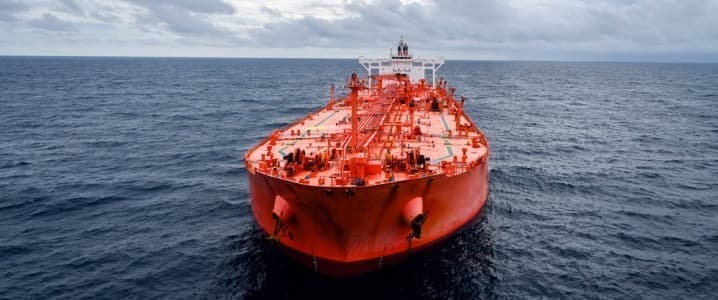
The profitability of shipping US crude from the Gulf Coast to Asian markets hinges on a favorable spread between the delivered cost of WTI and alternative crudes available to Asian buyers. Recent weeks have seen this spread erode significantly. Tanker rates, particularly for VLCCs, have been a primary culprit. Last week, VLCC rates surged to $12.5 million, marking the highest point since March 2023. While rates have since eased marginally to approximately $12 million, they remain stubbornly high, adding substantial costs to each barrel transported. Trading sources indicate this additional cost for trans-Pacific voyages has reached an impactful $1.75 per barrel – a figure that alone can render the arbitrage uneconomical.
Concurrent with rising freight expenses, the price of West Texas Intermediate crude has seen considerable upward movement. As of today, Brent Crude trades at $90.38, while WTI Crude stands at $82.59. This represents a significant daily decline of 9.07% for Brent and 9.41% for WTI, reflecting broader market adjustments. However, looking at the recent trajectory, WTI has climbed substantially from its June levels, which were cited around $60-$65 per barrel, with jumps past $70. The current WTI price of $82.59 is a far cry from those lower ranges and contributes directly to the narrowing of the arbitrage window. This elevation in WTI, coupled with the persistent high freight rates, creates a formidable barrier for competitive US crude exports to Asia, especially for November trade.
Investor Focus: Navigating Price Volatility and Future Outlooks
OilMarketCap.com’s reader intent data reveals a keen investor focus on future price trajectories and the stability of the energy market. A recurring question this week, “What do you predict the price of oil per barrel will be by end of 2026?”, underscores the anxiety surrounding long-term market direction amidst current volatility. This concern is well-founded given recent price action. Our proprietary 14-day Brent trend data shows a significant drop from $112.78 on March 30th to $91.87 on April 17th, representing an 18.5% decline. Such rapid shifts, like today’s sharp downturn, highlight the challenge for investors and traders trying to lock in profitable arbitrage positions or make long-term investment decisions.
The recent deflation in both Brent and WTI prices, partly attributed to news of an agreement to restart exports from northern Iraqi fields, illustrates how quickly supply-side developments can impact global benchmarks. For investors with holdings in integrated oil companies or those specializing in crude trading, understanding these macro drivers is paramount. While some market participants anticipate an easing of WTI premiums and a retracement of freight rates, leading to improved US competitiveness, the current environment demands a highly adaptive investment strategy. The question for many is how quickly and consistently these factors might realign to reopen lucrative export avenues, thereby influencing earnings for energy companies involved in production, shipping, and refining.
Upcoming Events: Catalysts for Change in the Global Oil Landscape
The coming weeks are packed with critical events that could significantly influence crude prices, freight markets, and ultimately, the viability of the US-Asia arbitrage. Our proprietary event calendar highlights several key dates for investors to monitor closely. This Saturday, April 18th, and Sunday, April 19th, mark the OPEC+ Joint Ministerial Monitoring Committee (JMMC) and the full Ministerial Meeting, respectively. Investors are actively inquiring about “OPEC+ current production quotas,” a clear indicator of the market’s anticipation for these meetings. Any decisions regarding production levels, whether cuts or increases, will directly impact global supply and pricing dynamics, potentially altering the WTI-Brent spread and influencing trade flows.
Furthermore, the market will be closely watching the weekly inventory reports. The API Weekly Crude Inventory reports are scheduled for April 21st and April 28th, followed by the EIA Weekly Petroleum Status Reports on April 22nd and April 29th. These releases provide crucial insights into US supply and demand fundamentals, which can directly affect WTI pricing and its competitiveness on the global stage. Alongside these, the Baker Hughes Rig Count on April 24th and May 1st will offer a snapshot of US production activity. Despite the current arbitrage challenges, US oil exports to Asia are still projected to increase this month, with an average rate around 135 million barrels daily, primarily to South Korea and India. The interplay of these scheduled events and continued demand from key Asian economies will dictate whether the arbitrage window reopens or remains tightly shut, making diligent monitoring of these dates essential for informed investment decisions.
Strategic Implications for Energy Investors
For investors deeply entrenched in the oil and gas sector, the thinning US-Asia crude arbitrage presents a complex strategic puzzle. The current environment, characterized by high freight rates and a robust WTI price, fundamentally alters the economics of long-haul US crude exports. This scenario may favor refiners with more localized crude sources or those strategically positioned to leverage regional price differentials, potentially impacting their short-term profitability relative to those reliant on arbitrage opportunities. Conversely, shipping companies, while benefiting from higher VLCC rates in isolation, might face reduced demand for US-Asia routes if the arbitrage remains closed, leading to shifts in vessel deployment and chartering strategies.
Looking ahead, the market expects continued volatility, but with an underlying potential for rebalancing. Should WTI premiums ease or global tanker capacity become more available, the arbitrage could quickly re-emerge. However, the current landscape underscores the need for investors to remain agile and leverage real-time market intelligence. OilMarketCap.com’s proprietary data pipelines provide an unparalleled view into these intricate market forces, offering a critical advantage in identifying emerging trends and making timely investment decisions in a constantly evolving global energy market. Monitoring the signals from OPEC+, inventory data, and global shipping rates will be key to understanding when this crucial arbitrage window might once again swing wide open for US crude.


