Ford Diversifies with Major Leap into Battery Energy Storage Market
A significant strategic pivot is underway at Ford, as the automotive giant formally launches Ford Energy, a wholly owned subsidiary poised to become a formidable player in the burgeoning battery energy storage system (BESS) sector. This bold move positions the company to manufacture U.S.-assembled BESS units specifically for high-demand applications including utility grids, rapidly expanding data centers, and large-scale industrial and commercial operations. Investors should take note of this calculated shift, offering Ford a new trajectory for growth amidst evolving energy market dynamics and a surging demand for reliable, grid-supporting infrastructure.
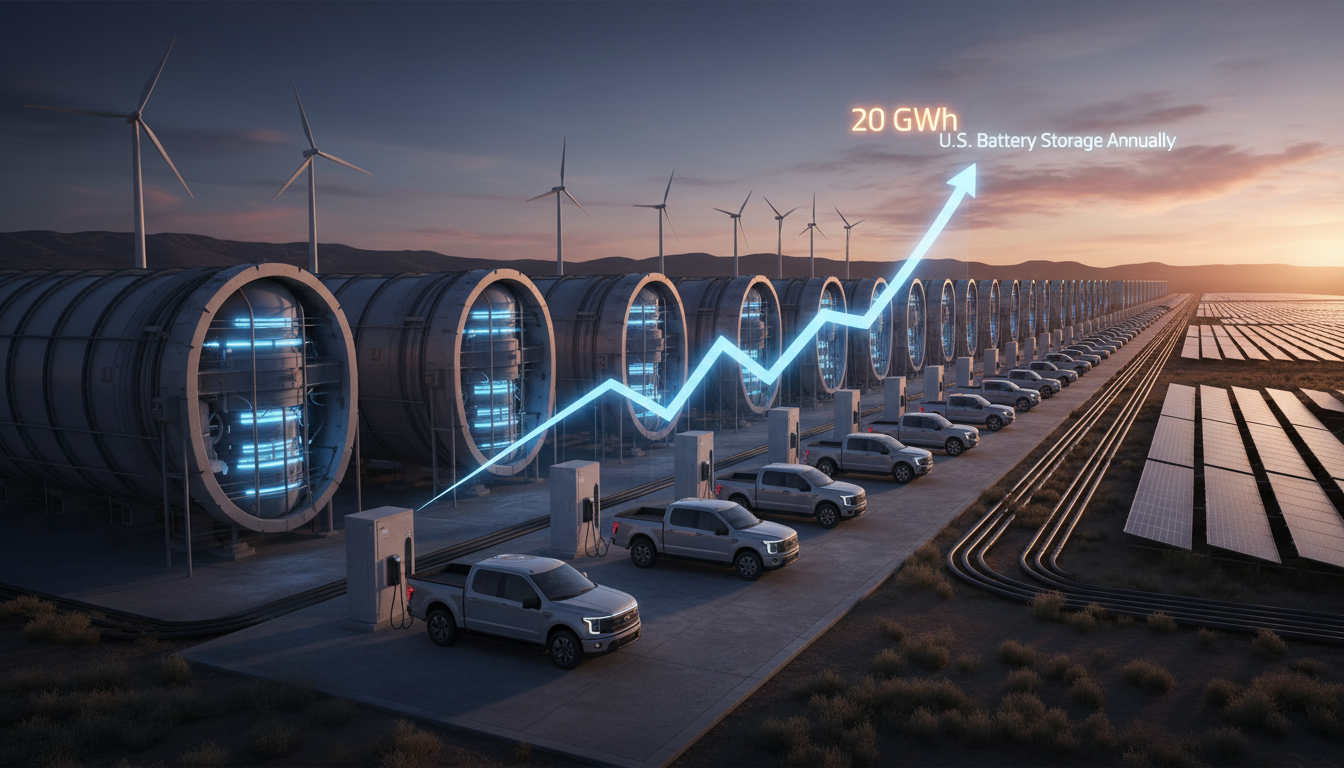
Ford Energy has set ambitious deployment targets, aiming to supply at least 20 GWh of battery energy storage annually. The market anticipates the first customer deliveries to commence in late 2027. This initiative has been under quiet development for nearly a year, with the company confirming it has moved beyond mere planning, actively executing on crucial fronts. Leadership emphasizes a period of quiet but intense activity, dedicated to establishing robust supply chains, preparing manufacturing facilities, and aligning proprietary technology with the immense domestic appetite for advanced energy storage solutions.
Strategic Reallocation: From Electric Vehicles to Grid Infrastructure
Central to Ford Energy’s operational strategy is the strategic repurposing of existing U.S. battery manufacturing capacity in Glendale, Kentucky. This facility was previously earmarked for Ford’s BlueOval SK joint venture with SK On. However, a reassessment of the electric vehicle (EV) market landscape, marked by softer-than-expected demand, led to the dissolution of that partnership in December. This decision freed up significant industrial infrastructure, which Ford is now intelligently redirecting toward the high-growth stationary storage market.
The original BlueOval SK venture, forged in 2021, represented an $11.4 billion commitment to establish three large-scale U.S. battery plants designed to bolster Ford’s future EV production capabilities. The softened EV sales trajectory, coupled with shifts in federal tax credit eligibility, diminished the immediate necessity for such extensive dedicated EV battery capacity. Now, Ford is reallocating approximately $2 billion over two years to establish Ford Energy and jumpstart BESS manufacturing. This strategic pivot includes plans to hire approximately 2,100 workers at the repurposed Kentucky facility, signaling a robust commitment to domestic job creation and manufacturing capability.
For investors and policymakers alike, Ford’s strategic decision underscores a broader evolution in U.S. battery strategy. It validates the significant potential for synergy between battery capacity initially developed for the automotive sector and the accelerating demand for grid-scale and large commercial energy storage. This adaptability highlights the intrinsic value of industrial infrastructure and skilled labor in addressing diverse national energy needs.
Unpacking Ford Energy’s Core Product and Bankability Focus
Ford Energy’s operational scope encompasses the full spectrum of battery cell manufacturing, including critical electrode coil production, followed by module and container assembly. This vertically integrated approach will be complemented by comprehensive sales and service support, offering customers a complete energy storage solution. The subsidiary’s flagship offering will be the Ford Energy DC block, a standardized 20-foot containerized battery energy storage system engineered around 512 Ah lithium iron phosphate (LFP) prismatic cells.
The DC block will be available in two distinct configurations to meet varied application requirements: the FE-250, designed as a two-hour system, and the FE-450, offering a four-hour duration. Both configurations leverage robust LFP prismatic battery technology, integrate advanced liquid-cooled thermal management, and feature a sophisticated battery management system. Ford is strategically positioning these systems on their predictable lifetime performance, ease of serviceability, and superior thermal stability. Crucially, the systems are designed to achieve an impressive 20-year performance life, a vital metric for long-term infrastructure investments.
This emphasis on durability and long-term performance is paramount in a market where customers, particularly utilities and large industrial players, require robust warranties, comprehensive insurance, and unwavering financing confidence. Buyers of large-scale energy storage are not merely acquiring hardware; they are underwriting decades of operational reliability and risk. Ford Energy’s commitment to providing systems that can be financed, insured, and depended upon for the long haul addresses a core industry need, reassuring investors about the long-term viability and operational effectiveness of its offerings.
Investment Tailwinds: Policy Alignment and Soaring Demand
Ford’s manufacturing and supply chain strategy is meticulously aligned with the evolving U.S. regulatory landscape governing energy storage. The company confirms its products will meet critical Investment Tax Credit (ITC) requirements and adhere to domestic content standards, both of which are increasingly influential in the procurement decisions for grid-scale storage projects. This policy alignment is expected to provide a significant competitive advantage as developers actively seek projects that qualify for federal incentives, further driving demand for domestically produced components.
Industry experts observe a rapid acceleration in U.S. demand for dispatchable, bankable energy storage solutions. This surge is fueled by several converging market forces: the explosive growth of AI data centers, the imperative for seamless integration of renewable energy sources, and the critical need for enhanced grid resilience. These factors have collectively created a noticeable gap in the market for robust, reliable, and domestically sourced energy storage.
The urgency for advanced energy storage becomes increasingly apparent as AI data centers dramatically escalate electricity consumption across key U.S. regions. Concurrently, utilities require sophisticated storage solutions to effectively manage the intermittency of renewable generation, alleviate grid stress, and introduce flexible capacity where it’s most needed. While Ford enters a market with established players, including Tesla, which continues to expand its energy storage business with significant battery supply agreements, Ford’s entry marks a pivotal moment.
The introduction of a major industrial manufacturer like Ford into the U.S. energy storage race underscores the sector’s maturity and growth potential. For executives and investors, this strategic pivot demonstrates how legacy manufacturing capabilities can be effectively re-aligned and deployed to support critical grid infrastructure. It firmly places robust, domestic battery supply at the forefront of the next phase of clean energy deployment and grid modernization, offering compelling investment prospects within the rapidly transforming energy landscape.


