Navigating the Crosscurrents: Monetary Easing Hopes Clash with Geopolitical Tariff Threats
The global energy landscape is currently a complex tapestry woven with threads of potential monetary easing, escalating trade tensions, and shifting fundamental supply-demand dynamics. For investors in oil and gas, understanding the interplay between central bank decisions, geopolitical posturing, and real-time market data is paramount to identifying both risk and opportunity. While the Bank of England stands poised to potentially ease monetary policy, offering a glimmer of hope for economic stimulus, new tariff proposals from the US threaten to introduce significant friction into global trade and manufacturing, creating a challenging environment for commodity prices.
The BoE’s Delicate Balancing Act: Rate Cuts and Market Implications
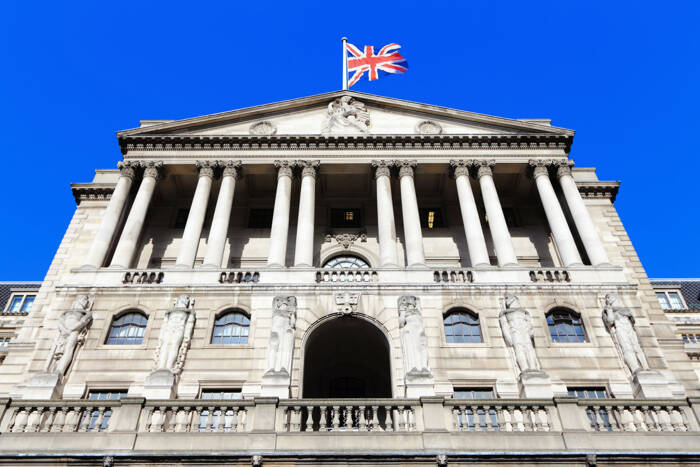
Today, the financial world’s attention is squarely on the Bank of England (BoE) as its Monetary Policy Committee (MPC) convenes. The market broadly anticipates a 25 basis point reduction in the bank rate, a move largely priced into current valuations. However, the true market mover will likely be the nuances of the MPC’s vote split and the forward guidance provided. While LSEG data points to a 7-2 vote in favor of a cut, our internal tracking suggests some desks are bracing for a more complex three-way split, potentially including members advocating for a more aggressive 50 basis point reduction or, conversely, a hold.
BoE policymakers face a formidable challenge. On one hand, persistent inflationary pressures, evidenced by June’s headline CPI inflation print rising to 3.6% from 3.4% and exceeding the BoE’s own Q2 estimate of 3.4%, argue for caution. On the other, signs of weakening economic activity, decelerating pay growth, and a softening job market provide compelling reasons for a rate reduction to stimulate growth. A more dovish vote split would likely weigh on the British pound and Gilt yields, while a more hawkish outcome could provide support. Investors should also closely scrutinize the language of the forward guidance; any deviation from the anticipated ‘careful and gradual approach,’ such as the removal of the word ‘gradual,’ could signal a more hawkish stance, potentially tempering future rate cut expectations and bolstering the pound.
Geopolitical Friction: Tariffs Threaten Global Supply Chains and Demand
Adding another layer of complexity to the global economic outlook are significant tariff proposals from the United States. Plans to impose approximately 100% tariffs on chip and semiconductor imports, far exceeding initial analyst estimates, represent a substantial escalation in trade tensions. While the announcement includes an incentive for domestic production – “if you are building in the US, there will be no charge” – the broader implication is a potential disruption to global supply chains and manufacturing costs. This policy, clearly aimed at bringing manufacturing back to the US, has already sent ripples through Asian semiconductor stocks, particularly in Japan.
For the energy sector, such tariffs could have a dual impact. Firstly, they may lead to increased production costs for industries reliant on these components, potentially dampening overall industrial activity and, by extension, demand for crude oil and natural gas. Secondly, a broader trade conflict could stifle global economic growth, reducing demand for transportation fuels and industrial feedstock. While the specifics of these levies are still emerging, their potential to create headwinds for global economic expansion is a key factor for energy investors to monitor closely.
Crude’s Current Snapshot: A Volatile Market Responding to Macro Shifts
Against this backdrop of monetary policy anticipation and geopolitical tension, crude oil markets are exhibiting notable volatility. As of today, Brent crude trades at $94.45 per barrel, reflecting a 1.08% decline from its opening, while WTI sits at $86.12, down 1.49% within the day’s range of $85.50-$86.78. This recent downturn follows a significant retreat over the past two weeks, with Brent having shed nearly 20% from its $118.35 high on March 31st to $94.86 yesterday. Gasoline prices are also feeling the pressure, currently at $3.02, down 0.66%.
The US dollar’s movements also play a critical role. Yesterday saw the US dollar index fall by 0.6% and breach its 50-day simple moving average, which typically makes dollar-denominated commodities like oil more attractive to international buyers. The euro rallied 0.7% against the dollar, further signaling a weakening greenback. However, the macro crosscurrents, particularly the uncertainty stemming from tariff threats, appear to be outweighing the dollar’s recent weakness, pushing crude prices lower. Many of our readers are keenly focused on where oil prices are headed, with questions like “Is WTI going up or down?” frequently surfacing, underscoring the market’s current uncertainty and the need for clear, data-driven analysis.
The Fortnight Ahead: Key Catalysts for Energy Market Direction
Looking forward, the next fourteen days are packed with events that could significantly sway crude and natural gas prices, offering critical insights for investors trying to predict where the price of oil per barrel will be by year-end 2026. The immediate focus turns to the OPEC+ Joint Ministerial Monitoring Committee (JMMC) Meeting scheduled for April 21st. This gathering could provide clarity on future production policies, and any signals regarding supply adjustments or adherence to current quotas will be closely watched for their impact on global supply balances.
Beyond OPEC+, a steady stream of vital US inventory and production data will shape market sentiment. The EIA Weekly Petroleum Status Reports on April 22nd and April 29th, alongside the API Weekly Crude Inventory reports on April 28th and May 5th, will offer crucial insights into US crude oil, gasoline, and distillate stockpiles, providing a real-time pulse on domestic supply and demand. Furthermore, the Baker Hughes Rig Count on April 24th and May 1st will shed light on drilling activity, a key indicator for future production trends. Finally, the EIA Short-Term Energy Outlook on May 2nd will deliver updated forecasts for global oil demand, supply, and prices, providing a comprehensive backdrop for strategic investment decisions. These upcoming events will be instrumental in determining the trajectory for energy markets amidst the ongoing interplay of monetary policy, geopolitical risks, and fundamental supply-demand shifts.