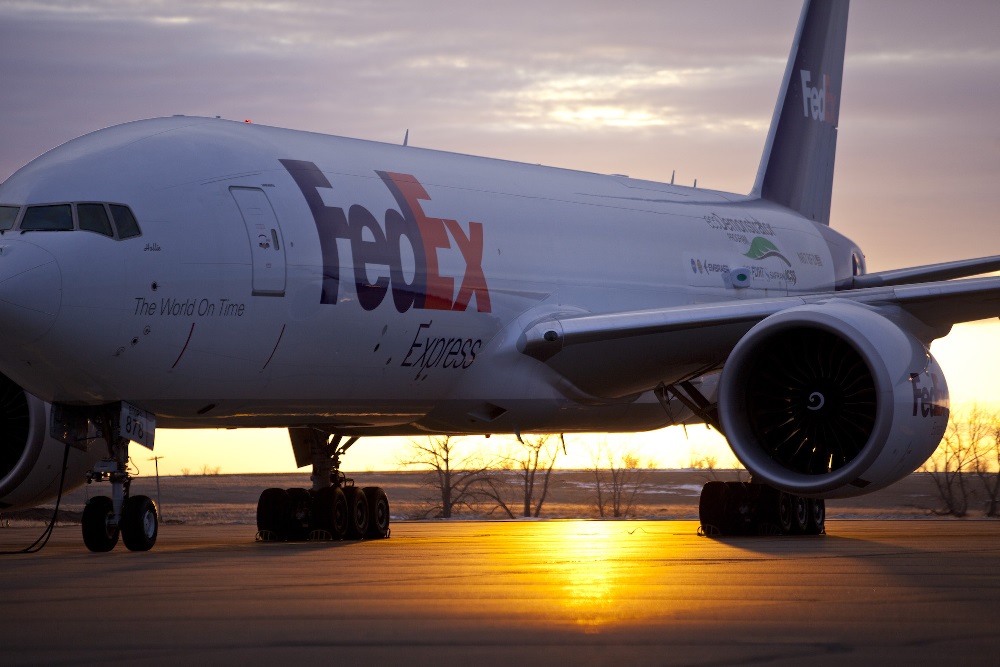
The recent announcement of global delivery giant FedEx’s significant purchase of sustainable aviation fuel (SAF) from Neste marks a pivotal moment for the aviation sector’s decarbonization efforts and presents a clear signal for energy investors. With a commitment to procure over three million gallons of blended SAF for its cargo operations out of Los Angeles International Airport, FedEx is not merely making an environmental statement; it is actively shaping demand for a nascent yet rapidly expanding market. This move, representing the company’s first major U.S. SAF deployment, underscores the increasing corporate imperative to reduce carbon footprints and highlights the critical investment opportunities emerging in the green jet fuel space.
The Growing Imperative for Sustainable Aviation Fuel
FedEx’s decision to integrate SAF into its operations is a tangible step towards its ambitious goal of achieving carbon neutrality by 2040. The company has allocated a substantial $2 billion towards this objective, focusing on key areas such as vehicle electrification, sustainable energy solutions, and carbon sequestration. The current SAF procurement, which will see blended fuel with a minimum of 30% neat SAF account for approximately one-fifth of all jet fuel consumed annually by FedEx at LAX, demonstrates the scale of commitment required for such a transition. Neste, as the supplier, plays a crucial role, producing its Neste MY Sustainable Aviation Fuel from sustainably sourced renewable waste and residues. This fuel is compatible with existing aircraft engines and airport infrastructure, offering a significant advantage by reducing greenhouse gas emissions by up to 80% over its lifecycle compared to conventional jet fuel. Investors should note Neste’s substantial global SAF production capability, currently standing at 1.5 million tons, or around 515 million gallons, per year, indicating a robust supply-side capacity ready to meet rising demand.
Navigating Volatility: SAF’s Value Proposition Amidst Shifting Crude Prices
In the dynamic landscape of global energy markets, the economic calculus for adopting SAF is increasingly influenced by the volatility of conventional crude oil prices. As of today, Brent crude trades at $95.57 per barrel, reflecting a modest gain of 0.82% within a daily range of $91 to $95.81. WTI crude similarly stands at $91.65 per barrel, up 0.41%. However, looking at the recent past, the market has seen significant fluctuations; Brent crude trended downwards by approximately $9, or 8.8%, from $102.22 on March 25th to $93.22 by April 14th. This inherent unpredictability in traditional fuel costs presents a compelling argument for the strategic adoption of SAF. While SAF currently carries a premium, its long-term stability in price, decoupled from geopolitical tensions and conventional supply shocks, offers airlines a valuable hedge. For investors, this creates an opportunity to back companies like Neste that provide solutions for long-term operational cost predictability and environmental compliance, fundamentally altering the risk profile for aviation sector investments.
Forward Outlook: Key Events Shaping the Energy Landscape and SAF Adoption
The trajectory of the broader energy market over the coming weeks will undoubtedly influence the pace and scale of SAF adoption. Investors should closely monitor several upcoming events. The OPEC+ Joint Ministerial Monitoring Committee (JMMC) meeting on April 18th, followed by the full Ministerial Meeting on April 20th, will be critical in determining global crude oil supply policies. Any significant shifts in production quotas could impact crude prices, thereby affecting the economic competitiveness of SAF in the short term. Furthermore, insights from the Baker Hughes Rig Count on April 17th and April 24th, alongside the API Weekly Crude Inventory reports (April 21st, April 28th) and the EIA Weekly Petroleum Status Reports (April 22nd, April 29th), will provide vital supply and demand signals for North American markets. These data points offer a comprehensive picture of the traditional energy sector’s health. While these events directly impact fossil fuels, they indirectly shape the investment climate for SAF, as sustained high crude prices could accelerate the transition, making the premium for green alternatives more palatable and driving further policy support and investment into SAF infrastructure and production capabilities.
Investor Focus: Addressing Core Questions in a Transitioning Market
Investors are actively seeking clarity on future market dynamics, evidenced by prevailing questions regarding crude oil forecasts. Many are asking for a base-case Brent price forecast for the next quarter and the consensus 2026 Brent forecast. While specific predictions are challenging given market volatility, the ongoing commitment to SAF by major players like FedEx suggests a long-term structural shift that influences these forecasts. Investments in SAF producers and related technologies offer a compelling avenue for growth, even as traditional crude prices fluctuate. Companies like Neste, with proven technology and significant production capacity, stand to benefit immensely from this transition. For traditional oil and gas companies, the FedEx deal serves as a clear signal to diversify into renewable energy solutions, including SAF production, or risk being left behind. The growth of SAF also has implications for existing energy infrastructure, requiring adaptations in logistics and storage, which could open new investment opportunities in midstream and downstream sectors focused on green fuels. Smart investors are therefore evaluating portfolios not just on current crude prices, but on their exposure to the decarbonization trend that SAF represents.
Conclusion: SAF as a Strategic Growth Vector
FedEx’s strategic move into large-scale SAF procurement is more than an environmental initiative; it is a powerful market signal reflecting the growing commercial viability and necessity of sustainable aviation solutions. For investors in the energy sector, this highlights SAF as a critical growth vector, moving from niche to mainstream. The commitment by a global logistics leader, coupled with robust production capabilities from innovators like Neste, underscores a fundamental shift in how the aviation industry will fuel its future. As the energy transition accelerates, companies positioned at the forefront of SAF production, distribution, and consumption will likely command increasing attention and deliver significant long-term value, making this a pivotal area for strategic investment in the evolving global energy landscape.


