ExxonMobil’s Stance: Democracy as the Bedrock for Venezuelan Oil Investment
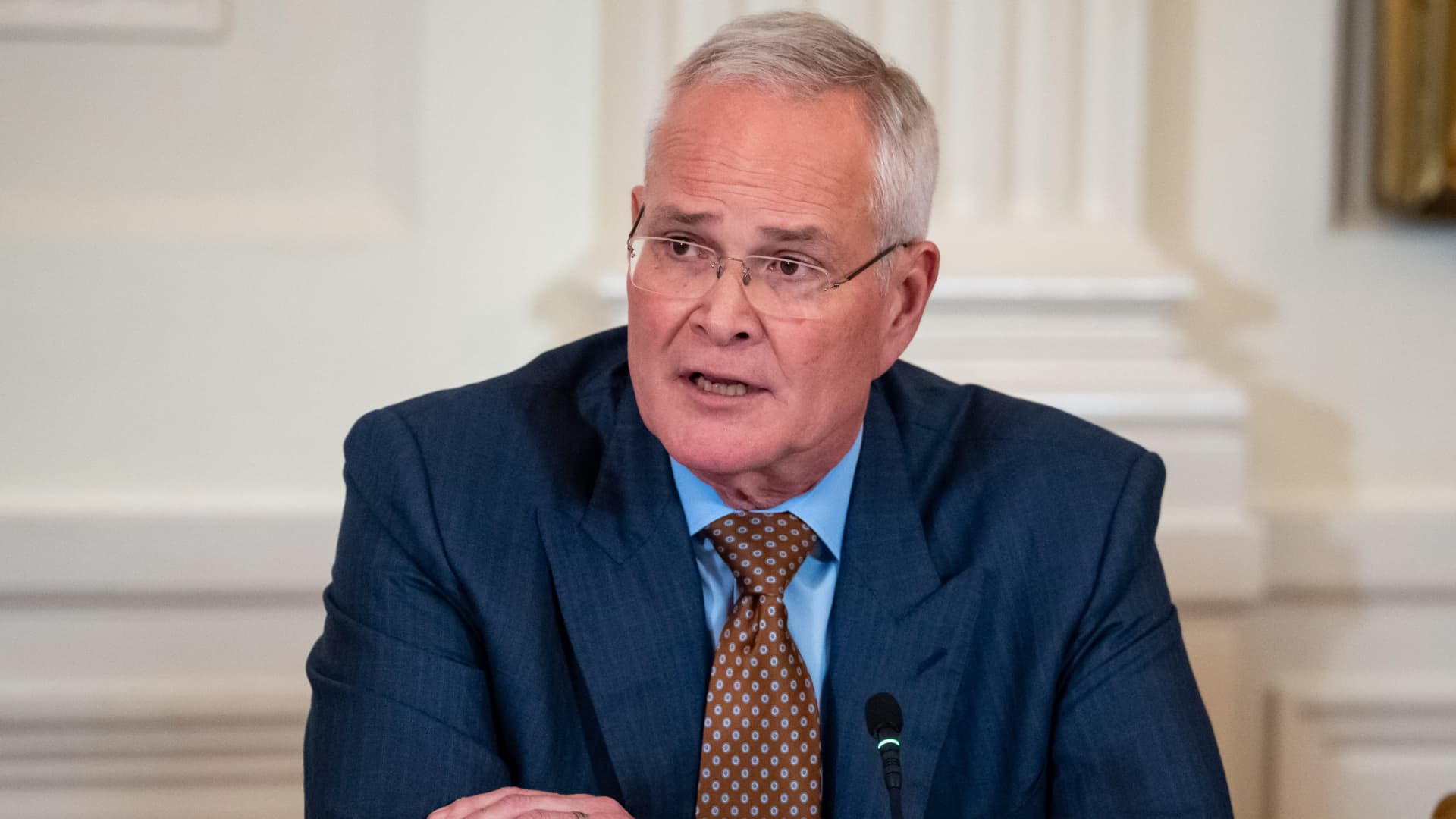
The prospect of re-engaging with Venezuela’s vast, yet dilapidated, oil industry presents a complex dilemma for global energy majors and investors alike. While the current U.S. administration actively encourages a multi-billion dollar rebuild, ExxonMobil CEO Darren Woods has drawn a clear line in the sand: a transition to democracy and the upholding of contractual sanctity are non-negotiable prerequisites. This firm stance highlights a fundamental clash between geopolitical ambition and the operational realities and risk assessments of a major energy company. For investors eyeing the potential of the world’s largest crude reserves, Woods’s assessment underscores the critical importance of a stable, rule-of-law environment over short-term political expediency.
The Irreducible Cost of Instability: Why Contracts Matter More Than Political Pressure
ExxonMobil’s departure from Venezuela in 2007, following the seizure of its assets by the then-regime, left billions in outstanding claims. This historical context forms the bedrock of Woods’s current ‘uninvestable’ declaration. His emphasis on the principle that “if you don’t uphold the sanctity of the contracts, if you choose to instead to steal the investments that we made… we can’t continue to work with you” is not merely rhetoric. It’s a foundational tenet for any international energy company considering multi-decade, capital-intensive projects. The administration’s suggestion to disregard past claims, stating “We’re not going to look at what people lost in the past,” directly contradicts the very framework necessary to attract significant foreign direct investment. For long-term investors, the willingness of a host government to honor agreements is paramount, far outweighing any immediate political pressure or the allure of untapped reserves. Without this assurance, the risk premium on any future investment in Venezuela remains prohibitively high, effectively sidelining major players who demand predictable legal and operational environments.
Current Market Headwinds and the Venezuelan Rebuild Challenge
The ambitious goal of injecting upwards of $100 billion into Venezuela’s energy infrastructure faces significant headwinds from current global crude markets. As of today, April 21, Brent Crude trades at $93.18, marking a 3.04% increase within the day’s range of $89.11-$93.36. Similarly, WTI Crude stands at $89.87, up 2.8% from its daily low of $85.5. While these daily gains suggest some market strength, the broader trend reveals a challenging landscape. Over the past 14 days, Brent crude saw a significant correction, falling from $118.35 on March 31 to $94.86 on April 20 – a substantial drop of nearly 20% before today’s rebound. This recent volatility and overall downward pressure make the financial calculus for a massive, high-risk infrastructure rebuild even more complex. Investors must weigh the potential long-term returns from Venezuela’s vast reserves against the immediate and ongoing costs of significant capital expenditure in a market prone to sharp price swings, not to mention the inherent political and operational risks that remain unaddressed. The current environment demands greater certainty on all fronts before committing such substantial capital.
Investor Concerns: Navigating Geopolitical Ambiguity and Price Outlook
Our proprietary reader intent data reveals a clear focus among investors on both short-term price movements and long-term market direction. Questions such as “Is WTI going up or down?” and “What do you predict the price of oil per barrel will be by end of 2026?” dominate investor queries this week. These questions underscore the market’s sensitivity to supply-side uncertainties, a category where Venezuela’s potential re-entry looms large. The administration’s current approach—working with acting President Delcy Rodriguez, a figure deeply entrenched in the previous authoritarian regime—raises eyebrows and complicates the outlook. While officials claim focus on stabilization and economic improvement through oil sales, this cooperation has sparked concerns among observers that the existing regime could persist, potentially sidestepping genuine democratic reforms. For investors, this geopolitical ambiguity translates directly into supply risk. Will a “stabilized” Venezuela under a potentially unchanged regime genuinely attract the necessary investment, or will it only see incremental, politically motivated capital? The long-term price trajectory of oil is inextricably linked to such supply narratives, and the lack of clarity on Venezuela’s political future adds another layer of complexity to these vital investor questions.
Upcoming Market Catalysts and the Venezuelan Conundrum
While Venezuela’s political and investment future remains uncertain, upcoming global energy events will continue to shape the broader market sentiment and the appetite for frontier investments. Today, April 21, the OPEC+ Joint Ministerial Monitoring Committee (JMMC) meeting is a pivotal event, as any signals regarding production policy will directly impact global supply expectations. Tomorrow, April 22, the EIA Weekly Petroleum Status Report will offer critical insights into U.S. crude inventories, refinery activity, and demand indicators, followed by another report on April 29. These reports are crucial barometers for the health of the world’s largest oil consumer. Further data points like the Baker Hughes Rig Count on April 24 and May 1 will provide a pulse on North American drilling activity. Perhaps most critically for longer-term outlooks, the EIA Short-Term Energy Outlook on May 2 will offer updated supply, demand, and price forecasts through 2027. These recurring data releases and policy discussions create the backdrop against which any significant investment in Venezuela would be evaluated. A global market perceived as stable, with clear supply-demand dynamics, might encourage more risk-taking. Conversely, heightened volatility or bearish outlooks from these events could further diminish the already cautious appetite for a politically fraught investment destination like Venezuela, reinforcing the prudence of ExxonMobil’s current stance.