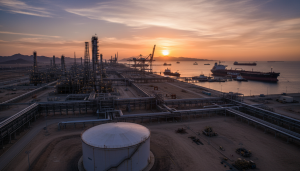
ExxonMobil, a leading global energy major, commenced the first quarter facing substantial operational headwinds, reporting a 6% reduction in its worldwide production volume. This significant decline is primarily attributed to the escalating conflict in the Persian Gulf, which has severely disrupted oil and natural gas operations across the region, causing investors to reassess the stability of key energy hubs.
A major contributor to this production shortfall stems from a liquefied natural gas (LNG) complex in Qatar, where ExxonMobil holds a partnership stake. The company disclosed that two LNG production lines, critical to its operations, sustained damage from Iranian missile strikes. Public statements from ExxonMobil indicate that repairs to these vital facilities will necessitate an extended period. While a precise timeline remains elusive pending an on-site evaluation, the damage’s severity could lead to a prolonged restoration process, potentially stretching for half a decade, according to Qatari estimates.
Geopolitical Tensions Reshape Energy Investment Landscape
The conflict in the Middle East has profoundly impacted not just production capabilities but also the strategic outlook for energy investment in the Persian Gulf. Under normal circumstances, this volatile region accounts for approximately one-fifth of ExxonMobil’s global output, underscoring its strategic importance to the Texas-based supermajor. The reported production losses from ExxonMobil are among the first tangible disclosures by international energy giants regarding the war’s direct consequences on assets they own or co-manage in and around the Gulf.
Investor sentiment immediately reflected these concerns. ExxonMobil’s shares saw a sharp decline of 6.1% in pre-market trading in New York. This broader market reaction coincided with an announced two-week ceasefire by US President Donald Trump, leading to a general downturn across energy stocks as traders grappled with potential shifts in geopolitical premiums and supply dynamics. European peer Shell Plc also issued a trading update on the same day, signaling lower quarterly gas production as a direct result of the ongoing conflict, further highlighting the widespread industry impact.
Financial Implications and Future Outlook
Beyond the direct production losses, ExxonMobil also forewarned investors about its first-quarter earnings for the energy-products division, which encompasses refining and trading activities. The company anticipates these earnings will be approximately $3.7 billion lower than the robust final three months of 2025. This projected decrease is primarily due to price volatility and the timing of cargo deliveries.
Despite these immediate financial pressures, Chief Financial Officer Neil Hansen offered a reassuring perspective. Hansen emphasized that these impacts are largely temporary “timing effects” that will eventually reverse, leading to “net positive profit once the underlying transactions are complete.” He characterized these as “sound trades” that promise “material profitability” in the future. Indeed, when excluding these timing-related effects, ExxonMobil’s per-share earnings actually demonstrated an improvement over the previous quarter, indicating underlying operational strength despite the short-term disruptions.
Revisiting Risk Premiums and Regional Stability
The broader energy sector has consistently cautioned that financial markets might be underestimating the severe and enduring repercussions of the Middle East conflict on global energy supplies. Strategists at JPMorgan Chase & Co., in an April 6 note, articulated this concern, stating that the war has “upended the perception of the Gulf as a safe and investable hub.” Their analysis pointed to “severe near-term growth hits” for nations like Qatar and Kuwait, with the potential for “longer-term damage” to foreign investment across the entire region.
Despite the operational challenges and market anxieties, ExxonMobil anticipates some offsetting gains in the first quarter. The company expects approximately $2.1 billion from higher crude prices and an additional $400 million driven by increased natural gas prices. These gains provide a partial buffer against the production losses and timing-related financial impacts. Chief Executive Officer Darren Woods has aggressively pursued a growth strategy, expanding output by over 30% in the last three years to nearly 5 million barrels per day equivalent through strategic acquisitions and significant project developments. This long-term vision aims to bolster the company’s resilience against regional volatility.
As investors keenly await more comprehensive insights, ExxonMobil is scheduled to release its full first-quarter results on May 1. These upcoming earnings will provide a more detailed financial picture and crucial commentary on the company’s strategies to mitigate ongoing geopolitical risks and capitalize on evolving energy market dynamics. The current environment underscores the critical importance of diversification and robust risk management for major players in the global oil and gas investment landscape.