ExxonMobil Fuels Japan’s Green Transition with Landmark Ammonia Deal
Houston – Energy major ExxonMobil has solidified its commitment to the burgeoning low-carbon energy sector, announcing a landmark long-term agreement with Japanese trading giant Marubeni. This pivotal deal secures an annual supply of 250,000 metric tons of low-carbon ammonia, marking a significant milestone as ExxonMobil’s inaugural customer contract for its proposed hydrogen production facility in Baytown, Texas. Publicly disclosed on May 8, 2025, this transaction underscores the accelerating global appetite for sustainable energy carriers and firmly positions ExxonMobil as a serious contender in the evolving low-carbon hydrogen economy. For investors tracking the energy transition, this agreement signals a concrete de-risking of a key strategic project and a clear path toward commercialization for advanced clean energy initiatives.
Baytown: Anchoring a Global Low-Carbon Hydrogen Future
At the heart of this transformative partnership lies ExxonMobil’s ambitious vision for its Baytown refining and chemical complex. The company aims to establish what could become the world’s largest low-carbon hydrogen production facility at this extensive site. While the path to project development has seen initial delays, the securing of a substantial off-take agreement with an international powerhouse like Marubeni injects crucial momentum and significantly reduces investment risk. This move provides a strong signal of confidence to the capital markets that ExxonMobil is effectively executing its strategic pivot towards new energy paradigms.
The facility’s operational model hinges on producing hydrogen from natural gas, a process meticulously integrated with state-of-the-art carbon capture and storage (CCS) technology. This advanced system is designed to sequester carbon dioxide emissions deep underground, dramatically minimizing the project’s environmental footprint. This innovative approach positions the Baytown complex not only as a cornerstone in ExxonMobil’s low-carbon portfolio but also as a vital asset in the global endeavor to decarbonize heavy industries and power generation, offering a template for future large-scale clean energy projects. Investors should note the strategic advantage of leveraging existing infrastructure for such a massive undertaking, potentially streamlining development and accelerating time-to-market.
Hydrogen and Ammonia: The Critical Carriers of Decarbonization
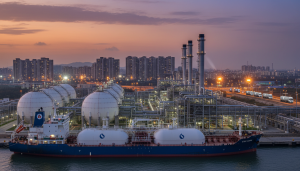
Hydrogen, when generated through processes that ensure minimal emissions, stands as a premier clean fuel, with its combustion producing only water. Its utility in the energy transition is immense, spanning power generation, industrial processes, and transportation. However, the efficient and safe transport of hydrogen across vast distances presents a logistical challenge. This is where ammonia, a compound comprising nitrogen and hydrogen, assumes a critical role. Ammonia serves as an ideal and efficient carrier for hydrogen, allowing it to be transported in liquid form across oceans and continents with established infrastructure.
This characteristic makes low-carbon ammonia an indispensable solution for international trade, particularly for energy-importing nations like Japan. These countries are actively pursuing robust strategies to meet their aggressive decarbonization targets and secure stable, clean energy supplies. For Barry Engle, President of ExxonMobil’s Low Carbon Solutions division, this agreement represents “another positive step forward for our landmark project,” underscoring the company’s unwavering commitment to expanding its low-carbon solutions portfolio and delivering tangible results for stakeholders. This emphasis on tangible progress is crucial for investors seeking concrete returns from clean energy investments.
Strategic Alliance and Investor Validation
The long-term supply agreement with Marubeni extends beyond a simple commercial transaction; it fundamentally deepens the strategic alliance through Marubeni’s acquisition of an equity stake in ExxonMobil’s Baytown hydrogen facility. While the precise percentage of Marubeni’s ownership remains undisclosed, this direct financial commitment is a powerful testament to Marubeni’s profound confidence in the project’s long-term viability and promising future. For discerning investors, Marubeni’s equity participation acts as a significant market validation, signaling robust project fundamentals and potentially attracting further capital investment, thereby strengthening the project’s financial foundation and overall resilience.
This collaboration gains additional strategic weight when viewed against Japan’s ambitious climate goals. Japan, a nation acutely dependent on energy imports, has set aggressive targets for decarbonization across its economy. Access to stable and reliable sources of clean energy carriers, such as low-carbon ammonia, is paramount to achieving these objectives. The Baytown facility is therefore poised to become a critical supplier, helping Japan diversify its energy matrix and reduce its carbon footprint. This partnership exemplifies how traditional energy giants are adapting to global sustainability mandates, creating new avenues for revenue and growth while addressing pressing environmental challenges for the benefit of both shareholders and the planet.
Market Implications and Future Outlook for Low-Carbon Investments
The ExxonMobil-Marubeni deal sends a clear signal across global energy markets: the commercialization of low-carbon hydrogen and ammonia is rapidly accelerating. For investors, this translates into tangible opportunities within the expanding low-carbon value chain. ExxonMobil’s move reinforces its strategy to leverage existing infrastructure and expertise in large-scale project execution, adapting them for the new energy landscape. This approach offers a compelling investment thesis, combining the stability of an established energy major with the growth potential of emergent clean technologies. It demonstrates a proactive approach to managing transition risks and capitalizing on new market demands.
This agreement is likely to catalyze further investments and partnerships in the low-carbon hydrogen space. As global economies continue their push towards net-zero emissions, the demand for scalable, cost-effective clean energy solutions will only intensify. Companies that can demonstrate proven capacity for large-scale production and reliable supply chains for low-carbon fuels will command a premium. ExxonMobil’s strategic foresight in securing this foundational contract, coupled with Marubeni’s financial commitment, positions the Baytown facility as a bellwether project, demonstrating the economic viability and strategic importance of advanced decarbonization initiatives. Investors should watch closely for similar partnerships and project developments as the low-carbon economy matures.
Ultimately, this landmark agreement is more than just a supply deal; it represents a significant stride in the global energy transition. It underscores the critical role that major oil and gas companies are playing in developing new energy paradigms, particularly through scalable technologies like carbon capture and storage. For investors, it highlights ExxonMobil’s proactive strategy in diversifying its portfolio, mitigating future carbon risks, and capturing market share in the rapidly expanding low-carbon economy. This collaboration between an energy producer and a global trading house exemplifies the cross-sectoral partnerships essential for driving the energy future, offering a compelling narrative of growth and innovation in a changing world.