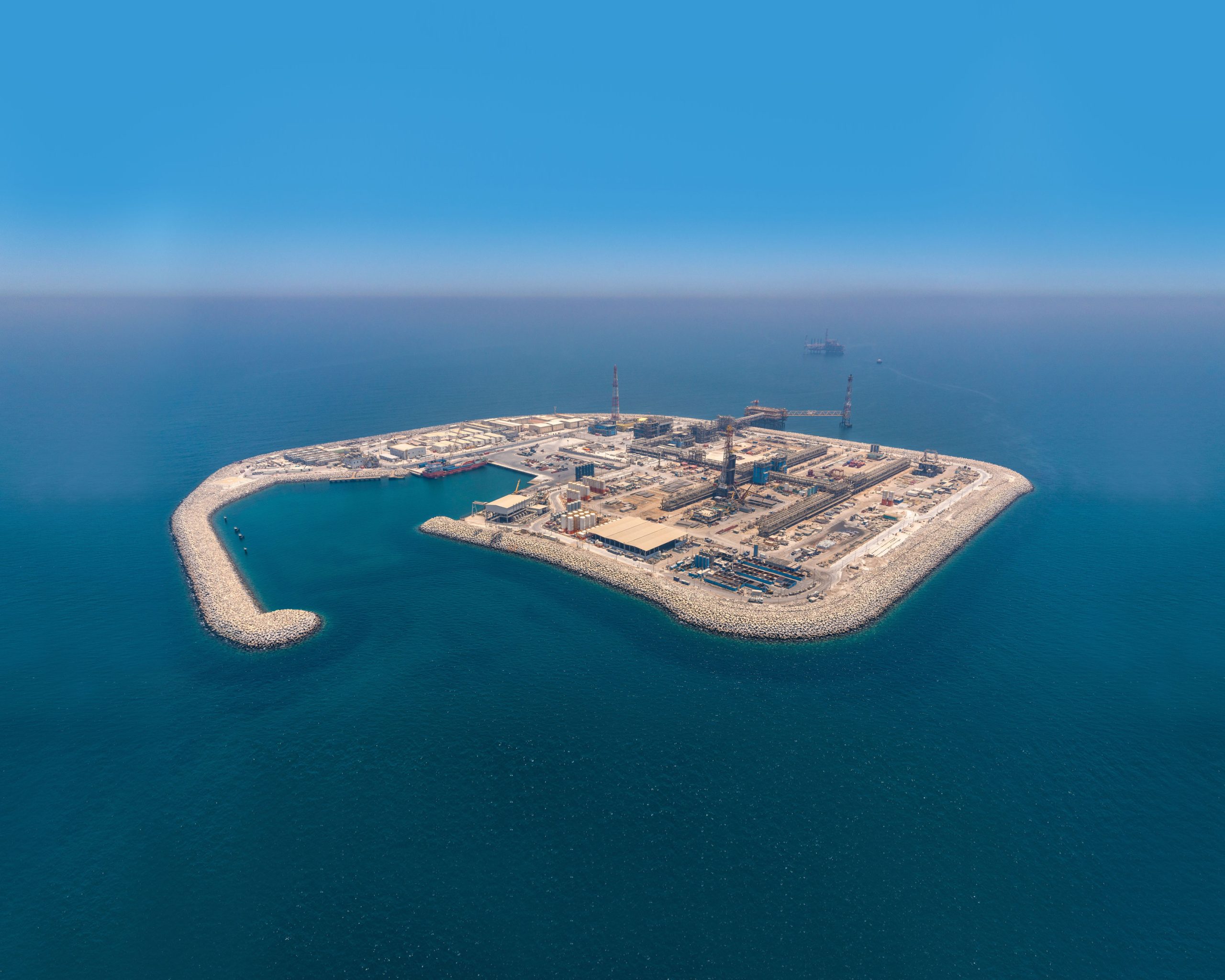
The United Arab Emirates is significantly bolstering its hydrocarbon production capabilities, cementing its position as a global energy powerhouse. Abu Dhabi National Oil Co. (ADNOC), in a pivotal collaboration with Exxon Mobil Corp., has unveiled plans to substantially expand output at the massive offshore Upper Zakum field, a move poised to reshape future oil market dynamics and attract keen investor attention.
This strategic alliance targets an increase in the Upper Zakum field’s production capacity, which currently stands at an impressive one million barrels per day (bpd). While ADNOC has not yet specified the new production target, this expansion signals a clear intent to capitalize on the field’s vast reserves. The Upper Zakum asset is a cornerstone of the UAE’s upstream portfolio, with Japan’s Inpex Corp. also holding a significant partnership stake, underscoring the international collaborative nature of these high-stakes energy ventures.
The timing of this capacity boost carries particular weight given the ongoing output limitations imposed by the OPEC+ alliance. The UAE, like many of its peers, currently operates with a substantial margin between its potential production capacity and its allocated quota. ADNOC’s current infrastructure supports a formidable 4.85 million bpd, yet its June OPEC+ allowance mandates pumping just under 3.1 million bpd. This discrepancy means billions of dollars in invested capital lie temporarily idle, a sensitive financial and political calculus for the nation. Future capacity additions, which typically involve multi-year development cycles, will inevitably widen this gap, providing the UAE with significant leverage and flexibility in future market scenarios.
ADNOC’s Ambitious Growth Trajectory and Strategic Investments
This Upper Zakum expansion is an integral component of ADNOC’s overarching $150 billion capital expenditure plan. This monumental investment strategy is predominantly channeled towards augmenting crude oil production capacity and achieving self-sufficiency in natural gas. The national energy giant has set an ambitious target of reaching 5 million bpd in crude oil capacity, a milestone it anticipates achieving by the close of the current year. Such an aggressive timeline underscores the urgency and scale of ADNOC’s strategic vision, positioning it for long-term market leadership.
Beyond crude oil, ADNOC is also making significant strides in its natural gas portfolio. In a separate yet equally crucial partnership, ADNOC and Occidental Petroleum Corp. (Oxy) are jointly exploring avenues to escalate capacity at the Shah Gas field. The objective is to raise daily output from 1.45 billion standard cubic feet per day (scfd) to 1.85 billion scfd. This expansion in gas production is vital for meeting domestic energy demand, supporting industrial growth, and potentially enhancing the UAE’s liquefied natural gas (LNG) export capabilities, further diversifying its energy revenue streams.
Pioneering Carbon Capture and Unconventional Resource Development
The collaboration between ADNOC and Oxy extends into the realm of advanced environmental technologies, highlighting a forward-looking approach to sustainable energy production. Occidental Petroleum is spearheading a groundbreaking project in the United States focused on direct air capture (DAC) of carbon dioxide. ADNOC, through its new international investment arm, XRG PJSC, will participate in this initiative. The captured CO2 will then be injected into oil field reservoirs for enhanced oil recovery (EOR), a process that not only boosts crude production but also sequesters atmospheric carbon, offering a dual benefit for both energy security and environmental stewardship. This investment signals ADNOC’s commitment to integrating cleaner technologies into its global portfolio and adapting to evolving energy transition demands.
Further diversifying its upstream footprint, ADNOC has awarded a significant concession to EOG Resources Inc. for the exploration of an unconventional oil block in Abu Dhabi. This move into unconventional resources represents a strategic diversification away from traditional conventional fields, potentially unlocking vast new hydrocarbon reserves and showcasing the UAE’s openness to cutting-edge exploration and production techniques. For investors, EOG’s expertise in unconventional plays brings proven methodology to a potentially nascent but resource-rich area.
Cross-Border Investment Flows and Future Outlook
These various partnership agreements and capacity expansion pledges collectively represent a substantial commitment of capital. ADNOC’s Chief Executive Officer, Sultan Al Jaber, indicated that these initiatives amount to a potential $60 billion in U.S. investment flowing into the UAE’s energy sector. Concurrently, the UAE itself is a significant investor in the U.S. energy landscape, with its current investments totaling $70 billion. This figure is projected to skyrocket to an impressive $440 billion by 2035, underscoring a robust and growing economic interdependence between the two nations.
The broader regional context also reveals a surge in investment. Recent high-level discussions saw an announcement of a staggering $2 trillion in investments from key Middle Eastern allies, including Saudi Arabia, Qatar, and the UAE, signaling a profound re-alignment of global energy and economic partnerships. For investors, these multi-billion dollar commitments from major national oil companies and international partners like Exxon Mobil, Occidental, and EOG Resources highlight the enduring strategic importance of the Middle East in global energy supply. The UAE’s proactive capacity expansion, coupled with its engagement in advanced technologies and unconventional resource development, positions it as a resilient and adaptable player in the evolving energy landscape, promising significant long-term value for those invested in the sector.