Extreme Heat Redefines Investment Landscape for Oil & Gas Sector
Global financial markets, particularly those tied to energy, must contend with a stark new reality: extreme heat conditions are already rendering parts of the planet “non-survivable” for human populations, according to groundbreaking scientific research. This revelation signals a more immediate and profound risk to economies, infrastructure, and ultimately, the demand and supply dynamics of the oil and gas industry than previously understood. Investors monitoring the energy sector need to urgently recalibrate their risk assessments as rising temperatures accelerate demand for cooling solutions while simultaneously threatening operational continuity in key regions.
The Alarming Science of Human Survivability
Recent studies have dramatically reshaped our understanding of human vulnerability to heat. Scientists re-evaluated six significant global heatwaves that occurred between 2003 and 2024, uncovering a much lower threshold for deadly conditions than previously assumed. The long-held benchmark for human survival was a six-hour exposure to a wet bulb temperature of 35 degrees Celsius – a combined measure of heat and humidity that rarely registers on global scales. However, thousands of fatalities in events spanning Mecca (Saudi Arabia, 2024), Bangkok (Thailand, 2024), Phoenix (United States, 2023), Mount Isa (Australia, 2019), Larkana (Pakistan, 2015), and Seville (Spain, 2003) occurred without ever approaching this theoretical wet bulb limit.
The new research, spearheaded by Prof. Sarah Perkins-Kirkpatrick of the Australian National University and published in Nature Communications, applied an innovative model of human physiology. This advanced approach accounts not just for ambient temperature and humidity, but critically, for the human body’s intrinsic ability to regulate its core temperature based on age and external conditions. The findings were stark: all six examined heatwaves included periods that would have been lethal for older individuals unable to find shade. Prof. Perkins-Kirkpatrick expressed her surprise at the immediate severity, noting, “If it’s already happening now, then what does a future that is two or three degrees warmer hold?”
This revised understanding underscores a critical vulnerability. The study revealed that in the Larkana and Phoenix heatwaves, older demographics faced non-survivable conditions even when seeking shade. Furthermore, the Larkana event presented periods that were deadly for individuals aged 18 to 35 exposed to full sun. Prof. Ollie Jay, Director of the University of Sydney’s Heat and Health Research Centre and a co-author, emphasized the gravity: “Conditions that threaten human life are already here and the risk moving forward is almost certainly much greater than we previously thought.” These findings challenge previous statistical analyses of heat-related deaths, suggesting a significant underreporting of fatalities, particularly in developing and densely populated urban centers.
Geographic Hotbeds and Energy Sector Exposure
The locations of these extreme heat events hold critical implications for global energy markets and oil and gas investing. From the oil-rich Middle East (Mecca) to rapidly industrializing Southeast Asia (Bangkok) and vital U.S. energy infrastructure zones (Phoenix), these regions are central to both crude oil production and significant energy consumption. Prof. Steve Sherwood, a climate scientist at the University of New South Wales whose early research contributed to establishing theoretical human temperature limits, warns that proximity to physiological limits makes mitigating higher temperatures “essential to humans still being able to live and thrive in the hottest and most humid places, including the top end of Australia and much of the tropics, but especially in India and the Middle East.” These are regions with vast populations and integral roles in the global energy supply chain.
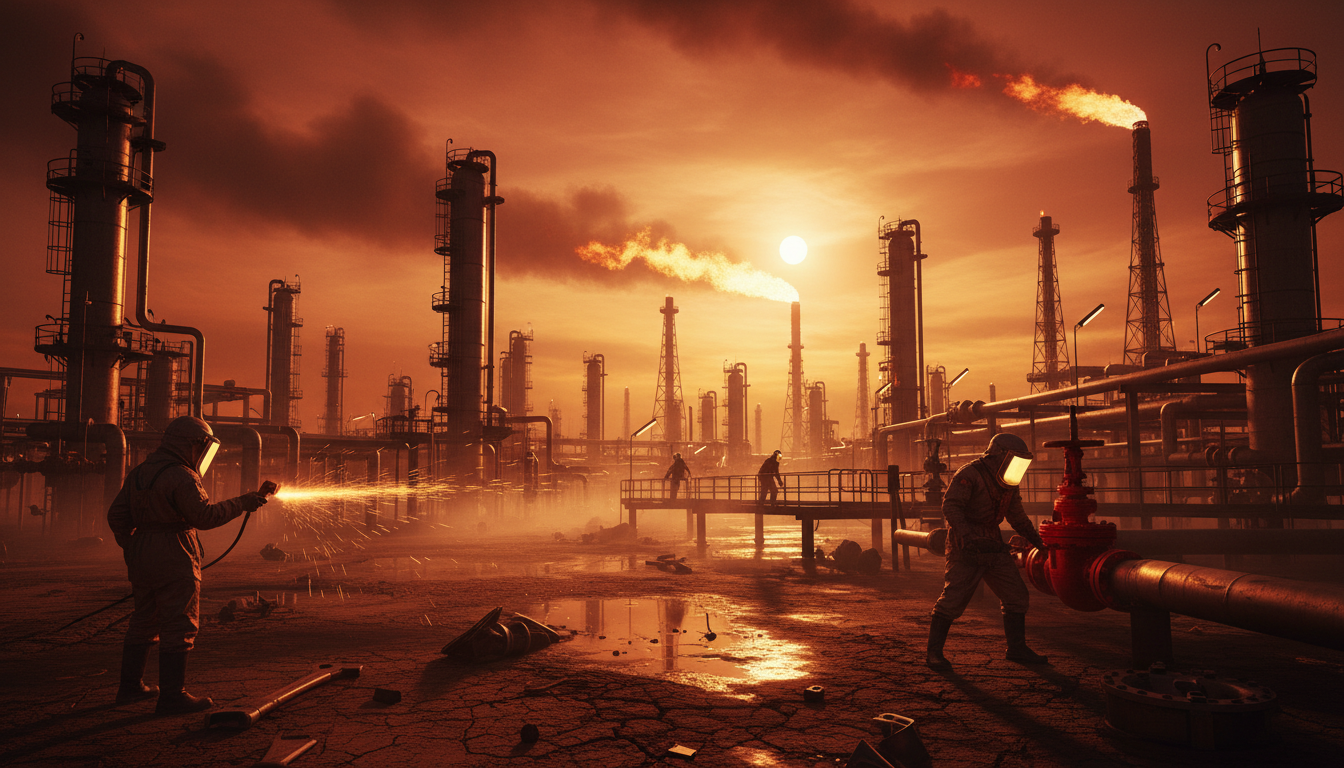
The human body’s primary defense against heatstroke is sweating and the subsequent evaporation of that sweat. High temperatures combined with high humidity, however, drastically impede this cooling mechanism. Older individuals, especially those over 75, are particularly susceptible due to reduced sweating capacity. This vulnerability in densely populated and economically vital areas translates directly into operational risks for oil and gas companies. Productivity declines, worker safety becomes paramount, and the costs associated with protecting personnel in the field escalate significantly. For investors, this means scrutinizing the human capital and operational resilience strategies of energy firms in high-risk geographies.
Direct Impact on Oil and Gas Demand and Infrastructure
The accelerating frequency and intensity of extreme heatwaves profoundly influence energy demand and place immense pressure on existing infrastructure. As temperatures soar to deadly levels, the need for cooling – primarily through electricity – experiences a sharp, sustained increase. This directly boosts demand for fuels used in power generation, most notably natural gas and, in some cases, diesel for backup generators. Oil and gas investors should anticipate elevated natural gas consumption peaks during summer months, alongside potential strains on grid reliability, which could lead to greater reliance on distributed generation solutions powered by fossil fuels.
Furthermore, critical oil and gas infrastructure, from refineries and processing plants to pipelines and export terminals, operates under specific temperature parameters. Prolonged exposure to extreme heat can reduce efficiency, increase maintenance requirements, and even necessitate temporary shutdowns, impacting global supply chains. The resilience of these assets, many of which are located in already hot climates, will become a key differentiator for companies. Investing in enhanced cooling systems, robust materials, and modernized grid connections will become essential capital expenditure for firms aiming to maintain operational stability and investor confidence in a warmer world.
Navigating Investment Opportunities and Risks
For astute oil and gas investors, this evolving climate reality presents a complex dual challenge and opportunity. On one hand, the increased demand for power to combat extreme heat will likely underpin sustained demand for natural gas, a relatively cleaner bridge fuel, and potentially crude oil derivatives for essential backup power and logistics. Companies strategically positioned in natural gas production, LNG export, and resilient power generation assets stand to benefit from these shifts in energy consumption patterns. Understanding regional energy mixes and projected cooling demand curves becomes critical for identifying promising oil and gas investment avenues.
On the other hand, the physical risks to existing assets and the social implications of “non-survivable” conditions introduce significant long-term uncertainties. Investors must evaluate the environmental, social, and governance (ESG) strategies of energy companies with renewed scrutiny. Firms demonstrating proactive measures in climate adaptation, workforce protection, and community resilience in heat-prone areas will likely be viewed more favorably. The global consensus emerging from this research points towards an urgent need for mitigation efforts against higher temperatures. This will undoubtedly intensify calls for cleaner energy sources and accelerate the energy transition, even as immediate fossil fuel demand for cooling increases. Oil and gas investors must navigate this dynamic interplay, balancing short-term demand surges with long-term transition pressures and inherent climate risks.