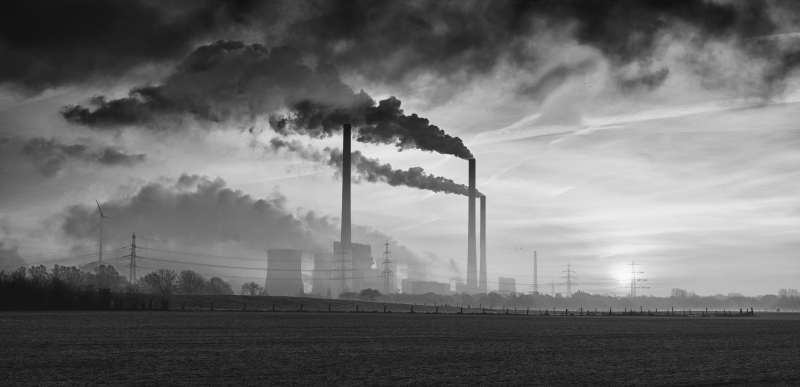
The imperative to modernize and stabilize North America’s electricity grid is creating significant, often overlooked, investment opportunities within the traditional oil and gas sector. A recent industry report highlights the strategic potential of repowering retired coal plant sites, a tactical maneuver poised to dramatically accelerate the deployment of clean, dispatchable power capacity. By leveraging existing infrastructure, including crucial interconnection access, this approach bypasses the notorious delays of greenfield projects and significantly de-risks permitting. For savvy investors, this isn’t merely an environmental play; it represents a pragmatic bridge to a more resilient grid, unlocking hidden value and substantial upside in the energy transition.
The Urgent Case for Natural Gas Repowering
The energy transition narrative often focuses on revolutionary new technologies, yet the immediate challenge facing our grid is time. Grid operators and policymakers alike are “short on time” to reintroduce firm capacity without lengthy waits in interconnection queues. This urgency makes natural gas repowering the fastest and most proven lever available. By converting existing coal-fired facilities to natural gas, companies can utilize established sites, transmission lines, and fuel delivery infrastructure, dramatically shortening project timelines and reducing capital expenditure compared to building entirely new plants.
New research identifies a substantial 14.6 gigawatts (GW) of U.S. coal capacity with high potential for natural gas repowering. Crucially, many of these top-scoring sites are strategically located near existing natural gas pipelines and distribution networks, further streamlining deployment. For investors, this represents a tangible pathway to deploy capital into projects with relatively quicker returns and lower regulatory hurdles. As OilMarketCap.com readers frequently ask about the future price of oil, such as “what do you predict the price of oil per barrel will be by end of 2026?”, it’s important to differentiate. While crude oil markets can be volatile, the demand for natural gas as a reliable, flexible power generation fuel provides a more stable, foundational demand base for energy companies involved in gas production and infrastructure. This demand for grid stability offers a compelling investment thesis, even amidst broader energy market fluctuations.
Strategic Portfolios and Current Market Dynamics
The investment landscape around repowering is particularly attractive for operators holding large, retired coal portfolios. The analysis indicates that several companies possess portfolios exceeding 10 GW of retired assets, presenting immense opportunities for redevelopment. The valuation potential for these portfolios is significantly enhanced where interconnection queue costs align favorably with available capacity, effectively turning legacy liabilities into future-proof assets. This focus on infrastructure reuse isn’t just a cost-saving measure; it’s a political and logistical shortcut to growing 24/7 low-carbon power, a critical component of national energy security.
Against this backdrop, the broader energy market continues to exhibit significant dynamism. As of today, Brent Crude trades at $90.38, reflecting a notable 9.07% decline within the day, with a range stretching from $86.08 to $98.97. Similarly, WTI Crude stands at $82.59, down 9.41%, having fluctuated between $78.97 and $90.34. Gasoline prices are also feeling the pressure, currently at $2.93, a 5.18% drop for the day. This daily volatility underscores a broader trend: Brent has seen an 18.5% decline from $112.78 on March 30th to $91.87 on April 17th. Such significant swings in the crude market often prompt investors to seek more stable, predictable returns. Investments in repowering projects, particularly those leveraging natural gas for reliable power generation, offer a compelling counter-cyclical hedge against the inherent volatility of global crude prices, providing consistent revenue streams tied to electricity demand rather than speculative commodity movements.
Beyond Gas: Long-Term Potential in Geothermal and Nuclear
While natural gas offers immediate solutions, the long-term energy transition also presents opportunities for advanced technologies. Enhanced Geothermal Systems (EGS) and nuclear power, though facing distinct siting challenges, offer greater long-term upside for repowering initiatives. EGS, for instance, shows strong potential in regions characterized by low energy costs and favorable geological conditions. A handful of operators are positioned well for early EGS deployment, holding project sites with suitability-weighted capacities exceeding 3 GW. This technology promises continuous, baseload clean power, making it a compelling option for diversification.
Nuclear repowering opportunities are concentrated among operators with facilities located in high-value power markets and regions poised for strong growth. In some portfolios, suitability-weighted capacities for nuclear repowering exceed 10 GW, indicating substantial long-term upside for companies willing to navigate the unique regulatory and capital requirements of nuclear energy. These advanced solutions, while requiring longer development timelines and higher initial capital, offer the promise of ultra-low-carbon, dispatchable power that is essential for a truly resilient and clean grid. Savvy investors are already scrutinizing portfolios for these longer-horizon plays, understanding that strategic diversification across immediate gas solutions and future-proof technologies is key to capitalizing on the evolving energy landscape.
Navigating Future Shifts: Upcoming Events and Investor Focus
For investors keen on these repowering opportunities, understanding the broader market context and upcoming events is crucial. The strategic importance of gas-fired repowering, for example, is influenced by global energy supply decisions. Key events in the coming days, such as the OPEC+ JMMC Meeting on April 18th and the Full Ministerial Meeting on April 19th, will impact global crude production quotas and, by extension, the economic calculus for all fossil fuels. While these directly affect crude oil, they indirectly shape the competitiveness of natural gas as a power generation fuel, influencing investor sentiment and project financing. For example, readers frequently ask, “What are OPEC+ current production quotas?”, demonstrating a keen awareness of how these decisions ripple through the entire energy sector.
Closer to home, weekly data releases such as the API Weekly Crude Inventory (April 21st, 28th), the EIA Weekly Petroleum Status Report (April 22nd, 29th), and the Baker Hughes Rig Count (April 24th, May 1st) provide critical insights into domestic supply, demand, and drilling activity for both oil and natural gas. These reports offer vital intelligence on the availability and pricing of natural gas, directly impacting the profitability and attractiveness of gas-fired repowering projects. Investors looking to identify companies poised to benefit from this trend, much like those inquiring “How well do you think Repsol will end in April 2026,” should closely monitor these data points. The successful execution of repowering strategies relies heavily on a favorable natural gas supply and price environment, making these upcoming events essential for accurate market forecasting and strategic investment decisions.


