Navigating the Electric Current: Why EV Charging Growth, “For Now,” Signals Oil Upside
The energy transition narrative often paints a picture of relentless, immediate headwinds for traditional hydrocarbon markets. Yet, a closer examination of ground-level developments, even within the burgeoning electric vehicle (EV) sector, reveals a more nuanced reality for oil and gas investors. While the expansion of EV charging infrastructure continues at a significant pace, its current trajectory suggests a longer, more stable runway for petroleum demand than many anticipate, creating a compelling “for now” upside for oil assets.
Contrary to the notion of a swift, disruptive overthrow of fossil fuels, recent data on EV charging network expansion, while impressive in its own right, underscores the sheer scale of the energy infrastructure required for a complete transition. The second quarter of the year witnessed record growth in the installation of new EV charging ports and stations across the U.S. Industry research projects that approximately 16,700 fast-charge ports will be operational by year-end, a staggering 2.4 times the level observed nationwide in 2022. Should this rapid deployment continue, the number of fast-charging ports in the U.S. could surpass 100,000 by 2027, climbing from 59,694 ports recorded at the close of June. Overall, the total count of EV charging stations increased to 11,687 by the end of Q2, up from 10,761 in the first quarter.
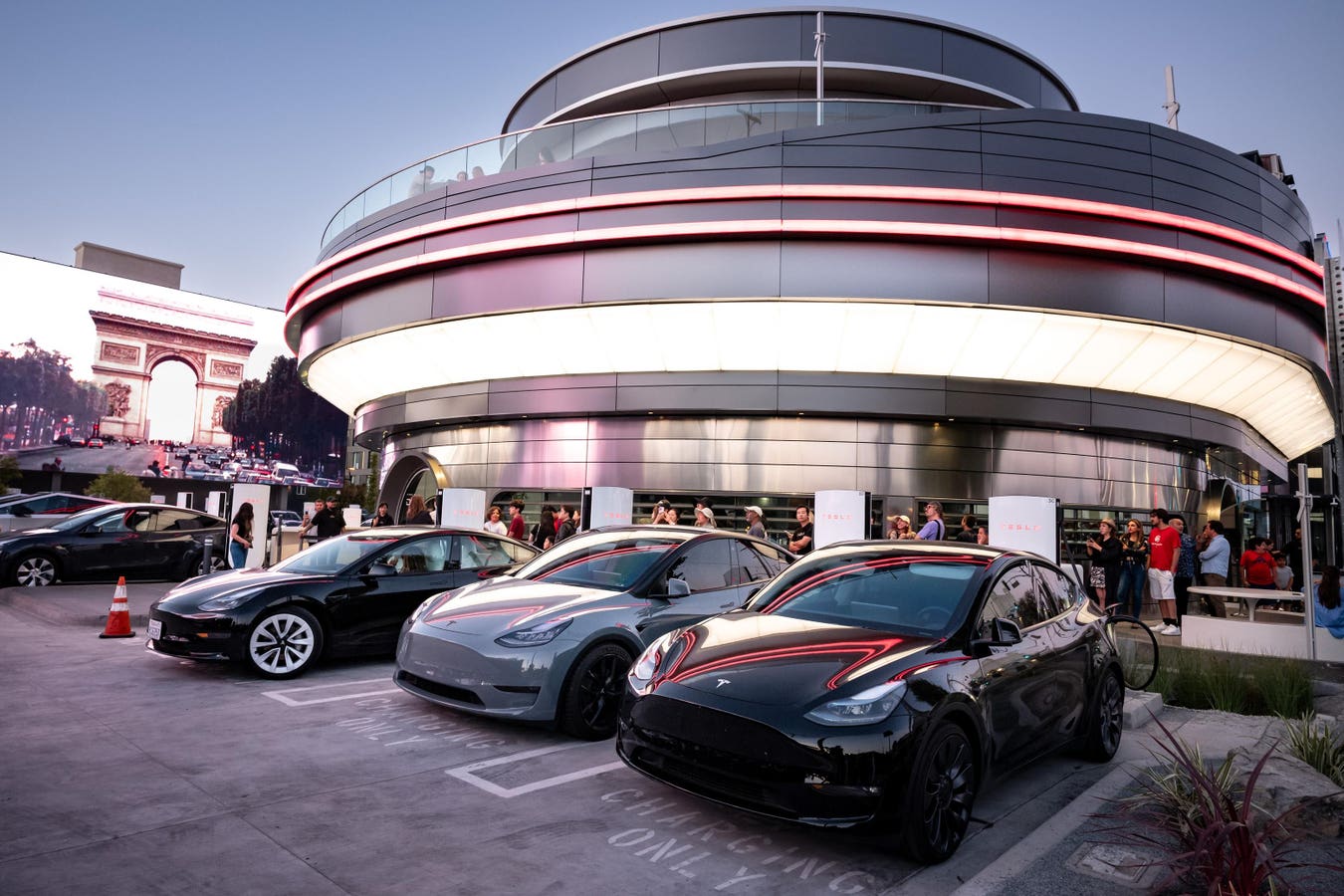
Even with shifts in federal policy—specifically, a notable pullback in direct governmental support for EV charging initiatives—industry estimates still forecast a robust 20% annual increase in new ports for the current year. This sustained private sector momentum is a testament to the underlying growth in EV adoption. Furthermore, charging costs have seen a modest dip, moving from 50 cents per kilowatt-hour (kWh) a year ago to 48 cents/kWh today. This slight reduction is attributable to intensified market competition and the introduction of more dynamic pricing models, including discounts for off-peak charging. Even market leader Tesla, operating the largest U.S. charging network, continues to innovate, exemplified by the opening of its Hollywood “Diner” in July, featuring a remarkable 80 Supercharger stations—the largest urban charging hub in the country—alongside amenities designed to enhance the charging experience.
However, the crucial perspective for oil and gas investors lies in the context of these figures. While thousands of new charging ports represent substantial progress for the EV ecosystem, they remain a fractional component when compared to the vast existing infrastructure supporting internal combustion engine (ICE) vehicles. The global fleet of ICE vehicles numbers well over a billion, serviced by millions of traditional fuel pumps. Replacing this gargantuan system, and the energy it consumes, is a multi-decade endeavor, not a short-term sprint. Each new charging port, while vital for EV users, adds incrementally to a network that is still playing catch-up to the incumbent.
Autonomous Driving: Waymo’s Calculated Expansion vs. Tesla’s Ambitions
Beyond individual EV ownership, the emergence of autonomous ride-sharing fleets presents another facet of the electric transition. Waymo, the leading U.S. robotaxi operator and an Alphabet Inc. subsidiary, is steadily expanding its footprint. The company recently announced plans to launch commercial rides in Dallas in 2026, marking its second market in Texas. This expansion, which includes a partnership with Avis for fleet maintenance, follows existing operations in Phoenix, San Francisco, Los Angeles, Austin, and Atlanta, with future launches slated for Miami and Washington, D.C., next year. Waymo’s methodical approach contrasts sharply with Tesla’s more ambitious, yet still largely in-testing, claims regarding full self-driving capabilities. Alphabet CEO Sundar Pichai even hinted that Waymo could soon triple its operational cities, citing Dallas’s potential for improving road safety in a city with a high traffic fatality rate among U.S. cities over one million people.
For oil market participants, Waymo’s calculated expansion, while significant for autonomous technology, further illustrates the gradual nature of energy shifts. Even fully electric robotaxi fleets, initially deployed in select urban centers, will constitute a tiny fraction of total vehicle miles traveled globally for the foreseeable future. The widespread adoption of autonomous vehicles, irrespective of their powertrain, faces regulatory hurdles, technological refinements, and consumer acceptance challenges that will extend their full market penetration over many years. This phased rollout provides a continued buffer for demand in traditional transportation fuels.
Investment Outlook: The Enduring Strength of Petroleum
The “for now” aspect of EV growth is central to the investment thesis for oil and gas. Reduced federal incentives for EV charging infrastructure, while not halting growth, certainly moderates its pace from what it could have been under more aggressive policy support. This dynamic, coupled with the inherent inertia of existing energy systems, means that the displacement of petroleum demand by electricity will be a prolonged process, not a sudden event.
For investors in upstream exploration and production, midstream infrastructure, and downstream refining, this translates into a sustained period of robust demand. Global oil consumption continues to climb, driven by emerging economies, air travel, heavy industry, and the vast existing fleet of ICE vehicles that will remain on roads for years, if not decades. Refining margins, often a bellwether for product demand, reflect this underlying strength. Capital allocation towards new fossil fuel projects, particularly those focused on efficiency and lower-carbon intensity production, remains strategically sound in this environment.
In conclusion, while the advancement of EV charging networks and autonomous electric vehicle fleets is undeniable, their current scale and rate of expansion do not pose an immediate existential threat to the global oil market. The “for now” reality is one where petroleum continues to be the bedrock of global energy, powering transportation, industry, and critical supply chains. Savvy oil and gas investors understand that the energy transition is a marathon, not a sprint, and that for the foreseeable future, the market dynamics point towards continued, resilient demand for crude oil and natural gas assets.