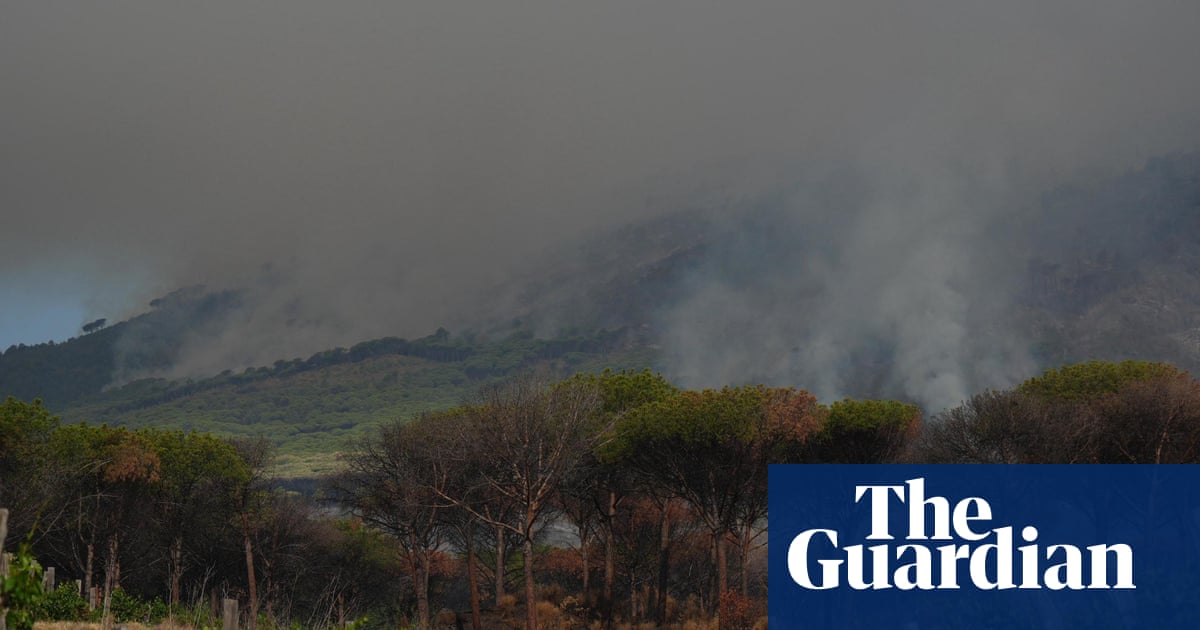
The intensifying wildfires across southern Europe, notably around Mount Vesuvius in Italy and the Aude region of France, are more than just local environmental tragedies. While firefighters battle blazes stretching kilometers wide, consuming vast tracts of woodland and threatening communities, these events serve as potent reminders of escalating climate risks that can subtly, yet significantly, ripple through global energy markets. For oil and gas investors, understanding how localized ecological disasters translate into broader supply concerns, infrastructure vulnerabilities, and market volatility is crucial for navigating an increasingly complex investment landscape. This analysis delves into the immediate market reactions, potential infrastructure impacts, and forward-looking catalysts that shape our outlook for crude and refined products.
Immediate Market Dynamics and Price Signals
The specter of widespread disruptions, even if regional, can quickly influence market sentiment. As of today, Brent crude is trading at $99.6, marking a notable increase of 4.92% within the day’s range of $94.42 to $99.73. Similarly, WTI crude has seen a significant jump to $91.52, up 3.85%, reflecting an intraday range of $87.32 to $91.58. These upticks come after a period of downward pressure, where Brent crude saw a decline of over 12% in the last 14 days, falling from $108.01 on March 26 to $94.58 just yesterday. The price of gasoline has also responded, climbing to $3.08, a 2.66% increase today alone.
While the fires in Italy and France do not directly impact major oil production facilities, their occurrence amidst a broader heatwave highlights the fragility of energy supply chains. Perceived risks to European refining capacity, logistical bottlenecks for refined products, or even broader economic disruptions could be contributing to this bullish reversal in crude prices. Investors are keenly aware that extreme weather events, though localized, can exacerbate existing supply tightness or create new vulnerabilities in an interconnected market. The current price action indicates a market sensitive to any signal that could tighten supply or disrupt demand equilibrium, even if the primary impact is indirect.
European Infrastructure Vulnerabilities and Refined Product Risks
The ongoing wildfires in southern Europe, particularly those near populated and industrial zones at the foot of Mount Vesuvius and across the Aude department in France, underscore inherent infrastructure vulnerabilities in a warming climate. While no major oil and gas production or refining assets have been directly impacted by these specific blazes, the broader context of persistent heatwaves, drought, and high winds in the region presents a tangible risk. European refining capacity, concentrated in coastal areas and river systems, relies on stable power grids, water availability for cooling, and unimpeded transportation networks for crude intake and product distribution. Fires, even if geographically distant from a refinery, can strain local emergency services, disrupt power transmission, or create logistical chokepoints for road and rail transport of fuels.
The destruction of hundreds of hectares of woodland and the closure of areas for safety reasons, as seen in the Vesuvius national park, illustrate the immediate operational challenges. Should such intense fire activity persist or spread to areas with critical energy infrastructure, the implications for refined product supply—including gasoline and diesel—could be significant. Europe’s reliance on a complex network of pipelines, ports, and storage facilities means that disruptions in one area can have cascading effects. Investors must consider these increasingly frequent extreme weather events as a non-trivial factor in assessing the operational continuity and supply stability of the continent’s energy sector, translating into potential volatility for refined product margins.
Forward-Looking Catalysts and Investor Sentiment
The current market environment, influenced by regional events like the European wildfires, is poised for further definition by several upcoming global energy catalysts. Investors are actively seeking a clearer picture, with many asking for a base-case Brent price forecast for the next quarter and the consensus 2026 Brent outlook. Such forecasts are increasingly challenging to pin down given the layers of uncertainty, including the growing frequency of climate-related disruptions.
Crucially, the next two weeks bring a flurry of key events that will shape investor sentiment. The OPEC+ Joint Ministerial Monitoring Committee (JMMC) is scheduled for April 18, followed by the full OPEC+ Ministerial Meeting on April 20. These gatherings will provide critical insights into producer nations’ strategies regarding supply levels amidst geopolitical tensions and evolving demand dynamics. Any decision on production quotas will have an outsized impact on crude prices. Additionally, the Baker Hughes Rig Count reports on April 17 and April 24 will offer a snapshot of North American drilling activity, hinting at future supply trends. Meanwhile, the API Weekly Crude Inventory reports on April 21 and April 28, coupled with the EIA Weekly Petroleum Status Reports on April 22 and April 29, will provide essential data on U.S. stock levels, a key barometer for global supply-demand balance. These upcoming events, against a backdrop of increasing climate-induced supply risks, will be pivotal for investors seeking to refine their short- and medium-term price expectations and manage exposure in a volatile market.
Investment Implications in a Climate-Challenged Environment
The increasing frequency and intensity of wildfires, heatwaves, and other extreme weather events globally, directly linked to human-caused climate breakdown, are fundamentally altering the risk profile of energy investments. While the immediate focus might be on crude and refined product prices, the long-term implications extend to energy security, infrastructure resilience, and capital allocation strategies. For investors, these events underscore the importance of integrating climate risk into their fundamental analysis, moving beyond traditional geopolitical and economic factors.
Portfolio diversification becomes paramount, considering exposure to regions and assets with varying degrees of climate vulnerability. Companies with robust climate adaptation strategies, resilient supply chains, and a focus on reducing operational emissions may present more attractive long-term prospects. Furthermore, the potential for increased insurance costs, regulatory pressures, and shifts in consumer behavior due to climate impacts will increasingly factor into asset valuations. The wildfires in Europe serve as a stark reminder that physical climate risks are not theoretical; they are present, intensifying, and demand a proactive, nuanced approach from energy investors navigating a rapidly changing global landscape.


