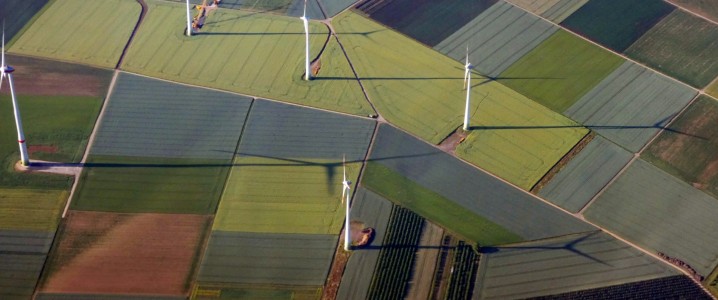
The ambitious push for renewable energy in Europe has hit a significant snag, one that paradoxically strengthens the investment thesis for traditional oil and gas. Recent data reveals that several major European economies, including Spain, Germany, France, and Sweden, have been forced to curtail a record amount of wind power generation. This isn’t due to a lack of wind, but rather the inability of existing grid infrastructure to handle the surging, intermittent supply. For sophisticated investors, this situation underscores the enduring need for reliable, dispatchable energy sources and the substantial, long-term capital required to modernize energy grids, creating a unique opportunity in a market often viewed through a purely ‘transition’ lens.
Europe’s Grid Bottleneck: A Wake-Up Call for Energy Security
The reality on the ground in Europe is stark: the pace of renewable energy deployment has outstripped grid capacity. Between January and September, countries integral to Europe’s energy mix saw significant increases in wind power curtailment. Spain, for instance, experienced a jump to a 12.2% curtailment rate from 9% the previous year. France’s rate climbed to 5.3% from 3.8%, Germany’s edged up to 4.9% from 4.5%, and south Sweden’s reached 2.4%, up from 2.0% year-on-year. Beyond the EU, offshore wind turbines in Scotland were reportedly switched off 37% of the time during the first half of the year, leading to 4 terawatt-hours of unproduced electricity. These figures are not trivial; they represent wasted clean energy and highlight a critical vulnerability in the continent’s energy infrastructure. The European Commission itself has acknowledged the problem, estimating that a staggering $2.36 trillion to $2.7 trillion is needed for grid upgrades by 2050. This colossal investment timeline suggests that the reliance on stable, dispatchable power sources, predominantly natural gas, will persist far longer than many initial energy transition narratives suggested, offering a clear runway for targeted oil and gas investments.
Crude Markets React: Opportunity Amidst Price Swings
Against this backdrop of European grid challenges, global crude markets are experiencing their own dynamics, presenting a complex but navigable landscape for investors. As of today, Brent Crude trades at $90.38, reflecting a notable 9.07% decline. WTI Crude follows a similar trajectory, priced at $82.59, down 9.41%, while gasoline stands at $2.93, a 5.18% drop. This recent downward pressure is significant; our proprietary data shows Brent Crude has fallen by $22.4, or 19.9%, in just the last 14 days, from $112.78 on March 30th to its current level. Such volatility naturally leads many of our readers to ask: “What do you predict the price of oil per barrel will be by the end of 2026?” While a precise prediction is challenging, the fundamental drivers remain key. The European grid stability issue, for example, quietly underpins sustained demand for natural gas as a backup fuel for electricity generation, indirectly supporting the broader hydrocarbon complex. For integrated energy companies like Repsol, a name frequently queried by our readers (“How well do you think Repsol will end in April 2026?”), a diversified portfolio that includes refining and petrochemicals, alongside upstream natural gas production, could prove resilient in an environment where both crude prices fluctuate and natural gas demand for grid stability remains robust.
Navigating Upcoming Catalysts: OPEC+ and Inventory Reports
For investors positioning themselves in the current environment, understanding the immediate catalysts is paramount. The coming fortnight is packed with critical energy events that will undoubtedly influence market sentiment and price action. Our calendar highlights the OPEC+ Joint Ministerial Monitoring Committee (JMMC) Meeting on April 19th, swiftly followed by the full OPEC+ Ministerial Meeting on April 20th. These gatherings are crucial, especially given the recent downturn in crude prices. Investors are keenly asking about “OPEC+ current production quotas” for good reason; any adjustments to output levels could significantly rebalance the market. A decision to deepen cuts or extend existing ones could provide a floor for prices, while inaction might signal a willingness to let market forces play out, potentially leading to further declines. Beyond OPEC+, weekly inventory data from the American Petroleum Institute (API) on April 21st and 28th, and the official Energy Information Administration (EIA) Weekly Petroleum Status Report on April 22nd and 29th, will offer vital insights into U.S. supply and demand dynamics. High inventory builds could exacerbate price weakness, while drawdowns might signal strengthening demand. Finally, the Baker Hughes Rig Count on April 24th and May 1st provides a forward-looking indicator of future production activity. Savvy investors will be tracking these events closely, interpreting them through the lens of global energy stability concerns, including Europe’s ongoing grid challenges, to inform their strategic decisions.
Investment Implications: The Long Road for Oil and Gas
The European experience with renewable curtailment offers a compelling, albeit counter-intuitive, argument for the continued relevance and investment appeal of the oil and gas sector. While the long-term trajectory towards a lower-carbon future is clear, the practicalities of grid modernization and ensuring energy security mean that hydrocarbons, particularly natural gas, will play a critical bridging role for decades. The estimated $2.36 trillion to $2.7 trillion needed for grid upgrades is a massive undertaking, characterized by long lead times and potential delays. This creates an extended window of opportunity for energy companies with robust natural gas assets and strong balance sheets. Investors should consider companies that are not only efficient producers but also strategically positioned to capitalize on sustained demand for reliable power generation. Furthermore, the recent dip in crude prices, while challenging in the short term, could present an attractive entry point for those with a long-term view, especially for companies involved in essential infrastructure, refining, or diversified energy portfolios. The path to a fully renewable energy system is proving to be a complex, capital-intensive, and often bumpy one, ensuring that the foundational role of oil and gas in global energy supply remains firmly in place for the foreseeable future.


