The Strategic Pivot: From Trade Dependence to Investment Partnership
Pakistan finds itself at a critical juncture, navigating significant economic constraints that necessitate a fundamental recalibration of its key international relationships. Historically, the European Union has served as a bedrock of Pakistan’s trade strategy, standing as its largest export destination and its second-largest trading partner after China. In 2024, the total trade volume between the two blocs reached a substantial $12.1 billion, accounting for approximately 13.6% of Pakistan’s overall trade. The enduring Generalised Scheme of Preferences Plus (GSP+) has, for over a decade, granted Pakistan tariff-free access to a majority of EU tariff lines, significantly boosting export growth, particularly in the vital textile sector. Indeed, nearly 27.6% of Pakistan’s total exports find their way to the EU, while imports from Europe remain comparatively modest at $3.2 billion, positioning the EU as Pakistan’s sixth-largest import source.
However, this stable yet trade-heavy dynamic has proven insufficient to catalyze the deep industrial transformation and substantial capital inflows essential for broader economic stabilization. Savvy investors are increasingly evaluating whether this relationship can evolve beyond mere market access to foster a more structural role in Pakistan’s economic recovery, with a particular focus on critical sectors like energy infrastructure. The upcoming EU-Pakistan Business Forum represents a concerted effort to address this imbalance, signaling a strategic pivot towards institutional investment rather than solely trade-driven engagement.
Geopolitical Realignment and Investment Signaling
Pakistan’s recent diplomatic overtures, including its proactive engagement around the Iran crisis, are not simply about regional facilitation. They represent a calculated strategy to enhance global relevance and translate diplomatic visibility into tangible economic opportunities. This drive for increased international access is meticulously designed to attract foreign direct investment, rebuild investor confidence, and underpin a much-needed economic rebound. Our proprietary reader intent data reveals a keen investor interest in geopolitical stability, with frequent queries regarding “OPEC+ members over-producing” and the broader implications of US-Iran negotiations for global energy markets.
The recent agreement between Israel and Lebanon to extend their ceasefire by three weeks, despite sporadic exchanges, alongside the ongoing—albeit stalled—US-Iran talks regarding sanctions relief, underscores the volatile geopolitical backdrop. Iran’s insistence on the US lifting its blockade of Iranian ports before a full ceasefire highlights the persistent challenges. For investors assessing long-term opportunities in Pakistan’s energy sector, regional stability, particularly concerning energy supply routes and the potential for cross-border projects, remains a paramount concern. Pakistan’s diplomatic efforts, if successful in de-escalating regional tensions, could significantly de-risk potential energy investments and enhance its appeal as a strategic hub for regional energy infrastructure.
Navigating Current Energy Market Volatility and Investment Horizons
The global energy market continues to present a complex and dynamic landscape for investors considering long-term commitments in developing economies. As of today, Brent Crude trades at $110.72 per barrel, reflecting a modest gain of 0.29% within a day range of $110.49 to $112.43. WTI Crude, meanwhile, stands at $104.59, experiencing a slight dip of 0.46% with a day range of $104.38 to $106.65. Gasoline prices are also on an upward trajectory at $3.63, reflecting a 0.55% increase, indicating broader inflationary pressures within refined products.
This immediate snapshot follows a significant upward trend for Brent, which has climbed from $99.36 on April 13, 2026, to $111.7 on April 30, 2026 – a robust increase of $12.34, or 12.4%, over the past fourteen days. Such sustained price appreciation directly impacts energy-importing nations like Pakistan, exacerbating balance of payments pressures and underscoring the critical need for diversified, resilient, and locally sourced energy infrastructure. Our proprietary reader intent data shows sustained investor interest in “2026 weekly trend for crude oil” and requests for a “base-case Brent price forecast for next quarter.” This indicates a strong focus on price stability and predictability, which is crucial for European firms evaluating multi-year energy projects in Pakistan, from LNG terminals to renewable energy ventures. The current elevated price environment, while challenging for importers, simultaneously makes indigenous energy development and efficiency projects more attractive for investors seeking higher returns.
Upcoming Catalysts and the Path Forward for Energy Investment
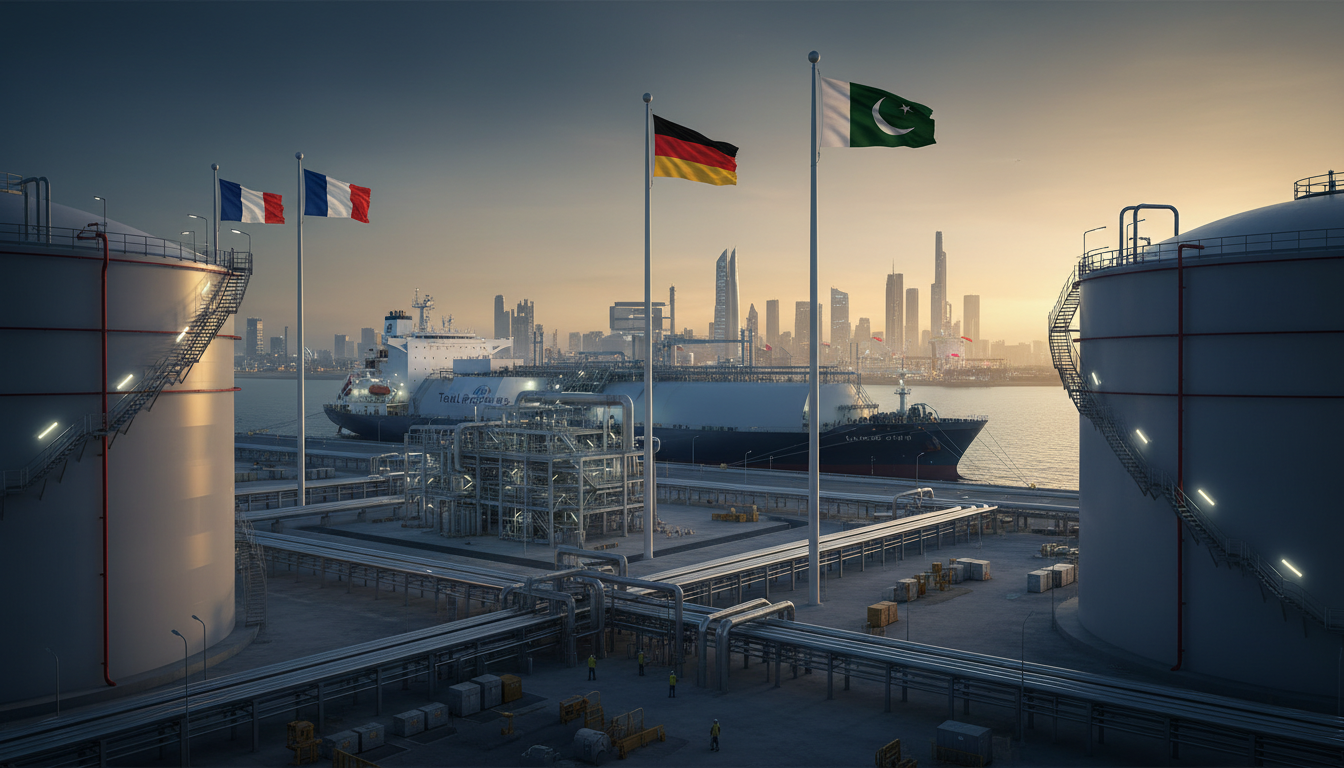
The strategic shift towards deeper investment will be prominently featured at the EU-Pakistan Business Forum, scheduled for April 28-29, 2026, in Islamabad. A key outcome of this forum is the launch of the EU–Pakistan Business Network, designed to institutionalize engagement with European firms already operating in the country and attract new capital. This initiative aims to foster sustained collaboration, moving beyond transactional trade towards a more integrated economic partnership that prioritizes capital deployment in critical sectors such as energy.
Looking ahead, investors will closely monitor a series of critical energy events that could influence global supply-demand dynamics and, consequently, the appetite for new investments. The upcoming Baker Hughes Rig Count reports on May 1st and May 8th will provide granular insights into drilling activity, while the EIA Short-Term Energy Outlook on May 2nd and the IEA Oil Market Report on May 12th will offer crucial forecasts on global oil supply, demand, and inventory levels. Weekly updates from the API and EIA on crude inventories (May 5th, 6th, 12th, 13th) will further refine the market picture. These reports are vital for investors seeking to build a “base-case Brent price forecast for next quarter,” a question frequently posed by our readers. A clearer understanding of future price trajectories and market stability will directly impact the confidence of European investors considering long-term commitments in Pakistan’s energy sector, from upstream exploration to renewable energy projects and infrastructure development. The success of the Business Forum will hinge on its ability to align these global energy trends with Pakistan’s specific investment opportunities.
Investor Focus: De-risking and Diversifying Pakistan’s Energy Future
Investors are keen to understand how Pakistan plans to de-risk its economy and create an attractive environment for foreign capital, especially given the current economic constraints. The transition from a GSP+-driven trade model to one focused on direct investment requires significant structural reforms and a clear, predictable regulatory framework. European investors, accustomed to robust legal and and operational certainty, will be scrutinizing the details of the EU–Pakistan Business Network and the specific proposals emerging from the forum. The focus is not just on traditional oil and gas. While inquiries about “WTI crude in XM trade” highlight continued interest in conventional energy, the broader shift in global energy policy towards sustainability means European investors will likely prioritize renewable energy projects, energy efficiency initiatives, and critical infrastructure for LNG imports or gas pipelines.
Pakistan’s energy mix, currently heavily reliant on imported fossil fuels, presents both a challenge and a significant opportunity for investors seeking to capitalize on the country’s vast untapped renewable potential. Ultimately, the success of this expanded European engagement will be measured by its ability to foster real capital inflows, diversify Pakistan’s energy matrix, and build a more resilient economy. For sophisticated oil and gas investors, this means identifying projects with strong returns, clear regulatory support, and a pathway to long-term sustainability, even amidst the backdrop of evolving crude oil prices and ongoing geopolitical shifts.