The global energy landscape is undergoing a profound transformation, with increasing investor focus shifting towards the critical minerals underpinning the energy transition. In a significant move, Euro Manganese has cemented its position within this evolving ecosystem by signing a long-term offtake term sheet with UK-based Integrals Power. This collaboration, centered on the supply of high-purity manganese sulphate monohydrate (HPMSM) from Euro Manganese’s Chvaletice Manganese Project in the Czech Republic, represents a strategic alignment with the burgeoning demand for sustainable battery materials. For oil and gas investors navigating the complexities of energy diversification, this deal highlights the imperative of understanding the interconnectivity between traditional energy markets and the rapid growth of the clean energy sector, where secure supply chains for critical inputs are paramount.
Strategic Expansion in Battery Materials
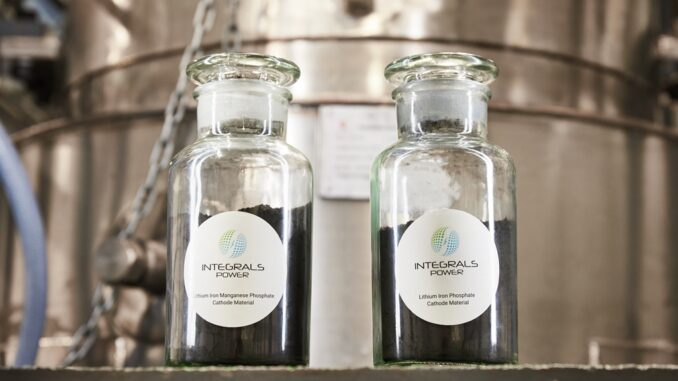
Euro Manganese’s agreement with Integrals Power is a clear statement of intent regarding its role in the next generation of battery technology. The HPMSM supplied under this deal is specifically earmarked for Integrals Power’s production of lithium manganese iron phosphate (LMFP) cathode materials. These advanced materials are not just buzzwords; they are foundational components for high-growth applications spanning electric vehicle batteries, large-scale grid energy storage solutions, and even defense technologies. The strategic importance of this partnership cannot be overstated, as it embeds Euro Manganese deeper into the supply chain for crucial energy transition infrastructure. With a current market valuation of approximately $28.56 million, this move is poised to significantly enhance the company’s profile and attractiveness to investors looking for exposure to the foundational elements of a decarbonized economy, offering a distinct investment thesis compared to conventional energy plays.
Navigating Volatility: Critical Minerals vs. Crude Markets
While the long-term outlook for critical minerals like high-purity manganese appears robust due to sustained demand from the energy transition, traditional oil markets continue to exhibit significant volatility. As of today, Brent crude trades at $93.22, marking an 8.8% decline over the past 14 days from its price of $102.22. This persistent fluctuation in crude prices underscores the inherent market dynamics that traditional oil and gas investors constantly monitor. OilMarketCap.com’s proprietary reader intent data further highlights this focus, revealing a strong reader interest in building base-case Brent price forecasts for the next quarter and year, alongside inquiries into the performance of Chinese teapot refineries and Asian LNG spot prices. This contrasts sharply with the long-term contractual stability sought by investors in the critical minerals space. The seven-year initial supply term, with an option to extend for an additional four years, provides remarkable operational clarity and reinforces the strategic importance of stable supply chains in the battery materials sector. This divergence in market characteristics positions critical mineral deals like Euro Manganese’s as a compelling option for investors seeking long-duration assets with predictable revenue streams, buffering against the more immediate and unpredictable swings in commodity prices.
Upcoming Milestones and Future Growth Trajectory
The agreement between Euro Manganese and Integrals Power includes a crucial joint testing program scheduled to commence in the third quarter of 2025. This program is designed to rigorously assess the compatibility and performance of Euro Manganese’s HPMSM within Integrals Power’s advanced cathode material production processes. Successful validation from this testing phase will lead to the pre-qualification of the product as a reliable feedstock, laying the groundwork for deeper, long-term collaborations. This forward-looking approach to product integration and quality assurance is a hallmark of robust supply chain development in the high-tech materials sector. While the battery materials sector meticulously plans for multi-year supply chains and product validation, traditional oil markets remain acutely sensitive to immediate geopolitical and economic developments. For instance, upcoming events such as the Baker Hughes Rig Count on April 17th and 24th, the OPEC+ JMMC and Full Ministerial meetings on April 18th and 20th, and the regular API and EIA weekly inventory reports on April 21st, 22nd, 28th, and 29th, will dictate short-term crude price movements and investor sentiment in the conventional energy space. This dichotomy highlights the different investment horizons and risk profiles that investors must consider when allocating capital between established fossil fuels and emerging energy transition materials.
Investment Implications for the Decarbonization Journey
This long-term offtake agreement significantly bolsters Euro Manganese’s strategic roadmap, aligning it firmly with the global decarbonization journey. By supplying high-purity, traceable, and low-carbon battery inputs, the company is positioning itself as a responsible and essential participant in the electric mobility and renewable storage ecosystems. Integrals Power’s focus on next-generation battery technologies, aimed at improving safety, sustainability, and cost-efficiency, further enhances the strategic value of this partnership, particularly for meeting rising demand across the UK and Europe. As Euro Manganese scales its commercial operations and builds on such critical partnerships, it is likely to attract closer attention from a broader spectrum of investors, including those monitoring ASX200 constituents with increasing clean energy exposure. For oil and gas investment analysts and portfolio managers, understanding these pivotal shifts in resource allocation and technological advancement is crucial. Investments in critical minerals like manganese are not merely ancillary; they are increasingly central to a diversified energy portfolio that seeks to capture value from both the enduring demand for traditional energy and the exponential growth of the new energy economy. This deal underscores the imperative for investors to evaluate companies not just on their current output, but on their strategic positioning within the transformative landscape of global energy.


