EUDR Rollout Stumbles: A New Variable for Global Commodity Investors
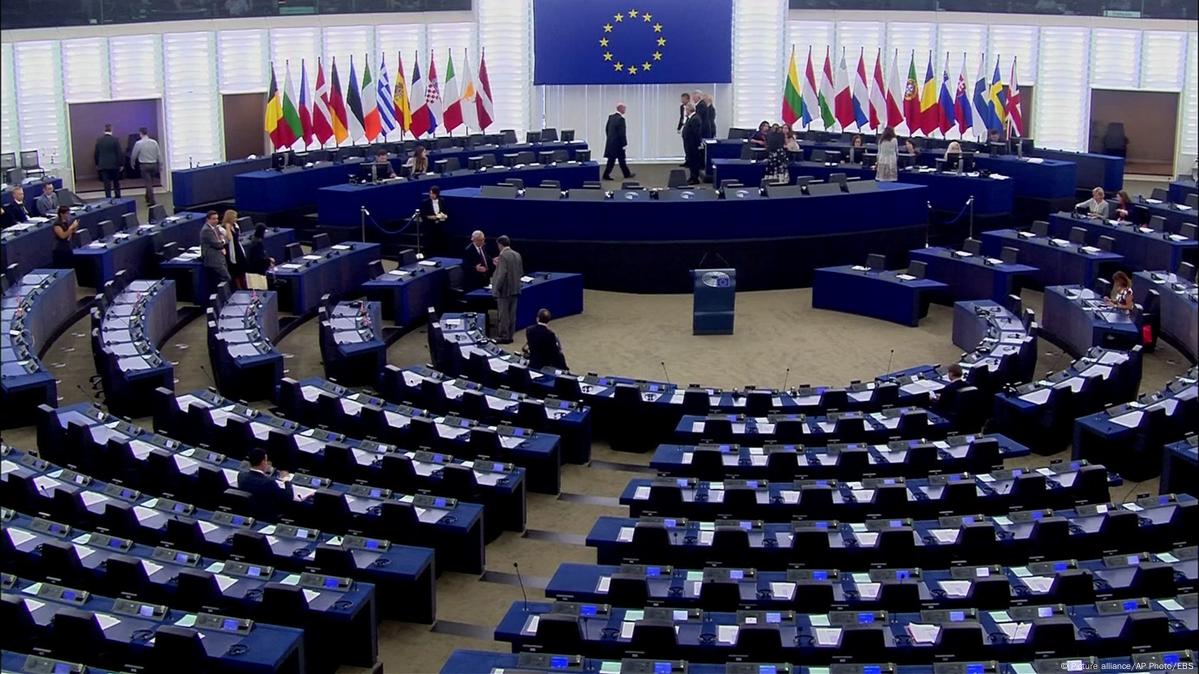
The European Union’s ambitious journey toward eliminating deforestation from its supply chains has hit a significant roadblock. In a move that sends ripples of regulatory uncertainty across global commodity markets, the European Parliament decisively rejected the EU Deforestation Regulation’s (EUDR) proposed country risk classification system. This outcome, driven by a 373-vote majority against the Commission’s methodology, creates immediate compliance headaches for businesses and introduces a fresh layer of complexity for investors tracking everything from agricultural products to the broader energy implications of global trade. For oil and gas investors, while seemingly distant from direct energy policy, the EUDR’s turbulence signals potential shifts in commodity flows, supply chain costs, and ultimately, demand dynamics that warrant close attention.
Regulatory Flaws Spark Supply Chain Apprehension
The core of the Parliament’s rejection lies in the perceived critical flaws within the Commission’s benchmarking system. Lawmakers, particularly from the influential European People’s Party (EPP), cited the use of outdated data and an overly simplistic three-tier risk structure (“low,” “standard,” or “high risk”) as insufficient to accurately reflect current land-use dynamics and forest degradation. This inadequacy is particularly glaring given that only four countries – Belarus, North Korea, Russia, and Myanmar – were designated “high risk,” while major deforestation hotspots like Brazil, Indonesia, and the Democratic Republic of Congo remained at “standard risk.” The EPP’s push for a “no risk” category for countries with stable or expanding forest areas underscores a fundamental disagreement on the regulation’s practical application.
For businesses, this regulatory limbo is more than just political wrangling; it’s a direct impediment to compliance. Importers and exporters dealing with key commodities such as palm oil, beef, timber, cocoa, coffee, rubber, and soy face immense due diligence challenges. Without a clear, fair, and data-driven risk classification, companies struggle to trace products back to their origin plots, verify deforestation-free status post-2020, and ensure compliance with local laws. This uncertainty translates into higher operational costs, potential trade disruptions, and increased financial risk exposure for entities throughout the supply chain. Indirectly, these pressures can impact the demand for shipping and logistics services, and even influence the prices of alternative fuels if certain commodity supply chains are significantly constrained or re-routed.
Market Resilience Amidst Policy Fog: What the Numbers Say
While the EUDR’s direct impact on crude oil prices is not immediate, the broader environment of regulatory uncertainty contributes to a cautious investor sentiment. As of today, Brent crude trades at $94.94, showing a modest daily gain of 0.16%, holding within a day range of $91-$96.89. WTI crude is similarly stable, priced at $91.42, up 0.15%, fluctuating between $86.96 and $93.3. This short-term stability, however, belies a recent softening in the market. Over the past two weeks, Brent has shed nearly 8.8%, retreating from $102.22 on March 25th to $93.22 on April 14th. This decline, influenced by broader macroeconomic trends and shifting supply-demand perceptions, highlights a market increasingly sensitive to any emerging uncertainty, whether geopolitical or regulatory.
Gasoline prices, meanwhile, offer a glimpse into resilient consumer demand, currently standing at $3, up 0.67% today within a $2.93-$3.03 range. This suggests underlying strength in some segments of the energy complex despite the broader crude retreat. However, any significant and prolonged disruption to global commodity supply chains resulting from a poorly implemented or delayed EUDR could eventually ripple through the global economy, affecting consumer purchasing power and, consequently, demand for transport fuels. Investors are keenly watching these interconnected dynamics, understanding that policy uncertainty, even in seemingly distant sectors, can contribute to volatility across the broader market landscape.
Investor Focus: Decoding Future Trajectories and Hidden Risks
Our first-party intent data reveals that investors are intensely focused on forecasting future market conditions, with a top query this week being “Build a base-case Brent price forecast for next quarter.” This desire for clarity underscores the challenge posed by evolving regulatory landscapes like the EUDR. While not a direct energy regulation, its profound impact on global trade flows for agricultural and timber products can indirectly influence demand for energy commodities. For instance, shifts in sourcing for palm oil (a key biofuel feedstock) or disruptions in global food supply chains could alter shipping patterns, processing demands, and even the competitive landscape for biofuels, all of which touch the oil and gas sector.
Furthermore, investor questions around specific regional demand drivers, such as “How are Chinese tea-pot refineries running this quarter?” or inquiries into “Asian LNG spot prices,” highlight a granular focus on demand centers and regional energy market dynamics. The EUDR’s potential to disrupt established commodity trade routes could lead to changes in logistics and processing, impacting everything from bunker fuel demand to regional energy pricing. Investors understand that an unstable regulatory framework for a significant trading bloc like the EU can create unforeseen hurdles, making accurate demand projections more complex and introducing an element of risk to even the most carefully constructed investment theses. The current situation demands a holistic view that integrates not just direct energy market signals but also the ripple effects of broader trade policy.
Looking Ahead: Navigating Critical Junctions and Policy Crossroads
The immediate future for the EUDR hinges on how the European Commission will respond to the Parliament’s rejection. Will a revised benchmarking system be proposed, perhaps incorporating the “no risk” category and updated data? The longer this uncertainty persists, the more challenging it becomes for businesses to prepare for the regulation’s eventual enforcement, potentially leading to significant trade friction and economic impact. Investors should closely monitor any communications from Brussels regarding a revised proposal or a new timeline, as these will be crucial indicators of the path forward.
Concurrently, the energy market has its own set of critical events on the horizon. The upcoming OPEC+ JMMC meeting on April 18th, followed by the Full Ministerial on April 20th, will provide crucial supply-side signals that could significantly influence crude prices in the short term. These decisions on production levels will undoubtedly take precedence in immediate market reactions, but the underlying regulatory environment continues to form a long-term backdrop. Additionally, the regular cadence of industry data, including the Baker Hughes Rig Count on April 17th and 24th, and the API and EIA Weekly Crude Inventory reports on April 21st, 22nd, 28th, and 29th, will offer ongoing insights into immediate supply-demand balances. While these directly address energy market fundamentals, the EUDR saga serves as a potent reminder that the global commodity landscape is interconnected, and investors must maintain vigilance over both direct market drivers and the broader, evolving regulatory frameworks that shape global trade and economic activity.


