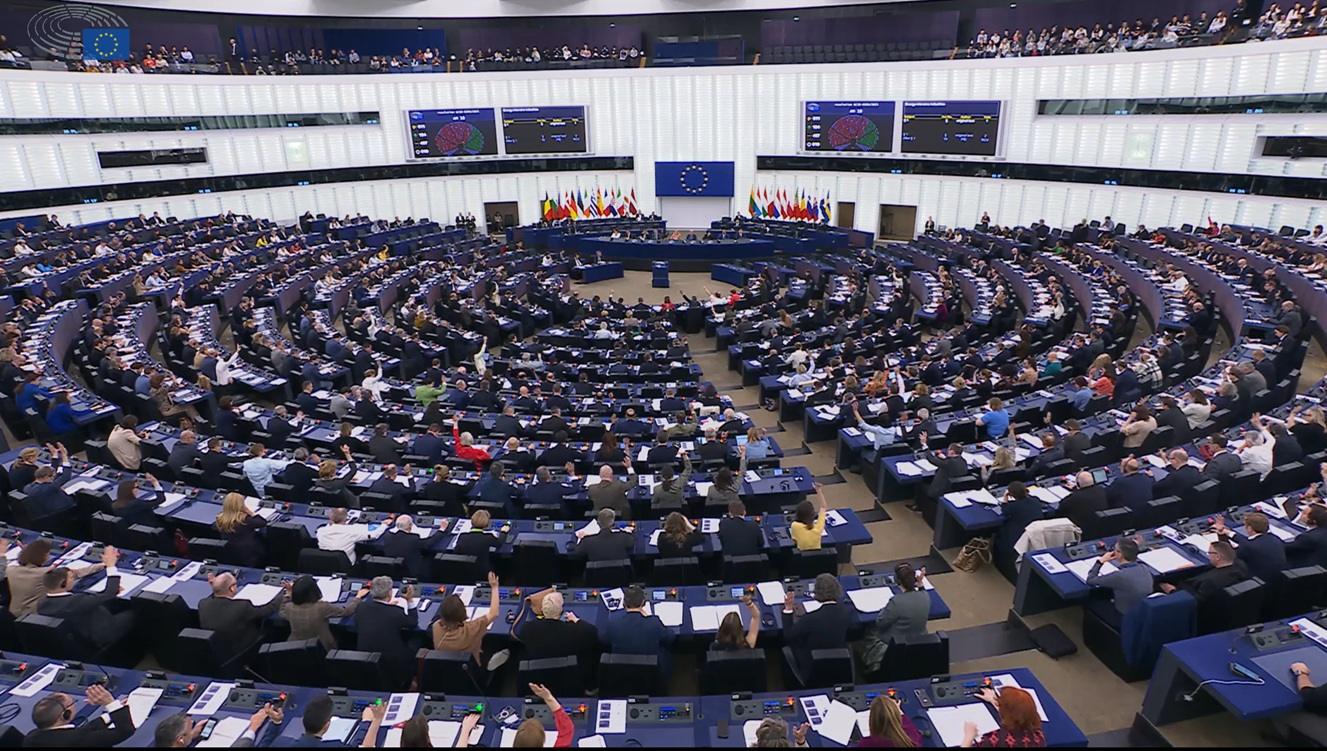
The European Parliament’s recent vote to reject a crucial benchmarking system for its Deforestation Regulation (EUDR) marks a significant, albeit indirect, development for global commodity markets. This move, which effectively delays or softens the immediate enforcement of stringent due diligence rules for a range of agricultural products, provides a temporary reprieve from escalating supply chain complexities. While directly impacting commodities like palm oil, soy, and timber, the wider implications resonate across the entire investment landscape, signaling potential shifts in capital allocation and risk perception. For oil and gas investors, understanding these broader commodity dynamics is essential, as the interplay of global supply risks, regulatory environments, and investor sentiment can subtly influence energy market trajectories and strategic decisions.
EUDR’s Benchmarking Rejection: A Short-Term De-Risking for Commodity Supply
On Wednesday, lawmakers in the European Parliament voted against the proposed benchmarking system for the EU Deforestation Regulation. This system was designed to categorize countries based on their deforestation risk levels, directly impacting the compliance burden for companies importing or exporting key commodities such as palm oil, beef, timber, coffee, cocoa, rubber, and soy, along with their derived products like leather or chocolate. The rejection stems from concerns raised by the European People’s Party (EPP), which argued the system utilized outdated data, failed to reflect current land-use dynamics, and offered an insufficient three-category risk classification (low, standard, high). This parliamentary decision effectively removes, for now, a layer of immediate regulatory complexity and potential supply disruption that had been looming over these crucial agricultural supply chains.
The EUDR, initially proposed in November 2021, aims to ban deforestation-linked products from the EU market, mandating companies to trace products back to their land of origin and prove no deforestation occurred after 2020. The initial agreement already delayed its applicability, setting December 2025 for large companies and June 2026 for smaller enterprises. This latest rejection of the benchmarking tool further complicates the path to full implementation, suggesting that the regulatory framework may be subject to further revisions or delays. For operators and traders in the affected sectors, this means a temporary reduction in the immediate threat of enhanced due diligence requirements, potentially easing logistical and cost pressures that would have been passed down the supply chain.
Crude Markets React to Broader Commodity Sentiment Amidst EUDR Uncertainty
While the EUDR rejection directly impacts agricultural commodities, the broader market sentiment around supply risk and regulatory intervention is keenly observed by energy investors. As of today, Brent Crude trades at $90.38, reflecting a significant 9.07% decline from its previous close, with a day range between $86.08 and $98.97. Similarly, WTI Crude stands at $82.59, down 9.41% within a day range of $78.97 to $90.34. This sharp dip in crude prices comes amidst a challenging period for the sector; Brent’s recent trajectory has been notably bearish, dropping from $112.78 on March 30th to $91.87 just yesterday, a significant 18.5% decline over the past 14 days. Gasoline prices have also followed suit, currently at $2.93, down 5.18% today.
This market volatility in energy is driven by a complex mix of factors, including global demand concerns, geopolitical developments, and inventory data. However, the softening of regulatory pressures in other commodity sectors, as seen with the EUDR, can contribute to a broader perception of easing supply-side risks across the commodity complex. While not a direct catalyst for crude, such developments can subtly influence investor appetite for risk assets and capital allocation. A less constrained agricultural supply chain, for instance, could theoretically free up capital for other investments or alleviate inflationary pressures that might otherwise curb economic activity and, by extension, energy demand. Investors are constantly weighing direct market signals against these wider, cross-commodity influences.
Navigating Long-Term Oil Outlook Amidst Regulatory Precedent
Our proprietary intent data reveals that investors are actively seeking clarity on long-term oil price trajectories, with common inquiries like “what do you predict the price of oil per barrel will be by end of 2026?” This underscores a persistent challenge: accurately forecasting energy prices requires a holistic view, integrating direct market fundamentals with geopolitical shifts and, crucially, the evolving regulatory landscape. The EUDR situation, while not directly tied to hydrocarbon production, offers a salient lesson in regulatory unpredictability and the potential for significant delays or modifications to far-reaching legislation. This precedent suggests that even well-intentioned, comprehensive regulations can face substantial hurdles, including parliamentary opposition based on data quality or practical implementation concerns.
For oil and gas companies, the EUDR’s setback might offer a glimmer of insight. While the industry faces its own distinct and often more immediate regulatory pressures related to emissions, climate targets, and environmental impact, the European Parliament’s move highlights that regulatory frameworks are not immutable. This could influence how investors assess the long-term regulatory risk profile of energy assets. Companies demonstrating strong compliance frameworks and adaptive strategies in the face of evolving global standards, like Repsol for example, are better positioned. The ability to navigate and influence these complex legislative processes, or at least anticipate their timelines and likely impacts, becomes a critical component of an energy company’s investment thesis, directly impacting investor confidence in their long-term performance and ultimately, the valuation of their shares through 2026 and beyond.
Immediate Catalysts: OPEC+, Inventory Data, and Rig Counts Dominate Short-Term Outlook
While the EUDR debate offers a longer-term perspective on regulatory risk, the immediate focus for energy investors remains firmly on tangible supply-side signals and demand indicators. Looking ahead, the coming weeks are packed with critical events that will directly shape crude price trajectory. Tomorrow, April 18th, the OPEC+ Joint Ministerial Monitoring Committee (JMMC) convenes, followed by the full Ministerial meeting on Sunday, April 19th. These meetings are pivotal, as any adjustments to production quotas or forward guidance will have an immediate and direct impact on global supply levels and market sentiment. Investors will be scrutinizing every statement for clues on whether the alliance plans to maintain, deepen, or ease current output cuts in response to recent price volatility.
Beyond OPEC+, the market will keenly await fresh inventory data from the United States. The API Weekly Crude Inventory reports are scheduled for April 21st and April 28th, providing an early look at U.S. stock levels. These will be followed by the more comprehensive EIA Weekly Petroleum Status Reports on April 22nd and April 29th, offering detailed insights into crude, gasoline, and distillate inventories, as well as refinery utilization and demand indicators. Furthermore, the Baker Hughes Rig Count, due on April 24th and May 1st, will offer a crucial gauge of North American drilling activity and future production trends. These recurring data points serve as critical barometers for supply/demand balances. Unlike the nuanced, drawn-out process of regulatory reform exemplified by the EUDR, these upcoming events provide immediate, quantifiable catalysts that will drive price action and inform short-term investment strategies in the dynamic oil and gas sector.


