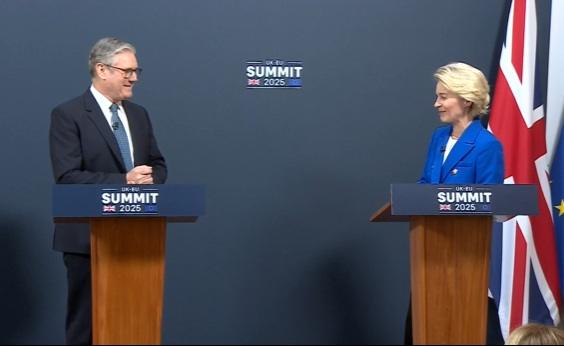
In a significant development for global carbon markets and the broader energy transition landscape, the European Commission and the United Kingdom government have formally announced their intent to forge a deeper connection between their respective Emissions Trading Systems (ETS). This agreement marks a crucial step towards integrating two of the world’s most influential carbon pricing mechanisms, which have operated independently since the UK’s departure from the European Union. For investors navigating the complexities of decarbonization and regulatory shifts, this proposed linkage signals a move towards greater market efficiency, reduced arbitrage opportunities, and a more harmonized operational environment for carbon-intensive industries.
The core of this envisioned integration involves mutual recognition: carbon allowances issued under either the EU ETS or the UK ETS could be accepted as valid within the other jurisdiction’s greenhouse gas emissions trading framework. This strategic alignment emerged from the inaugural EU-UK summit, where discussions spanned a range of critical areas, including security, migration, energy policy, and climate change initiatives. The implications for companies with significant carbon footprints, particularly within the oil and gas sector’s upstream, midstream, and downstream operations, are profound, influencing everything from capital expenditure decisions to long-term asset valuation.
The Evolution of Carbon Pricing: EU and UK Systems
The European Union’s Emissions Trading System, established in 2005, stands as the cornerstone of its climate policy, placing a financial cost on carbon emissions across a wide array of energy-intensive sectors. These include electricity and heat generation, oil refineries, steel production, cement manufacturing, paper, chemicals, and commercial aviation. This pioneering system has proven to be a robust mechanism for driving decarbonization efforts. Projections indicate that the EU ETS will generate an estimated €40 billion in revenues between 2020 and 2030, funds often earmarked for further climate action and innovation. For investors, understanding the trajectory and pricing signals from this established market is paramount for assessing risk and opportunity in European industrial assets.
Further bolstering its carbon mitigation strategy, the EU Commission introduced the Carbon Border Adjustment Mechanism (CBAM) in 2023. This innovative levy, effectively a carbon tax on imported goods, directly addresses the issue of “carbon leakage.” Carbon leakage occurs when companies relocate their emissions-intensive production to regions with less stringent environmental regulations, undermining domestic decarbonization efforts. By equalizing the carbon cost paid by EU-produced goods under the ETS with that of imports, the CBAM aims to create a level playing field and incentivize global carbon reduction. This mechanism significantly impacts trade flows and supply chain decisions for companies operating within or exporting to the EU.
Following its exit from the EU, the United Kingdom launched its own independent Emissions Trading Scheme in 2021, replacing its prior participation in the EU’s system. Mirroring the EU’s approach to carbon leakage, the UK has also signaled its intention to implement its own CBAM by 2027. The parallel development of these systems set the stage for the current discussions on linkage, recognizing the benefits of a broader, more liquid carbon market for both economies.
Integration’s Impact: Mutual CBAM Exemptions and Sectoral Reach
A key driver behind the proposed ETS linkage is the potential for mutual exemptions from the EU and UK CBAMs for goods originating in the respective jurisdictions. This would simplify trade and reduce administrative burdens for businesses operating across the Channel, providing greater regulatory certainty for companies engaged in cross-border commerce. Such exemptions would directly alleviate the financial burden associated with carbon taxes on imported goods, improving competitiveness for industries in both regions.
The scope of this potential integration is broad, initially targeting sectors critical to the energy and industrial landscape. These include electricity generation, industrial heat generation, general industry, maritime transport, and aviation. The agreement also outlines a procedure for expanding coverage to additional sectors in the future, indicating a long-term vision for comprehensive carbon market integration. For energy investors, this means a more unified carbon pricing signal impacting a significant portion of the industrial base, potentially stabilizing carbon price discovery and reducing the regulatory fragmentation that can complicate investment decisions.
Ambition as a Prerequisite: A Level Playing Field
A critical condition underpinning the drive for ETS linkage is the stipulation that the UK’s ETS cap and its associated emissions reduction pathway “should be at least as ambitious as the European Union cap and the European Union reduction pathway.” This clause is fundamental, ensuring that the integration does not lead to a dilution of climate ambition in either jurisdiction. For investors, this provides a clear signal that the UK is committed to maintaining robust decarbonization targets, which in turn influences the long-term cost of carbon and the viability of high-emissions assets within the UK market. EU Commission President Ursula von der Leyen underscored this commitment, stating that both the EU and UK “are both committed to leading by example on the path to net zero.” She further emphasized that linking their emission trading systems represents “a big step forward in decarbonisation and creates a level playing-field.”
Investment Implications and Future Outlook
The prospect of a linked EU-UK carbon market carries significant implications for financial markets and strategic investment decisions. A larger, integrated system promises enhanced market liquidity, potentially reducing price volatility and offering more robust carbon price signals. This improved market function provides greater clarity for industries planning long-term investments in low-carbon technologies and infrastructure. For oil and gas companies, this means a more predictable cost of emissions, influencing decisions on refinery upgrades, carbon capture projects, and investments in alternative fuels or renewable energy ventures.
Furthermore, the mutual recognition and potential CBAM exemptions could foster a more competitive and efficient trading environment between the EU and UK, removing barriers that have emerged post-Brexit. This regulatory harmonization can reduce compliance costs and improve the ease of doing business for companies with operations spanning both regions. As both economies push towards net-zero targets, a unified carbon market can accelerate the transition by providing a consistent economic incentive for emissions reductions across a broader geographic area.
While the agreement represents a commitment to work towards linkage rather than an immediate implementation, the direction is clear. Investors should monitor the progress of these negotiations closely, as the eventual integration of the EU and UK carbon markets will reshape the financial landscape for carbon-intensive industries, offering new opportunities for those positioned to capitalize on decarbonization and presenting new challenges for those slow to adapt to evolving carbon pricing mechanisms. The strategic convergence of these systems underscores a powerful global trend: carbon has a price, and that price is increasingly becoming a central factor in financial valuations and long-term investment strategies.


