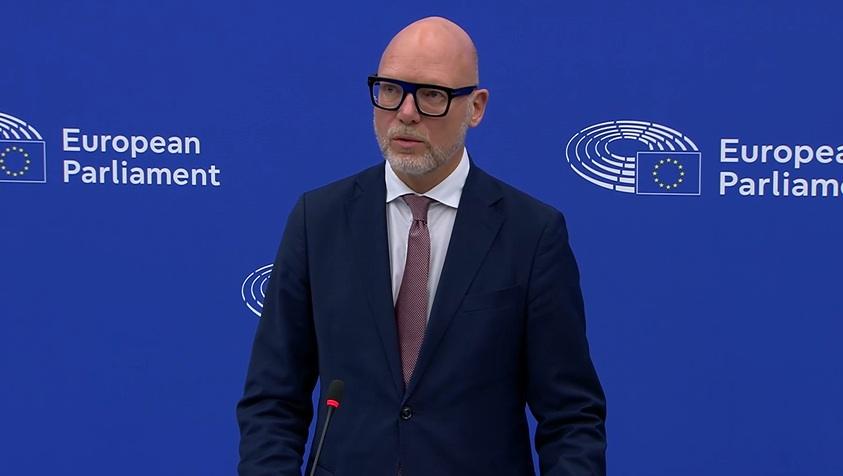
The European Parliament has voted to significantly reduce the burden of sustainability reporting and due diligence for a vast number of companies, a move that carries substantial implications for the oil and gas sector operating within or linked to the European Union. This approval of the provisional agreement, part of the Omnibus I package, signals a notable shift in the EU’s approach to ESG compliance, moving away from broad mandates towards a more focused framework. For energy investors, this development is more than just regulatory news; it represents a tangible reduction in operational costs and potential liabilities, offering a clearer path for capital allocation in a market still grappling with price volatility and geopolitical uncertainties. Understanding the nuances of this regulatory rollback is crucial for strategic positioning and assessing the profitability outlook of EU-exposed energy companies.
EU’s Regulatory Reset: Scaling Back ESG Compliance
Today’s vote saw MEPs approve the agreement with 428 votes in favor, 218 against, and 17 abstentions, marking a pivotal step toward the final adoption of the Omnibus I package. This initiative, launched by the EU Commission in February, aims to simplify and reduce compliance burdens across key sustainability regulations, most notably the Corporate Sustainability Reporting Directive (CSRD) and the Corporate Sustainability Due Diligence Directive (CSDDD). The initial Commission proposal suggested a reduction in companies covered by CSRD by approximately 80%, raising the threshold from 250 to 1,000 employees. However, both the Parliament and member states pushed for even more significant reductions.
The finalized agreement introduces more stringent thresholds, drastically reducing the scope of these directives. For the CSRD, companies must now have more than 1,000 employees AND annual revenues exceeding €450 million to be included, effectively removing an estimated 90% of companies from these reporting requirements. The cuts to the CSDDD are even more pronounced, with the threshold raised to 5,000 employees and €1.5 billion in revenue, thereby excluding the vast majority of companies from sustainability due diligence obligations. Beyond scope, the agreement also eliminates the CSDDD’s mandate for companies to prepare climate transition plans, removes the EU-wide liability regime, and caps potential penalties at a maximum of 3% of global revenues. These changes collectively represent a significant easing of the regulatory load, freeing up capital and resources that were previously earmarked for extensive compliance.
Market Dynamics and Immediate Investor Implications
This regulatory easing comes at a dynamic juncture for crude markets. As of today, Brent Crude trades at $91.87, representing a 7.57% decline, with a day range between $86.08 and $98.97. WTI Crude mirrors this trend, standing at $84, down 7.86% within a $78.97-$90.34 range. Gasoline prices have also dipped to $2.95, a 4.85% drop. This immediate market softness follows a broader trend; Brent crude has seen a notable decline over the past two weeks, falling from $112.57 on March 27th to $98.57 yesterday, a 12.4% decrease. In this environment of price volatility, the EU’s decision to lower ESG compliance costs offers a crucial reprieve for oil and gas companies with European operations or supply chains. Reduced administrative and reporting expenses directly impact the bottom line, potentially cushioning the blow of fluctuating crude prices and enhancing net profitability. For investors, this translates into improved financial metrics and greater flexibility for capital deployment, whether into core operations, exploration, or shareholder returns, rather than extensive compliance frameworks.
Navigating Future Volatility: Upcoming Events and Strategic Adjustments
The regulatory shift in the EU provides a new lens through which to view upcoming market-moving events. Investors must now integrate this reduced compliance burden into their forward-looking models, especially in anticipation of key energy calendar events. Today, April 17th, brings the OPEC+ Joint Ministerial Monitoring Committee (JMMC) meeting, followed by the Full Ministerial OPEC+ Meeting tomorrow, April 18th. Decisions emanating from these gatherings regarding production quotas will directly impact global supply and, consequently, crude prices. If OPEC+ maintains or deepens cuts, potentially pushing prices higher, EU-exposed oil and gas companies will now realize higher net margins due to their reduced ESG expenditure.
Furthermore, critical data releases such as the API Weekly Crude Inventory (April 21st and April 28th), the EIA Weekly Petroleum Status Report (April 22nd and April 29th), and the Baker Hughes Rig Count (April 24th and May 1st) will offer insights into supply-demand balances and drilling activity. For investors, these data points, combined with the softened EU regulatory landscape, will be instrumental in identifying companies best positioned to capitalize on market movements. Companies with significant European assets or a substantial portion of their revenue derived from EU-linked activities may now present more attractive investment cases, as a greater percentage of potential revenue gains can be retained post-compliance.
Addressing Investor Concerns: Profitability and Strategic Positioning
Our proprietary intent data highlights that investors are actively seeking clarity on future market conditions and company performance. Questions like ‘what do you predict the price of oil per barrel will be by end of 2026?’ dominate investor queries, underscoring a deep concern for long-term profitability amidst ongoing market fluctuations. This EU regulatory adjustment directly addresses a significant component of that profitability equation for many energy firms. For instance, the reduced compliance costs could materially improve the financial outlook for a company like Repsol, which is frequently a subject of investor inquiry regarding its near-term performance. The removal of the CSDDD’s climate transition plan obligation and the EU-wide liability regime, coupled with lower penalty caps, means less capital diverted to non-core activities and a reduced risk profile. This newfound flexibility allows companies to better allocate resources towards optimizing their core oil and gas operations, exploring new opportunities, or enhancing shareholder value through dividends and buybacks. This regulatory pivot essentially lowers the operational hurdle rate for investing in and operating energy assets within the EU, potentially encouraging renewed focus on an otherwise challenging region.


