EU’s Ambitious Nuclear Push: A $279 Billion Investment Reshaping Gas Demand
European Union member states are poised to funnel approximately EUR 241 billion, or an impressive $278.62 billion, into expanding their conventional nuclear power capabilities through 2050. This monumental investment aims to bolster the bloc’s energy security, enhance industrial competitiveness, and accelerate its ambitious decarbonization agenda, according to official analysis from the European Commission.
For energy market participants and investors, this substantial commitment to nuclear energy signals a critical shift in Europe’s energy matrix, with significant implications for future natural gas demand and overall energy commodity markets. The strategic pivot underscores a pragmatic approach to achieving climate targets while ensuring grid stability and reducing dependence on imported fossil fuels.
The Current State of EU Nuclear Power
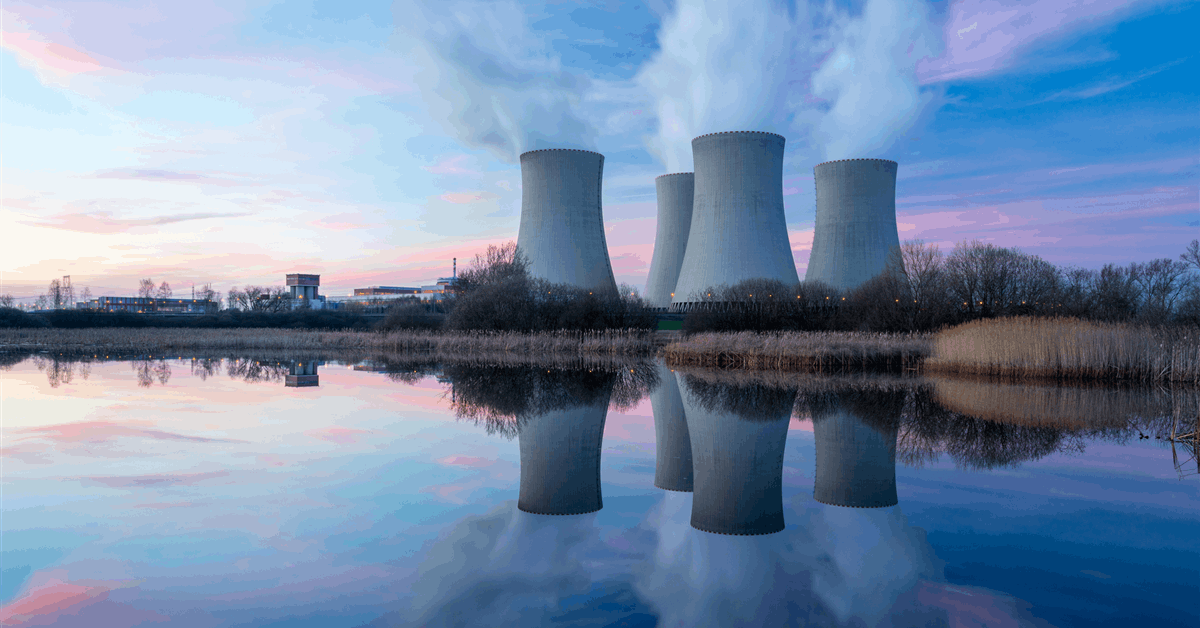
As of last year, the 27-member European Union counted 101 operational nuclear power reactors, collectively generating 98 gigawatts electric (GWe). These vital installations are distributed across 12 nations: Belgium, Bulgaria, Czechia, Finland, France, Hungary, the Netherlands, Romania, Slovakia, Slovenia, Spain, and Sweden. In 2023, nuclear facilities supplied a substantial 22.8 percent of the EU’s total electricity generation, highlighting their indispensable role in the existing energy mix.
Looking ahead, three additional reactors are currently under construction within the bloc: one at Mochovce 4 in Slovakia and two units forming the Paks II project in Hungary. These projects represent ongoing efforts to maintain and slightly expand the EU’s nuclear footprint. While Germany controversially decommissioned its final three nuclear power plants in April 2023, recent reports suggest a potential policy reversal, with the new German government signaling a potential willingness to reconsider its stance on nuclear energy, as noted in a May 2025 Reuters report citing a French official. This potential shift from Europe’s largest economy could add further momentum to the continent’s nuclear renaissance.
Unpacking the Investment Strategy and Projections
The estimated EUR 241 billion investment represents a “present-value” calculation, derived from an analysis of identified generation gaps within National Energy and Climate Plans (NECPs). This “base case scenario” prudently factors in the existing operational fleet, ongoing construction projects, and planned new reactor builds. A significant portion of this capital, EUR 205 billion, is earmarked for new construction initiatives. Concurrently, EUR 36 billion is allocated for lifetime extensions of existing reactors, crucial for maximizing the return on legacy assets and ensuring continuous baseload power supply.
Beyond these conventional investments, the Commission acknowledges an additional, as yet unquantified, capital requirement for developing and deploying advanced nuclear technologies. This includes small modular reactors (SMRs), advanced modular reactors (AMRs), and microreactors, which offer promise for enhanced flexibility, scalability, and potentially faster deployment compared to traditional large-scale plants. For investors, the emergence of these next-generation technologies presents a distinct opportunity, albeit with higher developmental risks.
Under the base case scenario, the EU projects a substantial increase in nuclear generation capacity, targeting 109 GWe by 2050. Achieving this ambitious goal hinges on two critical assumptions: the successful extension of many existing reactors beyond their initial 60-year operating lives, and the timely delivery of all planned newbuild projects. This projected growth underscores nuclear power’s pivotal role in the EU’s long-term energy strategy.
Nuclear’s Role in Decarbonization and Energy Security
The European Commission emphasizes that nuclear energy is an essential component of its decarbonization strategy. Projections indicate that over 90 percent of the EU’s electricity in 2040 will originate from decarbonized sources, primarily renewables, with nuclear energy serving as a crucial complement. This integrated approach acknowledges that all zero and low-carbon energy solutions are indispensable for comprehensively decarbonizing the bloc’s energy system.
For investors monitoring the global energy transition, the EU’s steadfast commitment to nuclear power signifies a robust, long-term policy direction. While renewables like wind and solar lead the charge in terms of new capacity additions, nuclear provides the essential baseload power needed to stabilize grids and ensure reliable electricity supply, thereby mitigating the intermittency challenges inherent in renewable sources. This strategic balance is key to both climate objectives and energy security, especially in a volatile geopolitical landscape.
Prioritizing Safety and Waste Management
Maintaining the highest standards of nuclear safety, security, and safeguards, alongside the safe and responsible management of radioactive waste, remains a paramount priority for the European Union. These stringent regulatory requirements are fundamental to public acceptance and the sustained growth of nuclear energy. The Commission stresses the need for intensified efforts in developing robust infrastructure for the disposal of radioactive waste and spent nuclear fuel, in parallel with efficient decommissioning practices and cost-effectiveness in all stages of the nuclear lifecycle.
In a significant regulatory update, the Euratom Safeguards Regulation was recently published in the EU Official Journal and is slated to become effective within 20 days. This new regulation supersedes the safety rules adopted in 2005 and incorporates modern provisions for “safeguards-by-design” specifically tailored for complex nuclear installations. Enhanced cooperation among national regulatory authorities will be vital in enforcing these updated standards and fostering a harmonized approach to nuclear oversight across the Union.
Implications for Natural Gas and Energy Markets
This massive European nuclear investment, totaling nearly $279 billion, carries profound implications for the continent’s natural gas demand. A successful expansion of nuclear capacity to 109 GWe by 2050 will inevitably displace a significant volume of natural gas currently used for electricity generation. As nuclear power provides consistent, carbon-free baseload electricity, it directly reduces the need for gas-fired power plants, which are often utilized to balance the grid and meet peak demand. For oil and gas investors, this translates into potential downward pressure on European natural gas prices and a structural reduction in gas import dependency over the long term.
The EU’s dual strategy of aggressive renewable deployment coupled with a renewed commitment to nuclear energy creates a formidable force against fossil fuel consumption in the power sector. While gas may continue to play a role as a flexible backup during the transition, the overall trend points towards a diminished market share. Investors should closely monitor the progress of these nuclear projects, as their timely completion and operational success will be key determinants of Europe’s future energy mix and the trajectory of its natural gas market.
The European Union’s multi-billion-dollar bet on nuclear power represents a pivotal moment for global energy markets. It solidifies nuclear’s status as a critical energy security and decarbonization tool, while simultaneously signaling a strategic intent to reduce reliance on natural gas. For astute energy investors, understanding the nuances of this profound shift is crucial for navigating the evolving landscape of European energy investments.