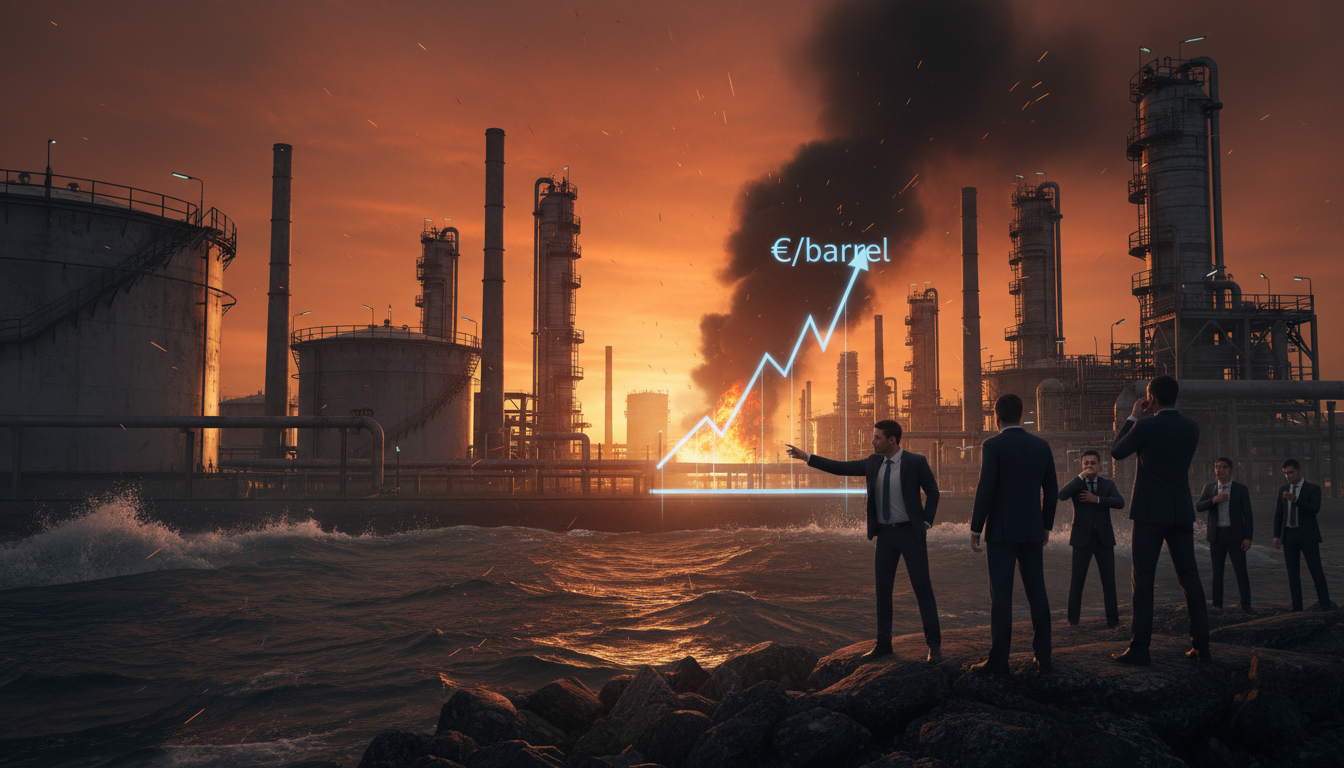
The intensifying conflict in the Middle East has cast a long shadow over global energy markets, prompting a stark warning from European Commission President Ursula von der Leyen. Europe now confronts the grim prospect of an energy crisis that could afflict its industries and households for an extended period, potentially spanning years. This profound geopolitical instability is not merely a temporary market fluctuation; it signals a fundamental re-evaluation of energy security and investment strategies across the continent.
Geopolitical Tensions Reshape Europe’s Energy Outlook
Speaking to the European Parliament, von der Leyen underscored the urgent need for a lasting resolution to the escalating conflict. However, she delivered a sobering reality check: the repercussions of this regional turmoil are likely to resonate for many months, if not years. This stark assessment immediately elevated energy security to the forefront of the EU’s agenda, reflecting a profound sense of vulnerability. Investors in the oil and gas sector must recognize this as a critical long-term risk factor for European demand dynamics and global supply stability.
This latest crisis, spurred by the conflict in Iran, marks the second major energy disruption for Europe within a mere four-year span. Such recurring volatility serves as a powerful, albeit painful, lesson for the EU: an excessive reliance on imported energy sources presents an untenable risk profile. For energy market participants, this underscores the inherent fragility of global supply chains when confronted with significant geopolitical flashpoints. The investment landscape is now irrevocably shaped by this renewed emphasis on domestic energy resilience.
The Escalating Cost of Imported Energy
The financial impact of the current Middle East crisis on European energy consumers is already staggering. The European Commission estimates that in just 60 days of heightened conflict, the EU’s collective bill for fossil fuel imports surged by an astonishing $31.6 billion (27 billion euros). Crucially, this enormous sum was spent without a single additional molecule of energy reaching European shores. This dramatic increase represents a pure geopolitical risk premium, draining capital from other sectors of the European economy and directly impacting corporate profitability and consumer purchasing power.
For investors, this financial burden translates into several critical implications. Companies with significant energy input costs, particularly those reliant on natural gas, gasoline, diesel, and jet fuel, face margin compression and increased operational expenditures. Conversely, firms involved in domestic energy production, energy efficiency solutions, and renewable energy technologies stand to benefit from the continent’s urgent drive to mitigate these exorbitant import costs. The market is clearly repricing energy security, making the case for diversified and localized energy portfolios even stronger.
Strait of Hormuz: A Bottleneck for Global Supply
A significant portion of Middle Eastern oil and fuel supplies, vital for global markets and European consumption, navigates the critical choke point of the Strait of Hormuz. The ongoing conflict has amplified concerns regarding potential disruptions at this strategic waterway, creating an immediate and tangible threat to supply continuity. Recognizing this vulnerability, the EU has moved swiftly to accelerate coordination among its member states. This effort aims to safeguard the availability of essential fuels like jet fuel and diesel, and to optimize the utilization of existing oil refinery capacities across the bloc.
For oil and gas investors, the Strait of Hormuz remains a perpetual geopolitical flashpoint that directly influences crude oil price volatility and refined product margins. Any sustained impediment to transit through this strait would trigger a significant spike in global energy prices, affecting everything from transportation costs to manufacturing expenses worldwide. The EU’s proactive measures reflect a recognition of this acute risk, signaling to markets that alternative supply routes and strategic reserves are becoming paramount considerations.
Europe’s Strategic Pivot Towards Energy Autonomy
In response to these escalating challenges, the European Commission recently unveiled a comprehensive suite of proposals designed to fundamentally reshape the continent’s energy future. These measures target both immediate relief and long-term strategic independence. Key initiatives include a concerted effort to reduce dependence on imported natural gas, enhanced coordination of gasoline, diesel, and jet fuel supplies across member states, and a significant acceleration in the deployment of renewable energy capacity. This strategic shift represents a massive redirection of capital and a profound opportunity for investors aligned with the energy transition.
Dan Jørgensen, the European Commissioner for Energy and Housing, articulated this vision clearly, characterizing the Middle East crisis as a “wake-up call and a turning point.” He envisions Europe moving decisively away from its reliance on fossil fuel imports and embracing “clean energy autonomy.” This declaration is a powerful signal to global financial markets. It indicates sustained policy support and significant investment flows into domestic, clean energy solutions, ranging from wind and solar to advanced nuclear technologies, all within a framework of technological neutrality.
Investment Opportunities in an Evolving Energy Landscape
The current confluence of geopolitical instability and urgent policy responses presents a compelling, albeit complex, landscape for energy investors. The immediate challenges to traditional fossil fuel supply chains, particularly those originating from volatile regions, heighten the risk premium associated with these assets. However, it simultaneously supercharges the investment case for alternative and domestic energy sources.
Investors should closely monitor companies positioned to benefit from Europe’s aggressive push for energy independence. This includes developers and operators of utility-scale wind and solar projects, manufacturers of essential components for renewable energy systems, and firms specializing in energy storage solutions. Furthermore, the emphasis on “technology neutrality” suggests renewed interest and potential investment in nuclear power, as well as emerging technologies like hydrogen production and carbon capture. Companies offering energy efficiency solutions and smart grid technologies will also find a receptive market driven by the imperative to optimize existing energy infrastructure.
While the long-term trajectory clearly favors clean energy, the immediate need for fuel security means that domestic oil and gas production, particularly in more stable regions, may experience renewed interest, albeit with a heightened focus on environmental performance and supply chain resilience. Refining capacities within Europe also gain strategic importance as the continent seeks to reduce its reliance on external refined product markets.
Charting a Course for a New Energy Era
The energy crisis ignited by the Middle East conflict serves as a stark reminder that geopolitical events exert an immediate and profound influence on global energy markets. For investors, this moment necessitates a re-evaluation of portfolio allocations, emphasizing resilience, diversification, and alignment with the accelerating energy transition. Europe’s determined pivot towards clean energy autonomy is not merely an environmental policy; it is now a critical national security imperative, backed by substantial financial commitments and regulatory frameworks.
As the continent navigates these turbulent waters, opportunities abound for those prepared to invest in the technologies and infrastructure that will define the next era of energy security. Smart investors will recognize this inflection point, adjusting their strategies to capitalize on the shift from vulnerable import dependence to robust, domestically sourced energy independence, ensuring their portfolios are well-positioned for the decades to come.