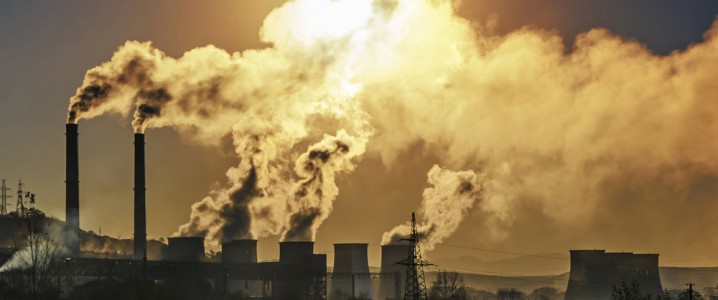
The European Union, long heralded as a global vanguard in the energy transition, faces a significant pragmatic hurdle that carries profound implications for the oil and gas sector. Recent developments indicate the bloc will miss the United Nations’ deadline for submitting hard, binding emission-reduction targets aligned with the Paris Agreement. This delay, stemming from internal disagreements and staunch economic objections from several member states, effectively extends the operational runway for conventional energy sources. For investors in oil and gas, this isn’t merely a bureaucratic hiccup; it signals a potentially longer demand window than previously anticipated, especially within Europe’s industrial core.
EU’s Climate Ambitions Hit Economic Reality
The core of the EU’s predicament lies in the proposed 90% emission reduction target for 2040 from 1990 levels. Key member states, including economic powerhouses like Germany and France, alongside nations such as Poland and Slovakia, have voiced strong opposition, deeming such aggressive targets “economic suicide.” Slovakia’s environment minister, Tomas Taraba, explicitly stated that these “ideological proposals” demonstrate Brussels’ disconnect from the economic realities facing European industries. This internal friction has led to a delay in target-setting, pushing the decision to a leaders’ meeting next month, well past the UN’s end-of-month deadline. This recalibration is not a minor adjustment; it signifies a fundamental clash between ambitious climate goals and the immediate economic stability of the continent. The arguments against rapid deindustrialization, supported by observed trends in GDP, industrial growth, and notably higher electricity prices in countries aggressively pursuing alternative energy, are gaining traction. For oil and gas investors, this translates into a more gradual, less disruptive shift away from fossil fuels in a major global economic bloc.
Navigating Current Market Volatility Amidst Policy Shifts
The broader energy market currently reflects a complex interplay of demand signals and supply management. As of today, Brent crude trades at $98.15 per barrel, down 1.25% within a day range of $97.92 to $98.67. Similarly, WTI crude sits at $89.80, a 1.5% decrease, fluctuating between $89.57 and $90.26. This daily softening, however, comes after a more significant downward trend, with Brent having fallen from $112.57 on March 27th to $98.57 by April 16th, representing a 12.4% decline over 14 days. While this recent price action reflects various global economic concerns and speculative positioning, the EU’s policy delay introduces a nuanced factor on the demand side. A softened, more drawn-out energy transition in Europe suggests a foundational resilience in demand that might otherwise be eroding more rapidly. For investors closely tracking crude benchmarks and refined products like gasoline, which currently trades at $3.08 per gallon, such policy shifts provide a longer-term demand floor, even as short-term volatility persists.
Investor Focus: Supply, Demand, and Data Integrity
Our proprietary intent data reveals a keen investor interest in fundamental market drivers and reliable analytics. This week, we’ve seen a surge in questions ranging from “What are OPEC+ current production quotas?” and “What is the current Brent crude price?” to inquiries about the data sources powering our EnerGPT platform. This underscores a market highly sensitive to both supply-side management and real-time pricing signals. The EU’s delayed climate targets directly influence the demand side of this equation. While investors are scrutinizing OPEC+’s next moves to manage supply, the less aggressive European demand reduction provides a counter-balancing force. The persistent focus on production quotas and immediate price discovery indicates a recognition that global supply-demand dynamics are finely balanced. The EU’s pragmatic pause ensures that the ‘demand’ component in this equation remains robust for longer, alleviating some of the pressure on producers to make drastic cuts and offering a clearer outlook for upstream investments.
Upcoming Events and the Extended O&G Demand Horizon
Looking forward, the coming weeks present several pivotal events that will further shape the oil and gas investment landscape, all against the backdrop of Europe’s extended transition timeline. Investors should closely monitor the upcoming OPEC+ Joint Ministerial Monitoring Committee (JMMC) meeting on April 17th, followed by the full Ministerial meeting on April 18th. These gatherings are critical for assessing how major producers plan to respond to global demand shifts, especially now with the EU signaling a more gradual energy transition. Any decisions on production quotas will carry amplified weight, potentially influencing the market for months. Beyond OPEC+, the consistent flow of inventory data from the API Weekly Crude Inventory reports on April 21st and 28th, and the EIA Weekly Petroleum Status Reports on April 22nd and 29th, will provide crucial insights into immediate supply-demand balances in the world’s largest consumer. Furthermore, the Baker Hughes Rig Count on April 24th and May 1st will offer a vital pulse check on North American drilling activity. Combined with the EU’s pragmatic shift, these events will collectively define the short-to-medium term investment thesis, reinforcing the likelihood of an extended demand window for oil and gas in a key global region.


