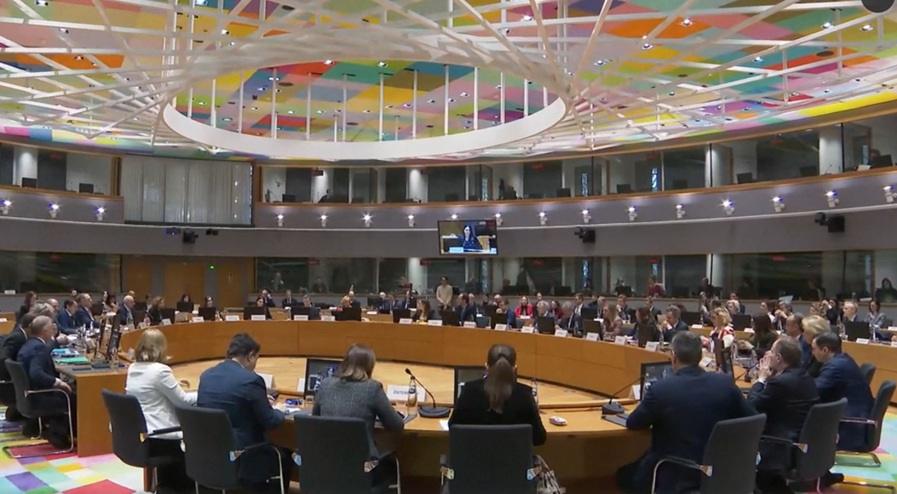
The European Union has delivered a significant policy pivot, with member states in the European Council approving a substantial rollback of sustainability reporting and due diligence requirements. This move, part of the “Omnibus I” simplification package, marks a decisive shift away from aggressive regulatory expansion, explicitly aimed at boosting European competitiveness and reducing the compliance burden on businesses. For investors in the oil and gas sector, particularly those with exposure to European markets, this development offers a crucial recalibration of the operating environment, potentially impacting capital allocation, profitability, and investment strategies in the years ahead.
A Pragmatic Reset for Corporate Sustainability Obligations
The newly approved agreement goes far beyond the European Commission’s initial proposals, dramatically scaling back the scope of key sustainability legislation, including the Corporate Sustainability Reporting Directive (CSRD) and the Corporate Sustainability Due Diligence Directive (CSDDD). Under the revised CSRD, the threshold for coverage has been significantly raised to companies with more than 1,000 employees and annual revenues exceeding €450 million. This dual criterion is estimated to remove a staggering 90% of companies previously subject to these reporting requirements.
The cuts to the CSDDD are even more profound, with the new thresholds set at 5,000 employees and €1.5 billion in revenue, effectively exempting the vast majority of companies from these due diligence obligations. Beyond the elevated thresholds, the agreement also eliminates the CSDDD’s obligation for companies to prepare climate transition plans, removes the EU-wide liability regime, and caps potential penalties at a maximum of 3% of global revenues. Furthermore, the implementation of the CSDDD has been delayed by a full year. This comprehensive easing of regulatory pressure signals a clear strategic shift by the EU towards prioritizing economic growth and corporate flexibility, which could have tangible benefits for European energy companies navigating complex capital expenditure decisions and operational challenges.
Market Dynamics and Investor Sentiment in a Volatile Environment
The EU’s regulatory reset comes at a time of considerable volatility in global energy markets. As of today, Brent crude trades at $93.86, showing a robust 3.79% gain, while WTI sits at $90.22, up 3.2%. Gasoline prices have also seen an upward movement, reaching $3.13, a 3.29% increase. This daily rally, however, is set against a backdrop of significant recent downturns, with Brent having shed nearly 20% over the past two weeks, dropping from $118.35 on March 31st to $94.86 yesterday. This stark contrast highlights the unpredictable nature of crude markets and the diverse drivers influencing price action.
Our proprietary reader intent data reveals a consistent focus on price direction, with questions like “is WTI going up or down” dominating investor queries, alongside longer-term outlooks such as “what do you predict the price of oil per barrel will be by end of 2026?” and specific interest in European players like “How well do you think Repsol will end in April 2026.” The EU’s decision to reduce ESG compliance burdens adds a new variable to this complex calculus. For European energy majors, the reduced regulatory overhead could translate into lower operating costs, potentially freeing up capital for investment in core business activities or shareholder returns. While the immediate price movements are often dictated by geopolitical events and supply-demand fundamentals, this policy shift provides a more favorable long-term operational framework for companies operating within the bloc, potentially enhancing their competitive standing and financial performance.
Navigating the Upcoming Calendar: Implications for Energy Investment
Looking ahead, the energy calendar is packed with critical events that will further shape market sentiment and provide context for the EU’s policy shift. Tomorrow, April 21st, the OPEC+ JMMC meeting will convene, where key production policies will be debated, directly impacting global supply. This will be swiftly followed by the EIA Weekly Petroleum Status Report on April 22nd, offering vital insights into U.S. inventory levels and demand trends. The Baker Hughes Rig Count on April 24th will then provide an indication of drilling activity and future production capacity.
The EU’s decision to ease regulatory burdens could subtly influence the interpretation of these upcoming data points. If, for instance, OPEC+ maintains a disciplined approach to supply, and EIA reports indicate tightening markets, the reduced compliance costs for European energy companies could amplify positive sentiment towards their profitability. The delayed implementation of the CSDDD by a year offers a crucial reprieve, allowing companies to allocate resources towards operational efficiencies and strategic growth rather than immediate regulatory adaptation over the next 12 months. This extended timeline, coupled with the softened requirements, could encourage investment in European energy projects that might have otherwise faced stricter scrutiny or higher compliance costs, aligning with the EU’s stated goal of boosting competitiveness and fostering a more attractive investment environment for the energy sector.
Empowering European Competitiveness in Energy
The stated rationale behind the “Omnibus I” package is to enhance European competitiveness and alleviate burdensome compliance requirements. For the oil and gas sector, this signals a pragmatic recognition from Brussels that overly aggressive ESG mandates can inadvertently stifle economic activity and investment. While many large European energy companies may still fall within the revised CSRD and CSDDD thresholds, the overall direction of policy is undeniably favorable. The removal of the CSDDD’s climate transition plan requirement, in particular, grants companies greater flexibility in how they manage their decarbonization strategies, allowing for more tailored and economically viable approaches rather than prescriptive top-down mandates.
This policy pivot could make European energy assets more attractive to investors by reducing the non-operational risks and costs associated with extensive sustainability reporting and due diligence. It suggests a potential shift towards allowing companies more autonomy in balancing environmental stewardship with economic imperatives. In a global energy market grappling with security of supply concerns and ongoing transition dynamics, a more flexible and less burdensome regulatory environment could empower European oil and gas firms to better compete, secure necessary investments, and ensure energy stability for the continent. Investors should closely monitor how this regulatory relief translates into tangible strategic decisions and financial performance across European energy portfolios.


