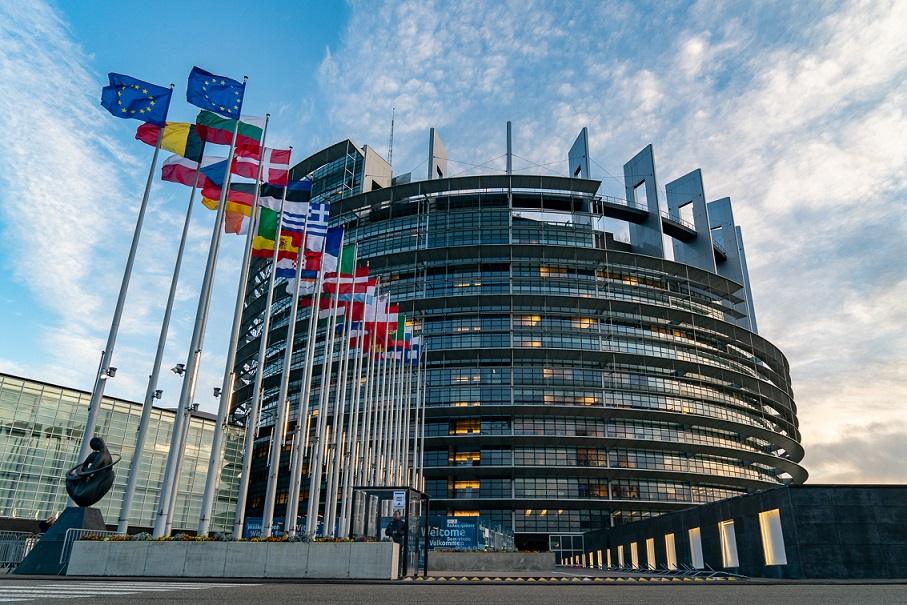
EU Balances Climate Ambition with Economic Pragmatism: CBAM Refined for Investors
The European Union has taken a significant step in refining its Carbon Border Adjustment Mechanism (CBAM), a critical piece of its climate policy designed to prevent “carbon leakage” and level the playing field for EU industries under the Emissions Trading System (ETS). Today, lawmakers in the European Parliament overwhelmingly approved changes to CBAM, with a decisive 564-20 vote. This move, part of the European Commission’s broader Omnibus I package launched in February 2025, aims to significantly reduce the regulatory burden on businesses, particularly smaller entities, while maintaining the mechanism’s core intent. For oil and gas investors, understanding these nuances is crucial, as carbon pricing mechanisms indirectly influence industrial demand for energy and shape the long-term investment landscape.
CBAM Evolution: Streamlining for SMEs, Sustaining Emissions Coverage
The core of the recently approved amendments introduces a new 50-tonne threshold, a measure designed to exempt approximately 90% of importers from CBAM rules. This translates to an estimated 182,000 small and medium-sized enterprises (SMEs) no longer facing the administrative complexities of the carbon tax. Adopted in 2023 and slated to come into full force in 2026, CBAM requires companies importing into the EU to purchase certificates to cover the carbon emissions embedded in their goods, effectively equalizing the carbon cost with EU-produced goods under the ETS. While the exemption for SMEs is substantial in terms of business numbers, our analysis indicates that the mechanism remains robust in its primary objective: the Commission confirms that over 99% of emissions from key carbon-intensive imports such as iron, steel, aluminum, and cement will still be covered. This strategic simplification, alongside streamlined reporting requirements for emissions calculations, reflects the EU’s dual commitment to climate action and fostering a competitive business environment, aligning with its “Competitiveness Compass” initiative.
Market Dynamics and Regulatory Headwinds: A Snapshot for Energy Investors
The context for these regulatory adjustments comes against a backdrop of dynamic energy markets. As of today, Brent Crude trades at $96.06 per barrel, showing a daily gain of 1.34%, with WTI Crude similarly up 1.29% at $92.46. While today’s session sees an uptick, it’s essential for investors to consider the broader trend: over the past 14 days, Brent has seen a notable decline, dropping from $102.22 on March 25 to $93.22 on April 14, representing an 8.8% decrease. This recent volatility underscores the sensitivity of energy prices to global economic signals and supply-demand imbalances. The CBAM changes, by reducing administrative hurdles for many businesses, could subtly mitigate some cost pressures on the supply chain for imported goods, potentially supporting economic activity. However, the sustained coverage of major industrial emissions means that the fundamental cost of carbon for large-scale energy-intensive production remains a significant factor, influencing long-term investment decisions in upstream and downstream sectors. Gasoline prices, currently at $2.98, also reflect these broader market forces, with slight daily increases.
Forward Outlook: Navigating Upcoming Events and Policy Implementation
Looking ahead, the EU Parliament’s vote sets the stage for negotiations with the European Council to finalize the CBAM legislation. While the broad endorsement suggests the core tenets will remain, investors should monitor these discussions for any further technical amendments that could impact specific sectors. Beyond regulatory developments, the immediate future of energy markets will be heavily influenced by a series of critical upcoming events. This Friday, April 17, brings the Baker Hughes Rig Count, offering insights into North American production activity. More significantly for global oil prices, the OPEC+ Joint Ministerial Monitoring Committee (JMMC) meets on Saturday, April 18, followed by the Full Ministerial OPEC+ Meeting on Monday, April 20. These meetings are pivotal for determining future production quotas and will undoubtedly shape market sentiment and price trajectories. Additionally, weekly inventory reports from API (April 21, 28) and EIA (April 22, 29) will provide crucial short-term supply and demand signals. Investors must integrate these policy and market events into their strategies, recognizing that regulatory clarity combined with supply-side decisions will dictate near-term market movements.
Addressing Investor Concerns: Factors Shaping Future Brent Forecasts
Our proprietary reader intent data reveals a consistent demand from investors for a base-case Brent price forecast for the next quarter, and a consensus 2026 Brent forecast. While specific numbers are contingent on numerous variables, the recent CBAM developments and upcoming energy events provide crucial context. The EU’s decision to simplify CBAM for SMEs, while maintaining stringent coverage for major industrial emissions, signals a pragmatic approach to decarbonization. This balance helps alleviate some immediate economic friction while reinforcing the long-term cost of carbon for heavy industry. For oil and gas, this translates to sustained pressure for efficiency and potentially a gradual shift in industrial energy demand profiles towards lower-carbon alternatives over time. In the immediate term, the outcomes of the upcoming OPEC+ meetings will be paramount in shaping the next quarter’s Brent trajectory. Any adjustments to production policy could significantly impact global supply, influencing prices more directly than the indirect effects of CBAM. For a 2026 forecast, investors must factor in not only ongoing geopolitical risks and global economic growth but also the accelerating impact of carbon pricing mechanisms like CBAM, which will increasingly shape industrial energy consumption and investment in green technologies, thereby influencing long-term demand for crude.


