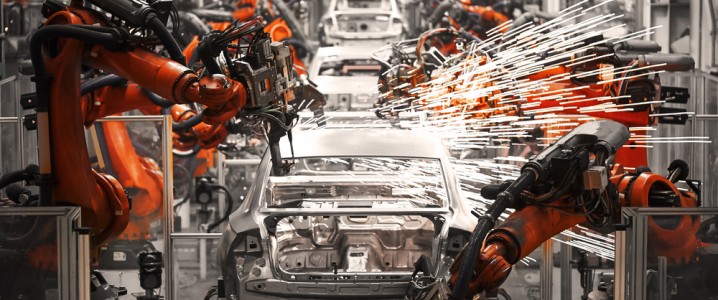
The European Union’s automotive sector experienced a notable slowdown last month, with new car sales contracting significantly, a development that warrants close attention from oil and gas investors. Overall new car registrations across the bloc declined by 7.2% in the latest reporting period, underscoring persistent challenges within the manufacturing industry as it navigates a complex transition towards electrification.
For the first half of the year, cumulative new vehicle registrations in the EU saw a more modest dip of 1.9%. This broader trend reflects a market grappling with economic pressures, supply chain dynamics, and the ambitious regulatory mandates pushing for a rapid shift away from fossil fuel-powered vehicles. The implications for regional oil demand are multifaceted, suggesting both immediate and long-term structural shifts in petroleum consumption patterns.
The Evolving European Fleet: Electrification Gains, ICE Declines
The composition of new car sales in Europe continues to evolve dramatically, with electric vehicles (EVs) steadily increasing their market penetration, albeit at a pace deemed insufficient by industry observers. In the first half of the year, fully electric cars accounted for 15.6% of all new registrations, a notable rise from 12.5% during the corresponding period last year. Despite this growth, the industry acknowledges that the current trajectory falls short of the aggressive targets set for decarbonizing the transport sector.
Conversely, the dominance of traditional gasoline and diesel vehicles is rapidly eroding. These internal combustion engine (ICE) cars represented only 37.8% of all new vehicles sold between January and June, a substantial drop from 48.2% registered a year prior. This pronounced decline in ICE vehicle sales directly impacts the demand outlook for refined petroleum products, particularly gasoline and diesel fuel.
Drilling down into the data, gasoline car registrations plummeted by a significant 21.2% in the first six months of the year. Diesel vehicles experienced an even steeper decline, with sales falling by 28.1%. These figures highlight the accelerating consumer shift, heavily influenced by government incentives and increasingly stringent environmental regulations designed to phase out fossil fuel vehicles. The market is clearly responding to these pressures, with buyers increasingly opting for alternative propulsion systems.
Hybrids Emerge as a Transition Favorite
Amidst the broader market contraction and the slower-than-desired pace of full EV adoption, hybrid vehicles have emerged as a compelling intermediary choice for many European consumers. These vehicles, which combine an internal combustion engine with an electric motor, captured a substantial 34.8% share of all new car sales in the first half of the year. Their appeal lies in offering improved fuel efficiency and reduced emissions compared to pure ICE vehicles, without the range anxiety or charging infrastructure concerns sometimes associated with fully electric models.
The robust demand for hybrids is underscored by their exceptional performance in June, where sales surged by an impressive 41.6% compared to the same month last year. This strong growth suggests that hybrids are currently the most attractive option within the broader “electric” category for a significant segment of the buying public, indicating a pragmatic approach to the energy transition by many European motorists. For oil and gas investors, this trend suggests a potential moderation in the pace of gasoline and diesel demand erosion, as hybrids still consume petroleum, albeit in smaller quantities.
Regional Performance: A Mixed Picture
The overall decline in European car sales was not uniformly distributed across the bloc’s major markets, presenting a nuanced regional landscape. Several key economies witnessed substantial contractions in June: Italy experienced a sharp 17.4% drop in new car registrations, while Germany, Europe’s largest automotive market, saw a decline of 13.8%. France also reported a significant downturn, with new car sales falling by 6.7%.
In contrast, Spain bucked the trend, registering a healthy 15.2% increase in new car sales during June. This divergence highlights varying economic conditions, consumer confidence levels, and perhaps the impact of specific national incentive programs across different EU member states. However, the collective performance of the largest economies points towards a prevailing weakness in the European auto sector, which inevitably casts a shadow over the region’s aggregate energy demand.
Automaker Challenges and Tesla’s Downturn
The challenging market conditions impacted a broad spectrum of automotive manufacturers. Data for June revealed sales declines across virtually all major European carmakers, indicating a widespread struggle to adapt to the shifting landscape and macroeconomic headwinds. Even industry giants like Tesla, a pioneer in the electric vehicle space, and Hyundai, a strong contender in the hybrid and EV segments, were not immune to these pressures.
For Tesla, June marked the sixth consecutive month of declining sales. This persistent slump can be attributed to several factors, including intensifying competition within the rapidly expanding EV market, as traditional automakers roll out their own compelling electric models. Furthermore, market analysts suggest that consumer sentiment in Europe may have been influenced by broader geopolitical considerations, specifically relating to CEO Elon Musk’s public political activities, potentially leading to a cautious approach from some buyers. This competitive environment and evolving consumer preferences pose significant strategic challenges for all manufacturers, impacting their production volumes and, by extension, the energy intensity of their operations.
Implications for Oil & Gas Investors
These developments in the European automotive market carry profound implications for oil and gas investors monitoring global demand trends. The rapid decline in gasoline and diesel vehicle sales signals a structural erosion of demand for these refined products in a major consuming region. While the strong performance of hybrids offers some near-term buffering against steeper demand destruction, the long-term trajectory is unequivocally towards electrification and reduced reliance on petroleum.
For investors focused on the European market, this data underscores the importance of assessing regional fuel demand with a critical eye, considering both fleet turnover rates and the evolving mix of new vehicle sales. Companies with significant exposure to European downstream operations—refining, distribution, and retail of gasoline and diesel—may face increasing pressure. Conversely, firms involved in renewable energy, battery materials, or electric vehicle charging infrastructure may find growing opportunities. The European Union’s automotive sector is clearly undergoing a transformative period, and understanding these shifts is paramount for making informed investment decisions in the dynamic energy landscape.