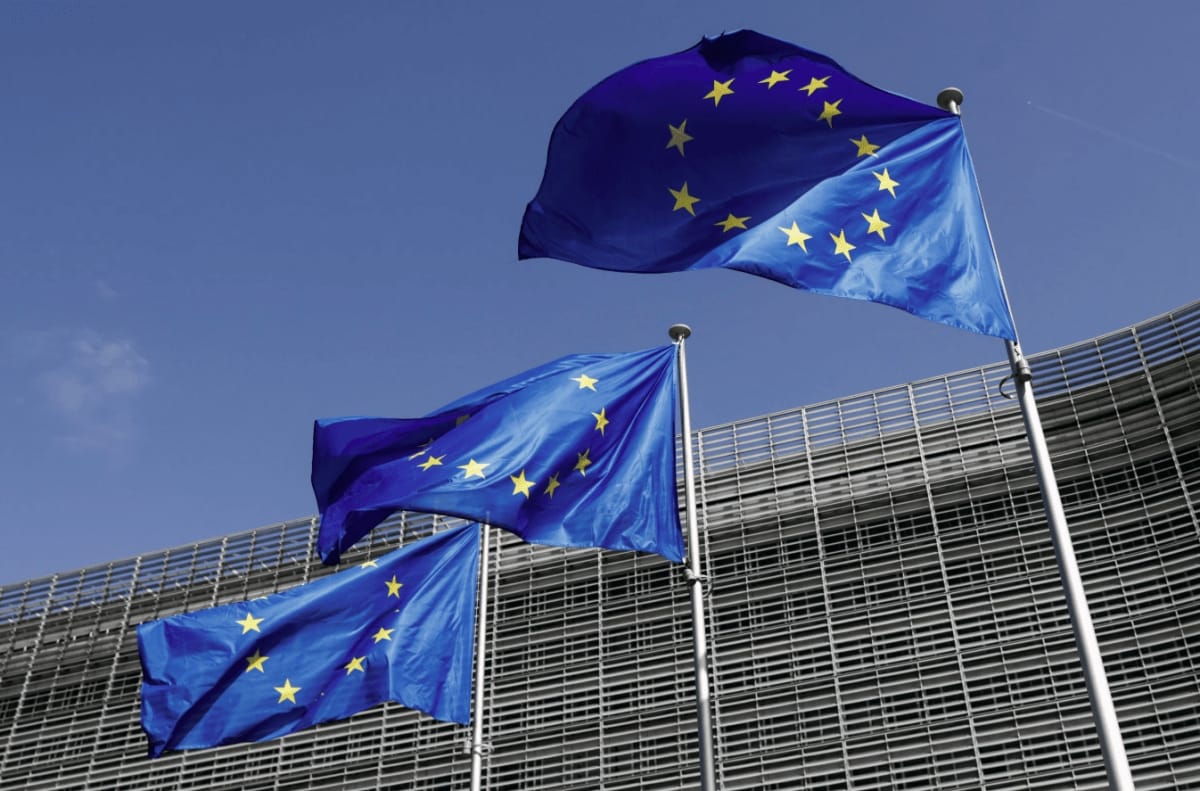
The European Union’s recent commitment of €15.5 billion ($16.9 billion) to turbocharge Africa’s clean energy transition marks a pivotal moment, demanding close scrutiny from oil and gas investors. This substantial financial injection, spearheaded by European Commission President Ursula von der Leyen and South African President Cyril Ramaphosa, is set to unlock 26.8 GW of new renewable capacity and extend electricity access to 17.5 million households. While the headline focuses on green energy, the implications for traditional oil and gas markets, global energy security, and investor portfolios are profound and multifaceted, signaling a strategic shift that cannot be ignored.
Africa’s Green Pivot: A Geopolitical and Economic Redefinition
The scale of this EU-backed investment into Africa is not merely an environmental initiative; it is a strategic geopolitical play with significant economic ramifications. The €15.5 billion commitment, with over €10 billion coming directly from Team Europe and additional bilateral packages, solidifies Europe’s influence on the continent’s energy future. This capital inflow, designed to facilitate a massive build-out of renewable infrastructure, aims to reduce Africa’s reliance on fossil fuels for domestic power generation, potentially freeing up some existing hydrocarbon resources for export or industrial feedstocks. For oil and gas companies with significant exploration and production assets in Africa, this signals a long-term shift in demand dynamics within the continent itself. While immediate impacts on crude exports may be minimal, the accelerated deployment of renewables will gradually reshape local energy consumption patterns, pushing African nations towards decarbonization targets and potentially influencing future project financing for fossil fuel initiatives.
Navigating Market Volatility Amidst the Green Wave
Even as massive capital flows into renewable projects, the immediate realities of the global oil market continue to assert their influence, creating a complex landscape for investors. As of today, Brent crude trades at $90.64 per barrel, reflecting an 8.8% decline within a day’s volatile range of $86.08 to $98.97. Similarly, WTI crude stands at $83.08, down 8.87%, after trading between $78.97 and $90.34. This intraday swing underscores the inherent instability in the current market. Looking at the broader picture, Brent has seen a significant downward trend, falling from $112.57 on March 27th to $98.57 just yesterday, a drop of over 12% in less than three weeks. This recent price pressure is a stark reminder that while long-term energy transition goals are critical, short-term supply-demand imbalances, geopolitical tensions, and macroeconomic factors still dictate crude valuations. Investors must reconcile the long-term decarbonization narrative, reinforced by initiatives like the EU’s African investment, with the immediate, often unpredictable, dynamics of the global oil market. The decline in gasoline prices to $2.93, a 5.18% drop today, further highlights a potential easing of consumer demand or an improvement in supply, adding another layer of complexity to the overall energy market sentiment.
Investor Focus: OPEC+, Inventories, and Future Price Trajectories
Our platform’s proprietary intent data reveals that investors are acutely focused on the near-term trajectory of oil prices and the strategies of key market players. Many are asking about specific company performance, such as how Repsol might conclude April 2026, while a significant portion of our readership is attempting to predict the price of oil per barrel by the end of 2026. These questions highlight a keen awareness of market sensitivities and the hunt for reliable forward-looking indicators. Crucially, there’s high interest in OPEC+’s current production quotas and their impact on global supply. This week brings critical catalysts, starting with the OPEC+ Joint Ministerial Monitoring Committee (JMMC) meeting on April 17th, immediately followed by the Full Ministerial meeting on April 18th. These gatherings are paramount for assessing production policy and will undoubtedly shape market sentiment and potentially influence crude prices in the coming weeks. Further guidance on supply-demand balances will come from the API Weekly Crude Inventory report on April 21st and the EIA Weekly Petroleum Status Report on April 22nd, with subsequent releases on April 28th and 29th. The Baker Hughes Rig Count, scheduled for April 24th and May 1st, will offer insights into North American production trends. For investors, integrating the long-term signal from the EU’s African investment with these immediate, tangible market events is essential for constructing a robust portfolio strategy.
Strategic Implications for Oil & Gas Portfolios
The EU’s substantial €15.5 billion investment in Africa’s renewable sector presents a double-edged sword for traditional oil and gas investors. On one hand, it accelerates the long-term energy transition, potentially dampening future demand for fossil fuels in growing African economies. This could pressure valuations for companies heavily reliant on long-term oil and gas development in the region. On the other hand, the investment also highlights Africa’s immense energy needs and growth potential. For agile oil and gas firms, this shift could open new avenues in natural gas-to-power projects, supporting grid stability for intermittent renewables, or in supplying essential feedstocks for the burgeoning green economy. The vast expansion of grid infrastructure to electrify 17.5 million households creates demand for diverse energy solutions, not exclusively renewables. Investors should therefore assess their holdings for resilience and adaptability. Companies with diversified portfolios, strong balance sheets, and a clear strategy for integrating lower-carbon solutions, or those focused on essential industrial feedstocks and LNG, may be better positioned to navigate this evolving landscape. The key takeaway is that the energy transition is not a cliff edge, but a complex, multi-decade transformation that demands a nuanced, forward-looking investment approach, balancing the immediate realities of crude markets with the undeniable momentum of green capital.


