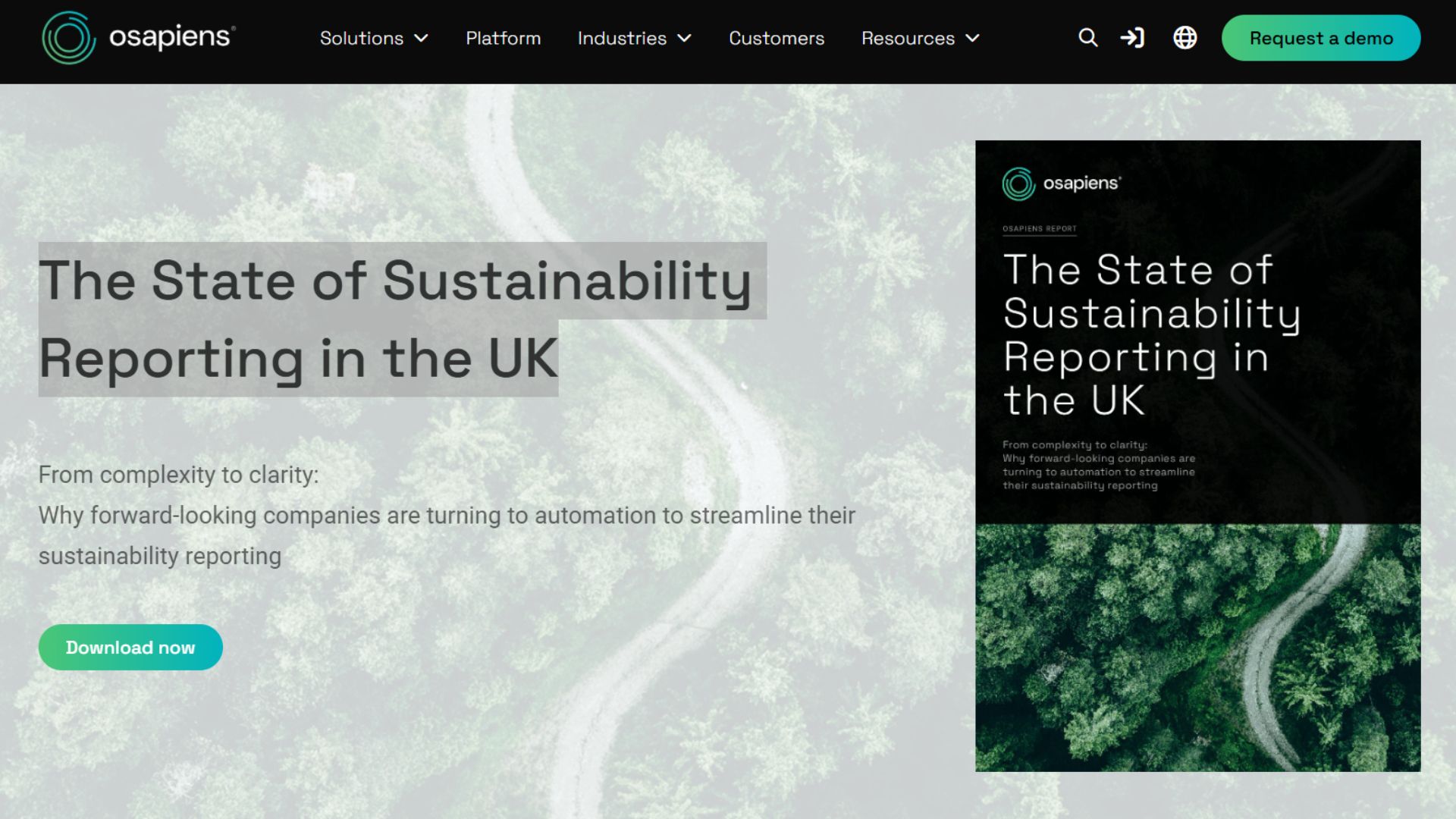
The landscape for UK businesses is shifting, and sustainability reporting, once viewed primarily as a compliance burden, is rapidly evolving into a strategic lever for innovation and competitive advantage. Our latest analysis, leveraging proprietary market insights and investor sentiment data, reveals that this transformation holds significant implications for capital allocation within the energy sector. While the broader market grapples with volatility and supply-demand dynamics, a quiet revolution in corporate governance is underway, reshaping how investors should assess long-term value in oil and gas firms.
ESG Reporting: A New Paradigm for UK Energy Firms
New findings suggest that nearly 70% of UK businesses now see mandatory sustainability reporting as a catalyst for innovation. This marks a crucial shift in perception, moving beyond simple box-ticking to recognizing the inherent value in transparent environmental, social, and governance (ESG) disclosures. For investors in the oil and gas sector, this signals a maturing market where robust ESG frameworks are becoming non-negotiable for attracting and retaining capital. A significant portion of companies, 41.5% of those in favor, even advocate for a tiered reporting system, acknowledging the varied capacities across firms. This nuanced approach could help integrate smaller, specialized energy service providers or independent producers into the broader sustainability ecosystem without overwhelming them, fostering a more inclusive and resilient supply chain.
Navigating the Regulatory Maze and Data Imperatives
Despite the growing support, the path to comprehensive sustainability reporting is not without its hurdles. A substantial 50% of businesses pinpoint regulatory uncertainty as their primary compliance challenge, followed by the sheer complexity of data gathering and verification (27%). For energy companies, this challenge is amplified by intricate supply chains and the inherent environmental impact of their operations. Our proprietary reader intent data shows investors are increasingly asking about the underlying data sources and models powering market insights, underscoring a broader demand for transparency and verifiable information. This mirrors the corporate struggle: firms are striving to provide granular ESG data, yet half still rely on manual, spreadsheet-based systems. While 48% are experimenting with digital tools, the chasm between intent and execution remains wide. Companies that can effectively bridge this gap through automation and robust data governance will not only reduce compliance costs but also gain a significant edge in investor confidence.
Strategic Implications Amidst Market Volatility
The pursuit of stronger ESG reporting occurs within a dynamic and often volatile energy market. As of today, Brent Crude trades at $98.01 per barrel, up 3.24% from its opening, though it has seen a range between $94.42 and $99.84 in the last 24 hours. This daily fluctuation is set against a backdrop of a recent 14-day trend that saw Brent drop from $108.01 to $94.58, a decrease of over 12%. Such market volatility intensifies the need for energy companies to demonstrate long-term resilience and adaptability. Investors are actively seeking clarity on the current Brent crude price and robust forecasting models, indicating a demand for stable, predictable returns. Firms that proactively embed sustainability into their core operations and transparently report on their progress are better positioned to attract capital, particularly from ESG-mandated funds, which often offer a buffer against traditional commodity price swings. This strategic differentiation can lead to lower costs of capital and greater investor loyalty, proving that environmental stewardship can indeed translate into financial outperformance in a turbulent market.
The Road Ahead: UK SRS and Future-Proofing Investments
Looking forward, the finalization of the UK Sustainability Reporting Standards (SRS) in September 2025 presents a critical inflection point. These standards, designed to align with international frameworks like CSRD, SASB, and CDP, will provide much-needed clarity for UK firms, including those in the oil and gas sector. This upcoming event, though over a year away, demands immediate strategic planning. Companies that delay their preparation risk falling behind competitors who are already investing in the necessary infrastructure and expertise. Our calendar of upcoming energy events highlights significant near-term catalysts, such as the OPEC+ JMMC and Full Ministerial meetings on April 18th and 20th respectively, and recurring API and EIA inventory reports. While these events dictate short-term supply and demand dynamics, the long-term trajectory of capital allocation will increasingly be influenced by a firm’s readiness for comprehensive ESG disclosure. Investors are currently asking about OPEC+ production quotas, directly linking supply decisions to market prices. Similarly, a company’s commitment to ESG reporting will increasingly be viewed as a ‘production quota’ for sustainable value creation, influencing future valuations and investment decisions. Firms that demonstrate strong confidence in tracking their supply chain impact, a current weakness for many (only 1 in 10 express strong confidence), will be particularly well-regarded as the UK SRS takes full effect.


