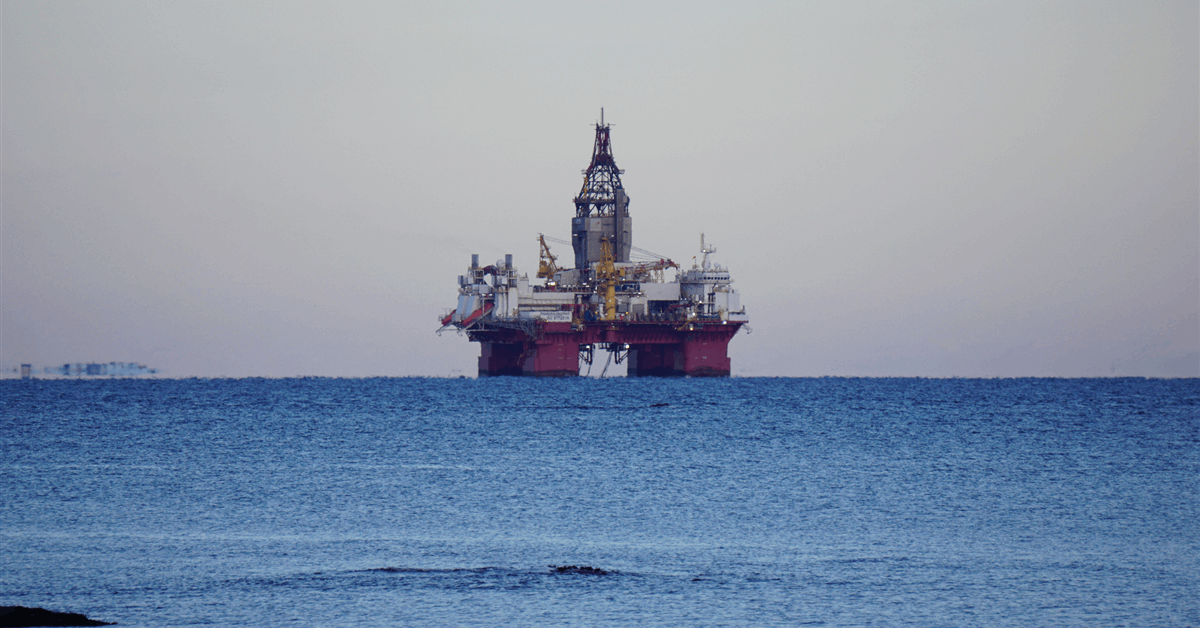
Equinor and its partners have successfully proven hydrocarbons in the Smorbukk Midt prospect, located within production license 094 in the Norwegian Sea. This latest discovery, estimated to hold between 6.3 and 18.9 million oil-equivalent barrels, is strategically positioned to leverage existing infrastructure at the nearby Asgard field. In a market currently grappling with significant price volatility, such cost-efficient developments offer a compelling investment proposition, underscoring the ongoing value of disciplined exploration in mature basins. This analysis dives into the operational specifics of the find, its broader market implications amidst fluctuating crude prices, and how upcoming geopolitical and inventory data could shape the investment landscape.
Equinor’s Strategic Tie-Back Success in the Norwegian Sea
The wildcat well 6506/12-PB-3 H, targeting the Smorbukk Midt prospect, has confirmed a valuable new resource for Equinor and its partners in production license 094. This discovery is particularly significant due to its proximity to the established Asgard field, which began production in 1999. The plan to connect the new find to the Smorbukk Sor accumulation, an integral part of the Asgard infrastructure, represents a highly capital-efficient development strategy. By utilizing existing processing and transportation facilities, Equinor significantly reduces upfront capital expenditure and accelerates the path to first production, mitigating exposure to market swings.
Exploration efforts by the Transocean Encourage rig successfully identified a 54-meter condensate/light oil column within the Middle Jurassic Garn Formation, exhibiting moderate to good reservoir properties. Additionally, 66 meters of gas/condensate were proven in the Ile Formation, also characterized by moderate to good reservoir quality. The well, drilled to a measured depth of 4,991 meters, did not encounter the petroleum/water contact in either formation, suggesting potentially larger resource upside. This success stands in stark contrast to Equinor’s recent dry well at the Deimos prospect in the Barents Sea, highlighting the inherent risks in exploration and making the Smorbukk Midt discovery all the more impactful. Equinor operates license 094 with a 40.95% stake, alongside partners Var Energi (34.3%), Petoro (14.95%), and TotalEnergies (9.8%).
Market Headwinds and the Value of Efficient Exploration
The timing of Equinor’s announcement comes as the broader energy market navigates a period of significant uncertainty and price correction. As of today, Brent crude trades at $90.38 per barrel, marking a sharp 9.07% decline within a single trading session. This downward pressure is part of a larger trend, with Brent having shed $20.91, or 18.5%, over the past 14 days alone, falling from $112.78 on March 30th to $91.87 just yesterday. WTI crude mirrors this sentiment, currently sitting at $82.59, down 9.41% today, while gasoline prices have also retreated to $2.93, a 5.18% drop.
In such a volatile and potentially softening price environment, the strategic value of discoveries like Smorbukk Midt is amplified. Projects that offer a quick and cost-effective route to market through existing infrastructure become inherently more attractive to investors. They minimize the capital at risk and offer quicker returns, which is crucial when the forward curve for crude prices is uncertain. This focus on capital discipline and efficient resource development is paramount for energy companies seeking to maintain profitability and deliver shareholder value during periods of market turbulence. The ability to bring new barrels online without the massive expenditures associated with greenfield developments provides a defensive advantage and a clear pathway to sustaining production levels.
Navigating Near-Term Market Catalysts: OPEC+ and Inventories
Looking ahead, the market’s immediate trajectory will be heavily influenced by a series of critical upcoming events, demanding close attention from investors. The most significant of these are the OPEC+ Joint Ministerial Monitoring Committee (JMMC) meeting scheduled for tomorrow, April 18th, followed by the full OPEC+ Ministerial Meeting on April 19th. These gatherings are pivotal, as global crude prices have experienced a notable decline since their last deliberations. Investors are keenly watching for any signals regarding potential adjustments to production quotas, particularly in light of the recent price drop and lingering questions about global demand strength. Any unexpected shift in output policy from this influential bloc could trigger substantial market reactions.
Beyond OPEC+, weekly inventory data will provide further short-term directional cues. The API Weekly Crude Inventory report on April 21st, followed by the EIA Weekly Petroleum Status Report on April 22nd, will offer crucial insights into supply-demand dynamics within the United States. These reports, repeated on April 28th and 29th respectively, are closely scrutinized for changes in crude oil, gasoline, and distillate stocks, which often serve as leading indicators for market sentiment. The Baker Hughes Rig Count, scheduled for April 24th and May 1st, will also provide a pulse on North American drilling activity. These collective events will undoubtedly shape the immediate outlook for oil prices, influencing how the market values both existing assets and new discoveries like Equinor’s.
Investor Sentiment and the Long-Term Outlook
Our proprietary data indicates that investors are grappling with significant questions about the future of oil prices, with many asking “what do you predict the price of oil per barrel will be by end of 2026?” and “What are OPEC+ current production quotas?” These inquiries underscore a dual focus: both the immediate impact of market-moving events and a longer-term perspective on energy prices. While the short-term outlook is undoubtedly clouded by the upcoming OPEC+ decisions and inventory fluctuations, the strategic importance of sustained investment in exploration and production remains high.
Equinor’s Smorbukk Midt discovery contributes to this longer-term picture by demonstrating the continued viability of developing new resources, particularly those that can be brought online efficiently. Such projects help to ensure energy security and provide a steady supply stream in a world where demand, despite short-term dips, is projected to remain robust for years to come. For investors, the ability of companies to consistently replenish reserves through both conventional exploration and strategic acquisitions, especially when coupled with disciplined capital deployment, is a key indicator of long-term value creation. In a market where volatility is the new norm, a balanced portfolio that includes efficient, tie-back developments provides resilience and positions companies like Equinor for sustained performance.


