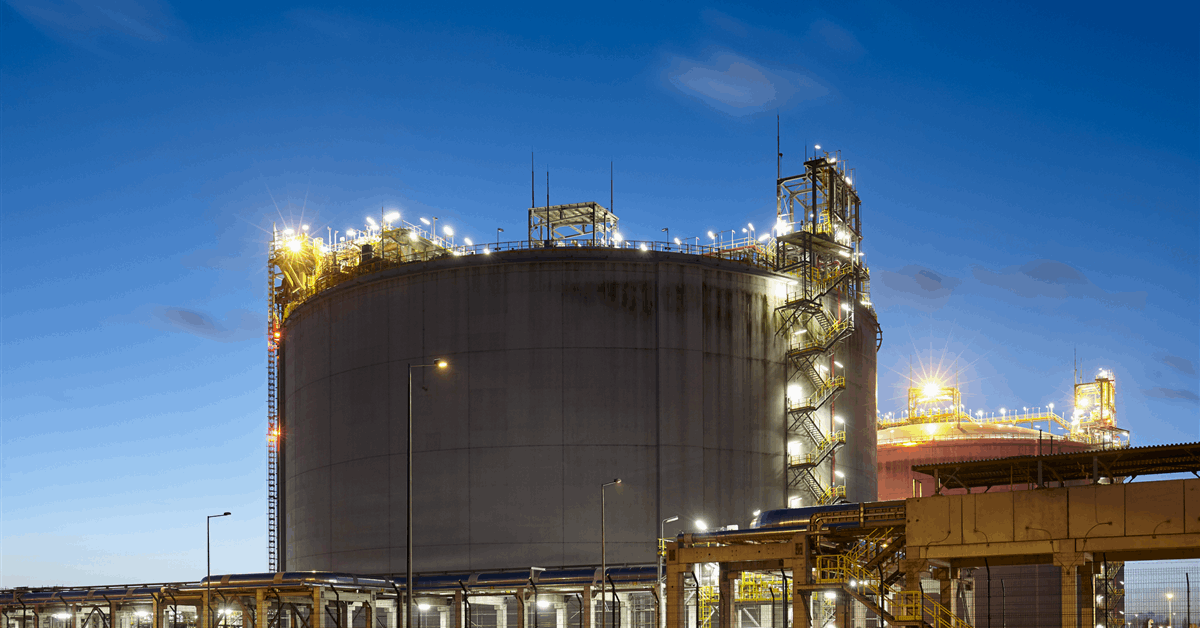
Equinor and its partners have significantly strengthened the long-term supply outlook for Europe’s natural gas market with the successful commissioning of the Askeladd West field in the Barents Sea. This strategic development is a critical step in ensuring sustained feed gas for the Hammerfest LNG facility, a vital asset for European energy security. By bringing Askeladd West online, Equinor is not only unlocking new recoverable volumes but also bridging a crucial production gap, guaranteeing full output from Hammerfest LNG until planned onshore compression facilities come into operation in 2028. For investors, this move underscores a commitment to stable, long-term gas production and profitability in a region increasingly central to global energy dynamics.
Bolstering European Gas Supply Amidst Demand Shifts
The Hammerfest LNG plant, located on the island of Melkoya, stands as the sole natural gas liquefaction and export facility in Northern Europe. Since commencing operations in 2022, it has played a pivotal role in diversifying Europe’s energy mix, processing 6.5 billion standard cubic meters (Bscm) of natural gas annually. This capacity represents approximately five percent of Norway’s total gas exports and contributes around two percent to the European Union’s gas requirements. The new Askeladd West field is designed to feed gas into this strategically important facility via a 195-kilometer pipeline, delivering an estimated 15 Bscm of recoverable volumes. This injection of new supply is instrumental in maintaining the plant’s full operational capacity, ensuring a consistent flow of liquefied natural gas to international markets at a time when energy security remains a paramount concern for European nations.
Investment in Production Stability and Future-Proofing Assets
Equinor’s decision to bring Askeladd West online, an investment totaling NOK 3 billion (approximately $302.91 million), highlights a proactive approach to managing long-term production sustainability. This project directly supports the Snohvit field, the Barents Sea’s inaugural hydrocarbon development, which has been producing since 2007. Askeladd West serves as a crucial interim measure, guaranteeing Hammerfest LNG’s output until the broader Snohvit Future project materializes. The Snohvit Future initiative, approved in 2023, includes significant upgrades such as onshore compression to maintain gas flow and electrification components designed to curb emissions, with completion anticipated by 2028 and a full shift to electrified operations by 2030. The “highly profitable” nature of the Askeladd West project, coupled with the involvement of a robust partner consortium including Norway’s Petoro, France’s TotalEnergies, Var Energi, and Harbour Energy, signals strong confidence in the economic viability and strategic importance of these Barents Sea assets for decades to come.
Navigating Current Market Dynamics and Anticipating Key Events
The successful ramp-up of new supply streams like Askeladd West occurs against a backdrop of fluctuating global energy prices. As of today, Brent crude trades at $98.33, reflecting a modest daily decline of 1.07%, while its U.S. counterpart, WTI, stands at $89.6, down 1.72%. This daily dip follows a more significant trend; Brent has seen a 12.4% reduction over the past fourteen days, falling from $112.57 on March 27th to $98.57 yesterday. Such shifts in the crude market often create ripple effects across the broader energy complex, influencing investor sentiment even towards natural gas. Investors are keenly watching for upcoming market signals that could further define these dynamics. The OPEC+ Joint Ministerial Monitoring Committee (JMMC) meeting tomorrow, April 17th, followed by the full Ministerial Meeting on April 18th, will be critical. Any adjustments to production quotas could introduce further volatility or stability into crude prices. Beyond OPEC+, weekly data releases, including the API and EIA crude inventory reports on April 21st and 22nd, respectively, along with the Baker Hughes Rig Count on April 24th, will provide fresh insights into supply-demand balances and future production trajectories, all of which factor into the overall investment thesis for energy projects.
Investor Focus: Stability, Transparency, and Strategic Positioning
In a global energy landscape characterized by geopolitical tensions and supply uncertainties, investors are increasingly scrutinizing projects that offer long-term stability and predictable cash flows. Our proprietary analytics indicate that investors are frequently asking about factors influencing market stability, such as “What are OPEC+ current production quotas?” and seeking clarity on the accuracy of real-time data, including “What is the current Brent crude price and what model powers this response?”. The commissioning of Askeladd West by Equinor directly addresses a core investor concern: reliable supply. This project provides a tangible example of how integrated energy companies are strategically investing to maintain production levels and ensure energy security, particularly for European markets. The consistent flow of natural gas from a non-OPEC source like Norway, backed by significant capital investment and a strong partnership structure, offers a degree of insulation from the volatility often associated with crude markets and geopolitical events. For investors, understanding these foundational supply-side developments, alongside macro market indicators and upcoming event catalysts, is crucial for making informed decisions and positioning portfolios for long-term growth in the evolving energy sector.


