Brazil Poised as Global Green Fuel Powerhouse with Envision’s Net-Zero Industrial Hub
A transformative energy initiative is set to redefine Latin America’s role in the global decarbonization landscape. Envision, a leading green technology innovator, has unveiled plans to develop Latin America’s inaugural Net-Zero Industrial Park in Brazil. This landmark project, strategically focused on the production of Sustainable Aviation Fuel (SAF), green hydrogen, and green ammonia, signals a profound shift in the region’s industrial and energy investment outlook.
The ambitious undertaking positions Brazil to emerge as a preeminent global hub for what many are calling “green oil” production. Leveraging the nation’s vast natural endowments, particularly its abundant biomass resources and significant renewable electricity generation capacity, the project aims to capitalize on intrinsic advantages to create a sustainable, scalable energy ecosystem. For investors tracking the evolution of the energy sector, this development represents a critical inflection point, indicating where future capital flows and technological advancements are converging.
Strategic Partnership Underpins Brazil’s Green Energy Ascent
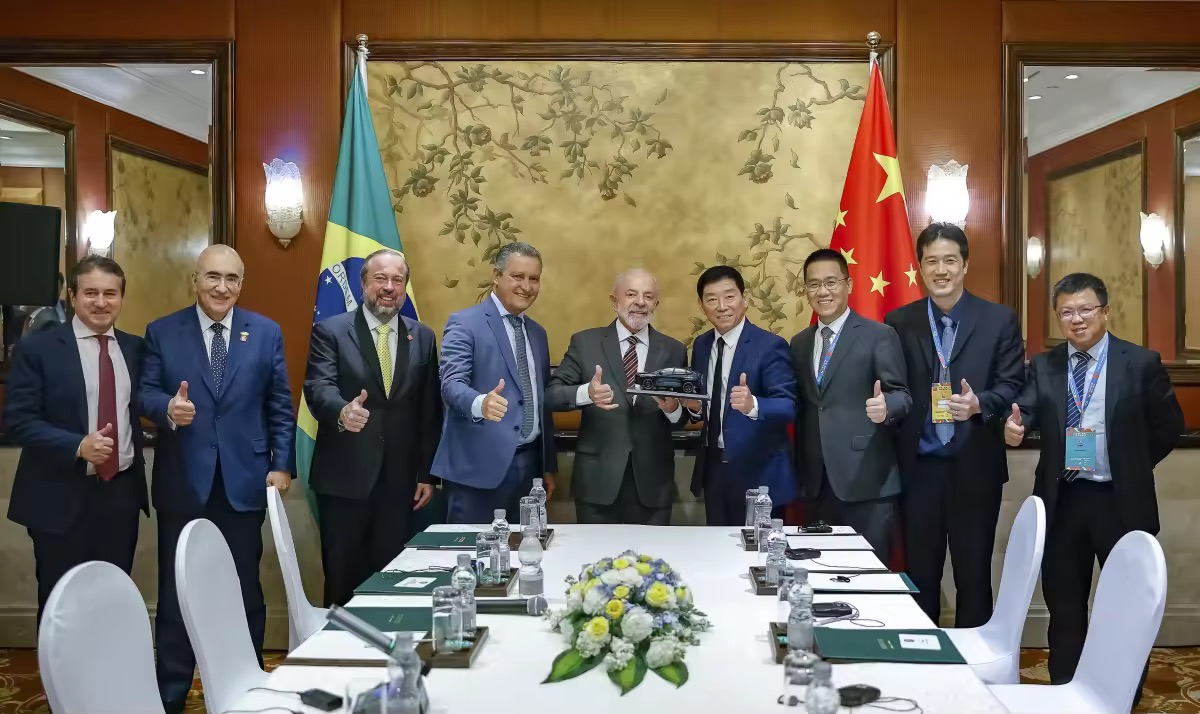
The announcement of this pioneering Net-Zero Industrial Park emerged during a high-profile official visit by Brazilian President Luiz Inácio Lula da Silva to China, where he met with Envision Chairman Lei Zhang. This high-level engagement underscores the strategic importance both nations place on accelerating Brazil’s green energy transition and fostering robust, sustainable industrial development.
This collaboration extends beyond a single project; it is part of a broader, concerted effort to forge comprehensive green fuel value chains within Brazil. By integrating cutting-edge renewable energy systems and advanced technological innovations, Envision aims to significantly boost Brazil’s capacity for clean fuel generation, thereby establishing the country as a global leader in the production of low-carbon energy solutions. For financial markets, such government-backed, large-scale initiatives signal long-term stability and growth potential in the burgeoning green energy sector.
Envision’s Proven Net-Zero Model Expands Globally
The foundation of Brazil’s upcoming Net-Zero Industrial Park is not a speculative venture but rather a successful, replicable model. Envision has previously demonstrated the efficacy of its Net-Zero Industrial Park concept in Inner Mongolia, a project that has garnered international recognition, including a spotlight in the World Economic Forum’s World Transitioning Industrial Clusters Report. This established track record provides a strong technical and operational precedent for the Brazilian development.
The Chifeng site in Inner Mongolia currently stands as a testament to Envision’s capabilities, hosting what is recognized as the world’s largest and most cost-effective facility for green hydrogen and ammonia production. This expertise in scaling complex green energy projects efficiently and economically is a key differentiator and a reassuring factor for potential investors looking at the Brazilian venture. The ability to produce these critical green fuels at competitive price points is paramount for widespread adoption and market penetration.
Driving Cost Competitiveness and Scale in Green Fuel Production
Lei Zhang, Chairman of Envision, articulated the strategic imperative behind their technological advancements, stating, “Envision is dedicated to enhancing the cost competitiveness of green oil through continuous technological innovation.” He further emphasized the company’s success, noting, “By leveraging our groundbreaking Net-Zero Industrial Park methodology, we have successfully constructed the world’s most expansive and economically efficient green hydrogen and ammonia project.”
This focus on both scale and cost-effectiveness is crucial for the mainstream adoption of green fuels. As the world pushes for decarbonization, the economic viability of alternatives to traditional fossil fuels becomes a primary concern for industries like aviation and heavy transport. Envision’s demonstrated ability to deliver large-scale, cost-competitive solutions positions the Brazilian project as a significant step towards making sustainable aviation fuel (SAF), green hydrogen, and green ammonia commercially attractive on a global scale. This directly impacts the long-term investment landscape for energy and infrastructure.
Brazil’s Unique Position in the Global Green Transition
“Brazil holds a pivotal position in the global transition towards a sustainable human society,” observed Lei Zhang. “With its abundant biomass and unparalleled renewable electricity resources, it is uniquely poised to become the planet’s foremost green oil production hub.” This perspective highlights the strategic advantages that make Brazil an ideal location for such an ambitious undertaking.
The nation’s vast agricultural land provides an enormous potential for biomass feedstock, while its hydroelectric, solar, and wind energy resources offer a foundation for generating truly green electricity. This combination creates a powerful synergy for producing low-carbon fuels and chemicals, minimizing reliance on fossil-based inputs. For investors seeking exposure to renewable energy and sustainable commodities, Brazil’s inherent advantages, now being harnessed by Envision, present compelling opportunities.
Global Decarbonization and Energy Security Implications
Building upon its successful deployments in regions like Inner Mongolia, Jiangsu, and Spain, Envision is now meticulously adapting its proven industrial park model to align with Brazil’s distinct resource profile and industrial strengths. This tailored approach is designed to maximize local benefits while contributing to global energy goals.
The project is expected to firmly establish Brazil as a key innovation hub for renewable energy throughout Latin America. More broadly, its impact will resonate on a global scale, playing a critical role in worldwide decarbonization efforts and enhancing energy security by diversifying global fuel supplies away from traditional petroleum products. For sophisticated investors, this initiative represents not just a local project but a significant piece of the global energy transition puzzle, with profound implications for environmental, social, and governance (ESG) investing strategies.
Envision’s commitment, as articulated by Zhang, to “transform the vision of a shared future for humanity into tangible action, leveraging China’s new energy advancements to foster a new era of global prosperity,” underscores the long-term, visionary nature of this partnership. The development of this Net-Zero Industrial Park in Brazil is a powerful signal of the accelerating shift towards a sustainable energy future, offering substantial growth prospects for those prepared to invest in the next generation of energy infrastructure and technology.