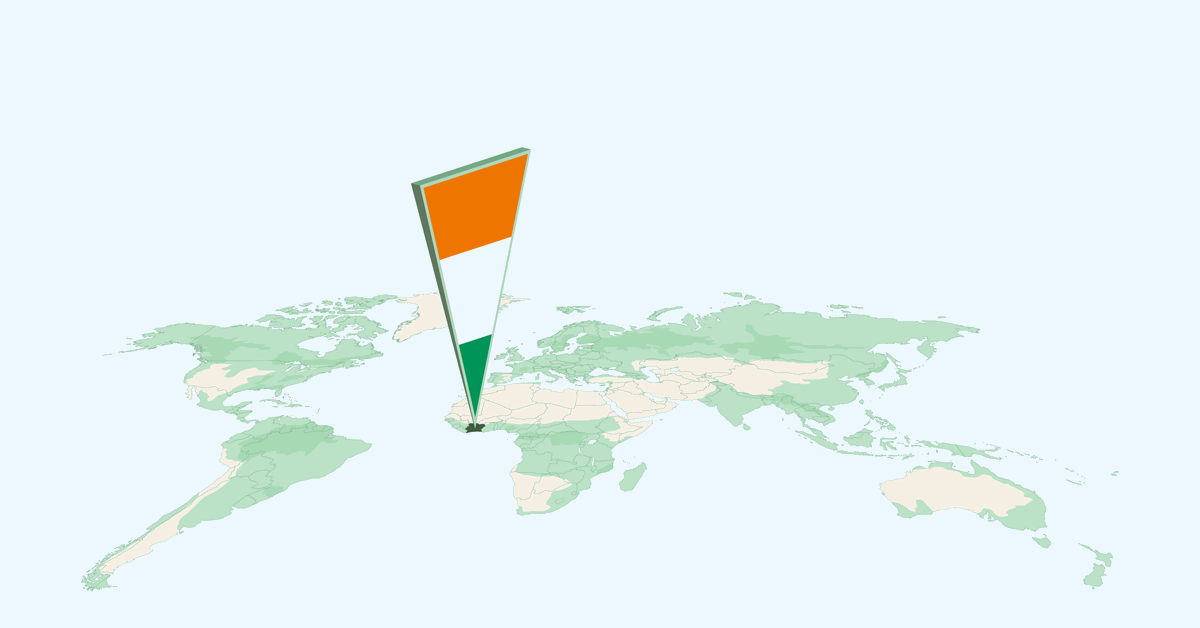
Eni’s latest strategic move, securing the CI-707 offshore exploration block in Côte d’Ivoire, underscores a continued commitment to bolstering its core upstream portfolio in a highly prospective region. This development is not merely an expansion; it represents a calculated maneuver to leverage existing infrastructure and geological understanding, particularly following the significant Calao discovery earlier this year. For investors, this signals Eni’s disciplined approach to growth, focusing on areas with proven potential and operational synergies, even as the broader energy market navigates a complex landscape of price volatility and energy transition demands. Understanding the strategic rationale behind such a move, juxtaposed against current market dynamics and upcoming catalysts, is crucial for assessing its long-term value creation potential.
Deepening West African Footprint and Strategic Synergy
The acquisition of the CI-707 offshore block, covering approximately 1,130 square miles (2,926 square kilometers) in the Ivorian sedimentary basin, is a significant enhancement to Eni’s already robust presence in Côte d’Ivoire. This new block, situated at water depths ranging from 3,280 to 9,843 feet (1,000 to 3,000 meters), offers a maximum exploration period of nine years, providing ample time for comprehensive appraisal. Crucially, CI-707 is geologically continuous with the nearby CI-205 block, where Eni announced the substantial Calao discovery in March 2024. This continuity is a key de-risking factor, offering a strategic opportunity to identify similar structures and pave the way for future synergistic developments, potentially accelerating time to production and optimizing costs by leveraging shared infrastructure.
Eni’s commitment to Côte d’Ivoire is long-standing, with operations commencing in 2017. The company currently operates in ten offshore blocks within the country, including CI-101, CI-205, CI-401, CI-501, CI-504, CI-526, CI-706, CI-708, CI-801, and CI-802. Current equity production stands at over 62,000 barrels of oil equivalent and more than 75 million cubic feet of gas per day, with an ambitious target to increase this to 150,000 barrels of oil and 200 million cubic feet of gas with the start of its phase 3 project. This consistent growth trajectory, now further supported by the CI-707 block, reinforces Côte d’Ivoire’s role as a core asset in Eni’s global portfolio, promising significant future cash flow generation.
Navigating Market Volatility: Investor Sentiment and Crude Prices
While Eni strategically expands its long-term upstream assets, the immediate market environment for crude oil remains highly dynamic. As of today, Brent crude trades at $90.38 per barrel, marking a notable daily decline of 9.07%. Similarly, WTI crude has fallen to $82.59, a 9.41% drop, and gasoline prices are down to $2.93, a 5.18% decrease. This recent downturn follows a significant trend; over the past 14 days, Brent crude has seen a substantial reduction of nearly 20%, falling from $112.78 on March 30th to its current level. This volatility highlights the ongoing challenges and opportunities facing oil and gas investors.
Our proprietary reader intent data reveals a keen interest in these market fluctuations, with many investors asking “what do you predict the price of oil per barrel will be by end of 2026?” Such questions underscore the desire for clarity amidst uncertainty. For a company like Eni, with long-term exploration and development projects, daily price swings are less impactful than the broader trend. However, sustained lower prices can influence investment decisions and project economics. Eni’s strategy of de-risking exploration through geological continuity and leveraging existing infrastructure, as seen with CI-707, helps to mitigate some of this market-driven risk, making its upstream investments potentially more resilient even in a volatile pricing environment.
Forward Catalysts and Supply-Demand Dynamics
The immediate horizon holds several critical events that will undoubtedly influence market sentiment and potentially shift crude price trajectories. The most prominent of these is the OPEC+ Ministerial Meeting scheduled for Sunday, April 19th. This full ministerial gathering is a crucial juncture, as investors closely watch for any decisions regarding production quotas. Our readers are actively seeking insights into this, with queries like “What are OPEC+ current production quotas?” indicating the market’s focus on potential supply adjustments. Any decision by OPEC+ to further cut production could provide upward price support, while maintaining current levels or, less likely, increasing supply could exert downward pressure.
Beyond OPEC+, a steady stream of data releases will offer insights into global supply and demand. The API Weekly Crude Inventory reports on April 21st and 28th, followed by the EIA Weekly Petroleum Status Reports on April 22nd and 29th, will provide crucial updates on U.S. crude stocks, refinery utilization, and product demand. These reports often trigger short-term market reactions. Furthermore, the Baker Hughes Rig Count, scheduled for April 24th and May 1st, will offer a forward-looking indicator of drilling activity and potential future supply from North America. For long-term investors in companies like Eni, these events are vital for understanding the broader market backdrop against which their deepwater exploration projects in Côte d’Ivoire will eventually come online, influencing future profitability and valuation.
Balancing Hydrocarbons with the Energy Transition: The Kazakh Solar Play
Adding another dimension to Eni’s portfolio strategy is its ongoing commitment to renewable energy, exemplified by the recent commissioning of a 50-megawatt (MW) solar power plant in Zhanaozen, Kazakhstan. This plant, a significant component of a larger 247-MW hybrid power facility integrating solar, wind, and gas generation, showcases Eni’s subsidiary Plenitude’s role in the global energy transition. Equipped with over 80,000 photovoltaic panels spread across approximately 80 hectares, the facility is projected to produce 86 gigawatt-hours of renewable energy annually, contributing directly to the electricity needs of KazMunayGas (KMG) facilities in the region.
The hybrid configuration is particularly noteworthy, combining variable renewable sources with stable gas generation to ensure a reliable power supply. This approach addresses a key challenge in renewable integration and underscores a pragmatic pathway for energy transition. For investors, Eni’s ventures like the Kazakhstan solar plant demonstrate a strategic balancing act. While the company continues to invest in high-potential hydrocarbon assets like the new Côte d’Ivoire block, it simultaneously diversifies into lower-carbon energy sources. This dual strategy aims to secure long-term energy supply through traditional means while building a resilient, diversified portfolio that aligns with evolving global energy demands and environmental objectives, potentially attracting a broader base of investors focused on both energy security and sustainability.


