The global energy sector is at a pivotal juncture, marked by an anticipated contraction in fossil fuel investment for the first time since the COVID-19 pandemic. This shift, primarily driven by a predicted 6% drop in oil production spending, signals a complex interplay of price sensitivity, evolving capital allocation strategies, and the persistent tension between energy security and the green transition. For investors, understanding the underlying drivers and immediate market implications of this forecast capex reduction is paramount, especially as current market realities present a different picture than the one informing these long-term projections.
The Capex Contraction: Drivers Behind the Dip
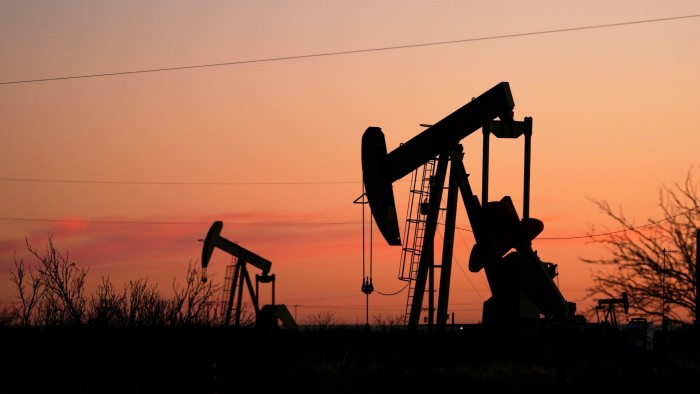
The International Energy Agency’s forecast of a 6% decline in oil production spending this year marks a significant reversal, excluding the unique circumstances of the pandemic. This projected drop would be the largest since 2016, a period defined by crude prices plummeting below $30 a barrel. The IEA attributes this contraction to a combination of lower oil prices and dampened demand observed in the recent past. Specifically, US shale producers, who constitute roughly 15% of global oil production capital expenditure, are expected to cut their investment by a substantial 10%. International oil majors are also scaling back, increasingly prioritizing shareholder returns and capital discipline over aggressive expansion. This dynamic has consequently elevated the influence of state-owned oil companies, particularly from the Middle East and Asia, which are now poised to account for 40% of all oil and gas spending this year, a significant jump from a quarter ten years prior.
Navigating Current Market Realities Amidst Forward Projections
While the IEA’s capex forecast is rooted in a prior market environment characterized by a significant price drop to around $65 a barrel, the current live market paints a more robust picture. As of today, Brent Crude trades at $96.25, reflecting a 1.54% increase, with a daily range between $91 and $96.89. Similarly, WTI Crude stands at $92.58, up 1.42%. This upward momentum contrasts sharply with the downward price trajectory that underpinned the IEA’s projections for investment cuts. Our proprietary data shows Brent crude, while experiencing some volatility, has largely trended upwards over the last 14 days, from $93.22 just yesterday to over $96 today, after a period where it dipped from $102.22 on March 25th. This current price strength suggests that while the IEA’s report highlights the *sensitivity* of capex to lower prices, sustained higher prices could eventually temper the extent of these cuts, or at least shift where investment is directed. Investors are keenly asking about the consensus 2026 Brent forecast; this capex report, combined with current price strength, suggests a tighter supply outlook in the future if investment indeed falls, potentially supporting higher prices than previously assumed. The operational status of Chinese teapot refineries, another key investor inquiry, will also play a crucial role in determining demand-side pressure, influencing future price stability and, by extension, investment decisions.
The Dual Imperatives: Energy Transition Meets Energy Security
The broader energy investment landscape reveals a stark contrast: global spending on fossil fuels is projected to shrink by 2% this year to $1.1 trillion, while investment in renewable energy, nuclear, batteries, power grids, low-emission fuels, and energy efficiency is set to exceed $2.2 trillion. Yet, this global shift is not uniform. China and India are actively building substantial fleets of coal-fired power plants, driven by surging electricity demand and paramount energy security concerns. This commitment stands in direct opposition to advanced economies, which, for the first time on record, placed no new orders for coal-fired power plant turbines. Adding another layer of complexity, international oil companies are also reportedly reducing their clean energy spending, with a collective investment of $22 billion in low-emissions technology in 2024, a 25% decrease from the previous year. This divergence underscores the ongoing challenge of balancing climate goals with the immediate need for reliable and affordable power, a tension that will continue to shape capital flows across the energy spectrum.
Upcoming Events to Watch: Shaping the Investment Horizon
For astute investors, the next two weeks present a critical series of events that will offer further clarity on market direction and potential investment shifts. The upcoming OPEC+ Joint Ministerial Monitoring Committee (JMMC) meeting on April 18th, followed by the Full Ministerial meeting on April 20th, will be paramount. Any decisions regarding production quotas could significantly influence global supply, impacting prices and, in turn, the investment appetite of producers. Given the IEA’s forecast of capex cuts, any tightening of supply from OPEC+ could further exacerbate future supply concerns. Moreover, the Baker Hughes Rig Count reports on April 17th and April 24th will provide a real-time pulse on US drilling activity. If US shale producers adhere to the predicted 10% investment cut, a noticeable drop in rig counts would signal a tightening of future supply. Conversely, if current higher crude prices ($90s per barrel) incentivize a more robust drilling response, it could temper the IEA’s more pessimistic capex outlook for the region. Finally, the API Weekly Crude Inventory (April 21st, April 28th) and EIA Weekly Petroleum Status Reports (April 22nd, April 29th) will offer crucial insights into short-term supply-demand balances, inventory levels, and refinery utilization, all of which directly influence market sentiment and price volatility, factors critical for formulating a robust base-case Brent price forecast for the next quarter.