Enbridge’s recent engagement in the US Gulf of Mexico, culminating in the finalization of a comprehensive geological evaluation, signals a strategic reinforcement of its long-term infrastructure ambitions. This isn’t merely a routine survey; it represents a foundational investment in de-risking future projects and securing operational longevity in a critical energy basin. As global energy markets navigate persistent volatility, the detailed geotechnical insights gathered by TDI-Brooks for Enbridge underscore a commitment to strategic, data-driven development, positioning the company for sustained growth amidst evolving supply dynamics and investor scrutiny.
Strategic Data Underpins Future Infrastructure Resilience
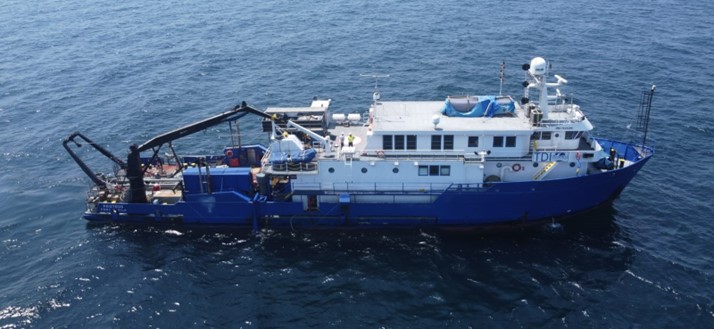
The meticulous geological evaluation conducted by TDI-Brooks on behalf of Enbridge in the Gulf of Mexico provides a crucial bedrock for prospective energy infrastructure. Utilizing the specialized research vessel R/V BROOKS MCCALL, the project executed an extensive data acquisition program, including 38 piston cores, 7 gravity cone penetration tests (gCPTs), and 82 box cores. This sophisticated suite of tools, encompassing 20-meter jumbo piston cores and 40-meter CPT-Stingers, is paramount for understanding seabed conditions, assessing geohazards, and optimizing the design and routing of critical assets like pipelines and subsea tie-backs. Enbridge’s consistent investment in such detailed preliminary work in the region, building on previous geotechnical projects, demonstrates a proactive approach to mitigating risks and ensuring the structural integrity and long-term viability of its deepwater operations. The subsequent examination of these samples at TDI-Brooks’ Geotechnical Laboratory in College Station, Texas, and the field reporting by GEMS/Geosyntec, highlight a multi-faceted commitment to precision and reliability, essential for capital-intensive offshore ventures. This foundational data acquisition is a hallmark of strategic planning, indicating Enbridge is preparing for significant future developments in the vital Gulf of Mexico energy corridor.
Market Volatility vs. Long-Term Investment Signals
Against a backdrop of significant market shifts, Enbridge’s foundational investments in the Gulf of Mexico stand out. As of today, Brent crude trades at $90.38 per barrel, marking a sharp 9.07% decline within the last 24 hours, with the daily range fluctuating significantly between $86.08 and $98.97. Similarly, WTI crude is priced at $82.59, down 9.41% today, traversing a daily range of $78.97 to $90.34. Gasoline prices have also seen a notable drop, currently at $2.93 per gallon, down 5.18%. This immediate volatility follows a broader trend where Brent has fallen from $112.78 on March 30th to $91.87 just yesterday, representing an 18.5% decline over 14 days. Despite these short-term fluctuations and the broader market turbulence, Enbridge’s continued focus on extensive geological data acquisition signals confidence in the enduring demand for hydrocarbons and the necessity of robust infrastructure to deliver them. Investors often look beyond daily price swings, recognizing that multi-year, multi-billion-dollar projects require a long-term demand outlook. The strategic nature of this geotechnical work suggests Enbridge is positioning itself to capitalize on future energy needs, irrespective of current commodity price headwinds, viewing the present as an opportune moment for strategic groundwork.
Upcoming Events to Shape Investment Decisions and Outlook
The implications of Enbridge’s data gathering extend into the future, intersecting with critical upcoming energy market events that will shape the investment landscape. Investors are keenly watching the OPEC+ Joint Ministerial Monitoring Committee (JMMC) meeting tomorrow, April 18th, followed by the full Ministerial Meeting on April 19th. Any decisions regarding production quotas will directly impact global crude supply, influencing future price trajectories and the economic rationale for new infrastructure projects. Furthermore, the weekly API Crude Inventory report on April 21st and 28th, along with the EIA Weekly Petroleum Status Report on April 22nd and 29th, will provide crucial insights into short-term supply and demand dynamics in the U.S., a key market for Enbridge’s operations. The Baker Hughes Rig Count, scheduled for April 24th and May 1st, will offer a granular gauge of upstream activity, indirectly affecting pipeline utilization and future expansion plans. Our proprietary reader intent data shows significant investor interest in predicting the price of oil per barrel by the end of 2026, highlighting a widespread focus on the medium-term outlook, alongside specific questions about OPEC+’s current production quotas. Enbridge’s proactive data collection suggests it is preparing for a future where efficient and reliable energy transport remains paramount, acknowledging that while market events influence sentiment, foundational strategic planning is key for long-term growth.
The Specialized Ecosystem Powering Offshore Energy Development
The success of complex offshore energy projects hinges on a highly specialized ecosystem of service providers, exemplified by TDI-Brooks’ role in Enbridge’s Gulf of Mexico initiatives. As a 29-year-old research and service company, TDI-Brooks brings decades of expertise in geotechnical and offshore survey projects, multi-disciplinary oceanographic studies, and advanced environmental chemistry. Their capability to operate a fleet of multi-use research vessels, including the U.S. Jones-Act compliant R/V Brooks McCall and Miss Emma McCall, alongside globally registered vessels like the Gyre, Proteus, and Nautilus, underscores the intricate logistical and technical requirements of deepwater exploration and development. This specialized expertise is not only critical for traditional oil and gas but also extends to the burgeoning offshore wind sector, providing a robust and adaptable foundation for energy infrastructure development. For investors, understanding the capabilities of these underlying service industries is vital, as they de-risk capital-intensive projects and enable the strategic expansion of major players like Enbridge. The commitment to high-end environmental chemistry and comprehensive geological assessment ensures that even in a volatile market, foundational data collection and expert analysis continue to drive long-term value creation and responsible development in the energy sector, solidifying Enbridge’s position for future growth.