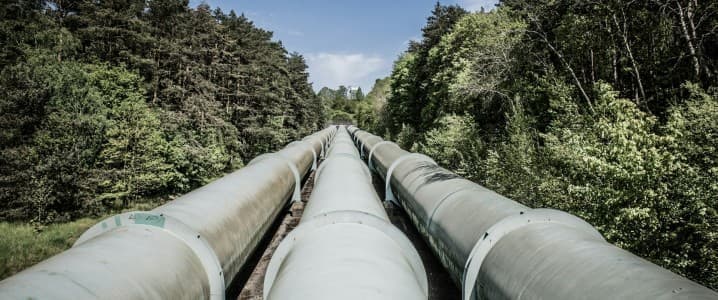
Canada’s vast oil reserves, particularly from its western provinces, have long faced a structural challenge: getting crude to market efficiently. This perennial issue has resurfaced with pipeline giant Enbridge signaling that new projects are contingent on significant legislative reform. The company’s strategic comments arrive as the Canadian government introduces Bill C-5, legislation designed to streamline infrastructure approvals. For investors, this intersection of policy, corporate strategy, and robust commodity markets presents a compelling analytical lens. Our proprietary data reveals a market grappling with supply stability and forward-looking price trajectories, making Canadian egress capacity a critical factor in the broader North American energy narrative.
Enbridge’s Strategic Calculus Amidst Legislative Shift
Enbridge, a cornerstone of North American energy infrastructure, has clearly articulated its position: while ready to build “what is needed for its shippers, for Alberta and for Canada,” such expansion will only proceed “when the conditions make sense and the right framework is in place.” This statement is a direct response to Bill C-5, a proposed legislative amendment championed by Mark Carney’s government aimed at expediting environmental and regulatory reviews for infrastructure projects, including critical oil and gas pipelines. This move is pivotal, given Enbridge’s immense footprint; its Mainline system alone transports over 3 million barrels per day (bpd) of crude oil and liquids, handling 30% of North America’s crude production and facilitating 65% of all U.S.-bound Canadian oil exports. The company is already contemplating an expansion that could boost crude shipments from Canada to the United States by an additional 200,000 bpd, a testament to the persistent demand for increased capacity. Such an expansion, integrated into their existing Mainline network, would significantly enhance market access for Western Canadian producers, impacting everything from regional differentials to overall North American supply dynamics.
Market Realities Driving the Urgency for Faster Approvals
The push for legislative reform is not occurring in a vacuum; it’s directly influenced by prevailing market conditions and the need for long-term energy security. As of today, April 15th, Brent crude trades at $95.63 per barrel, marking a 0.89% increase on the day within a range of $91 to $96.89. WTI crude also shows strength at $92.20, up 1.01%, with its daily range between $86.96 and $93.30. These robust prices, coupled with gasoline trading at $3.01 (up 1.35%), underscore a market that values consistent and accessible supply. While Brent has seen some volatility recently, dropping from $102.22 on March 25th to $93.22 on April 14th before its current rebound, the overarching trend suggests strong demand and a tight supply-demand balance. For investors, this translates into sustained profitability for producers and, by extension, a clear economic incentive for pipeline operators like Enbridge to invest in capacity expansion. The faster approval times envisioned by Bill C-5 are crucial for capitalizing on these market realities, reducing project risk, and providing the certainty needed for multi-billion dollar infrastructure commitments.
Alberta’s Global Ambitions and Investor Focus on Future Supply
Beyond Enbridge’s immediate plans, Alberta’s provincial leadership is aggressively pursuing its own vision for expanded crude egress. Premier Danielle Smith has confirmed efforts to secure private backing for a monumental 1 million bpd pipeline project designed to transport oil from the province’s oil sands to the Port of Prince Rupert on British Columbia’s northwest coast. This initiative is not merely about moving crude; it’s about unlocking direct access to international markets, particularly the high-growth economies of Asia. Our reader intent data highlights significant investor interest in future crude price trajectories, with many asking for a base-case Brent price forecast for the next quarter and consensus 2026 Brent forecasts. Furthermore, questions around Chinese “tea-pot” refinery operations and Asian LNG spot prices underscore a market keenly focused on global demand centers. A new pipeline to Prince Rupert would fundamentally alter Canada’s role in the global oil trade, providing a direct conduit to satisfy this burgeoning Asian demand, thereby acting as a critical balancing force against potential supply disruptions elsewhere and offering a long-term bullish catalyst for Canadian crude benchmarks.
Upcoming Catalysts and the Long-Term Investment Horizon
The legislative debate surrounding Bill C-5 and Enbridge’s cautious optimism are set against a backdrop of dynamic global energy events that will shape the investment landscape. In the coming days, investors will closely monitor the Baker Hughes Rig Count on April 17th and 24th for insights into North American production trends. Even more critically, the OPEC+ Joint Ministerial Monitoring Committee (JMMC) meeting on April 18th, followed by the full Ministerial Meeting on April 20th, will provide crucial signals regarding global supply policy. Any decisions from these meetings could directly influence the urgency and economic viability of new Canadian pipeline capacity. Additionally, weekly data from the API (April 21st, 28th) and EIA (April 22nd, 29th) on crude inventories will offer granular views into North American supply-demand balances. For long-term investors in midstream assets, the prospect of streamlined approvals in Canada, coupled with strategic expansions like those proposed by Enbridge and Alberta, represents a significant opportunity. The ability to bring new, efficient capacity online amidst evolving global supply dynamics and strong commodity prices offers a compelling value proposition, reinforcing the importance of actively monitoring both policy developments and market fundamentals in the Canadian energy corridor.


