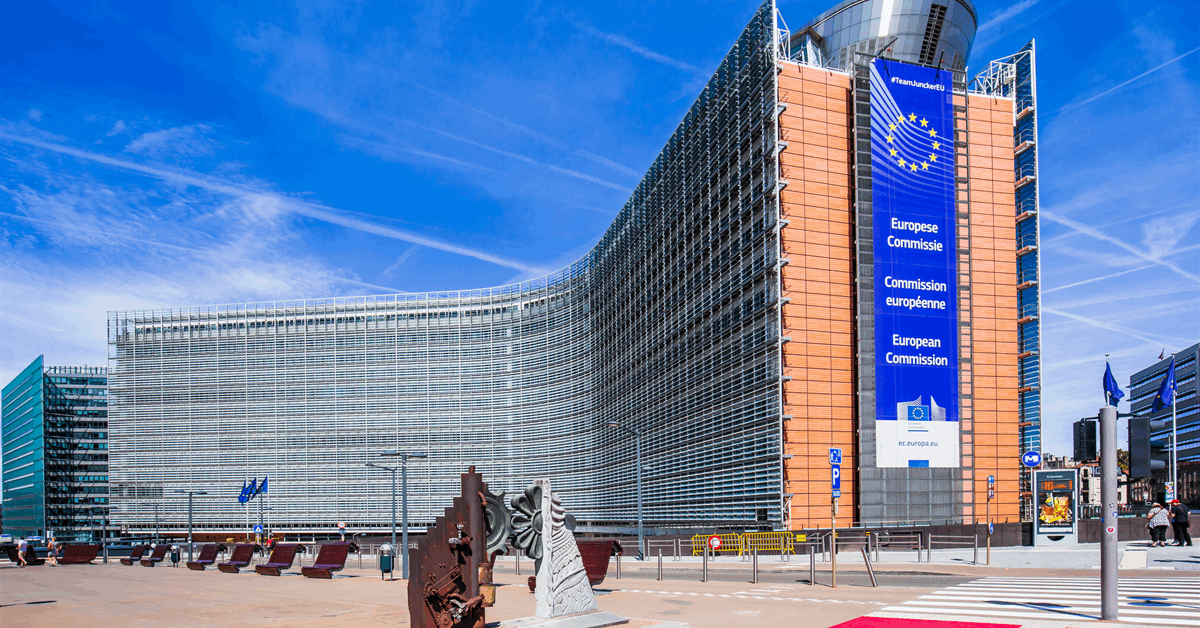
The European Commission’s recent announcement of a EUR 545 million ($639.5 million) Team Europe package for Africa’s energy transition marks a pivotal moment for global energy investment. This substantial commitment, unveiled alongside South African President Cyril Ramaphosa, underscores a strategic shift towards bolstering renewable infrastructure across the continent. For sophisticated investors, this isn’t merely a philanthropic gesture but a calculated move with profound implications for long-term energy markets, regional stability, and the burgeoning clean energy sector. OilMarketCap.com’s proprietary data pipelines allow us to dissect this pledge within the broader context of market dynamics and investor sentiment, offering unique insights beyond surface-level reporting.
Africa’s Green Potential Meets Strategic Investment
The European Commission emphasizes that Africa’s energy choices are globally significant, highlighting the continent’s vast, untapped renewable energy potential. Despite this, nearly 600 million people currently lack access to electricity, presenting both a humanitarian challenge and an immense investment opportunity. The $639.5 million package, delivered through the Global Gateway investment strategy, is designed to accelerate this transition, fostering job creation, stability, and growth while contributing to global climate objectives. Strategic investments in solar, wind, hydro, and geothermal power are framed not just as moral imperatives but as strategic choices that strengthen supply chains and enhance energy system resilience, with the potential to create up to 38 million green jobs by 2030.
The funding is strategically distributed across nine countries, targeting key infrastructure projects. Cote d’Ivoire leads with approximately $388.2 million earmarked for the Dorsale Est high-voltage transmission line, a crucial backbone for regional energy distribution. Cameroon will receive $63.8 million to extend rural electrification to 687 communities, impacting over 2.5 million people. Lesotho’s Renewable Lesotho program is set to unlock wind and hydro energy with a $28 million injection, while Mozambique secures $14 million. Madagascar is expanding electrification through mini-grids with $35.8 million, and Somalia will utilize $49.1 million to boost access to affordable renewable energy and develop climate-resilient agri-food systems. Smaller yet critical investments include $2.2 million for a solar park in Ghana, $3.8 million for renewable access in the Republic of Congo, and $3.6 million for technical assistance to the Central African Power Pool and a feasibility study for the cross-border Friendship Loop transmission line.
Navigating Market Volatility: A Backdrop for Green Capital
This significant commitment to African renewables comes amidst a backdrop of notable volatility in traditional energy markets. As of today, Brent Crude trades at $90.38, down a substantial 9.07% for the day, with a daily range between $86.08 and $98.97. Similarly, WTI Crude is priced at $82.59, experiencing a 9.41% drop today, fluctuating between $78.97 and $90.34. This downturn is particularly sharp when considering the recent trend: Brent Crude has fallen from $112.78 on March 30th to its current $90.38, representing a $-22.4, or 19.9%, decline in just over two weeks. Gasoline prices have also seen a dip, currently at $2.93, down 5.18% today.
For investors, this market instability highlights the increasing appeal of diversified energy portfolios. While short-term oil price swings can create tactical trading opportunities, the EC’s long-term green investment strategy provides a counter-narrative, emphasizing the stability and growth potential of renewable assets. The significant capital allocated to transmission and rural electrification projects in Africa suggests a foundational build-out that can withstand commodity price fluctuations, offering a more predictable return profile for patient capital. This dichotomy between fossil fuel volatility and renewable stability is a key consideration for energy funds balancing risk and long-term growth.
Forward Outlook: EC Pledge Meets Upcoming Market Movers
The European Commission’s pledge, while forward-looking, will interact with immediate market dynamics driven by crucial upcoming events. For instance, the full OPEC+ Ministerial Meeting scheduled for Sunday, April 19th, looms large. Investors are keenly asking about OPEC+’s current production quotas and how any adjustments might impact global supply and, consequently, crude oil prices. A decision by OPEC+ to either maintain or alter production levels could further influence the volatile market conditions we’ve observed, potentially affecting the economic calculus for new energy investments, both fossil and renewable.
Moreover, the API Weekly Crude Inventory reports on April 21st and 28th, followed by the EIA Weekly Petroleum Status Reports on April 22nd and 29th, will offer critical insights into U.S. supply and demand. These reports, alongside the Baker Hughes Rig Count on April 24th and May 1st, provide a pulse on the global energy landscape. While the EC’s $639.5 million package targets long-term renewable growth, the success and speed of these projects can be indirectly influenced by the broader energy market sentiment shaped by these weekly data releases. A robust global demand outlook, even if primarily met by fossil fuels in the short term, can create a more favorable investment climate for all energy infrastructure, including the critical transmission lines and mini-grids planned for Africa.
Investor Sentiment: Pricing the Future of Energy
Our proprietary reader intent data reveals a strong investor focus on future energy prices and market drivers. Questions like “what do you predict the price of oil per barrel will be by end of 2026?” highlight the ongoing challenge of forecasting commodity markets. The EC’s significant renewable energy investment in Africa directly impacts this long-term outlook. By accelerating the clean energy transition in a continent poised for massive energy demand growth, the EU is effectively contributing to a future scenario where a larger portion of global energy needs could be met by renewables, potentially capping the upside for fossil fuel prices in the long run.
Beyond price predictions, investors are also seeking clarity on market data sources and underlying APIs, indicating a sophisticated need for real-time, reliable information to navigate these complex shifts. The African energy transition, bolstered by this EC funding, offers compelling diversification opportunities. For instance, projects like Lesotho’s wind and hydro expansion or Madagascar’s mini-grid electrification represent tangible assets with predictable cash flows, providing an attractive alternative or complement to traditional upstream oil and gas investments. As the energy landscape continues to evolve, understanding the interplay between geopolitical funding, market volatility, and long-term renewable growth will be paramount for capital allocation decisions.


