The global energy landscape is witnessing a pivotal shift, and a recent development in Denmark signals a significant leap forward for sustainable fuels. The inauguration of the world’s first large-scale commercial e-methanol production facility in Kassø, Denmark, marks a crucial milestone in the journey toward decarbonization, particularly for hard-to-abate sectors. This €150 million joint venture, spearheaded by European Energy and Mitsui & Co., is now fully operational, delivering 42,000 metric tons (equivalent to 53 million liters) of green e-methanol annually, setting a new benchmark for industrial-scale renewable energy integration.
Kassø: A Blueprint for Green Fuel Investment
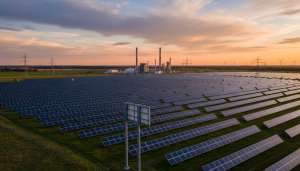
The Kassø e-methanol plant is more than just a production facility; it represents a tangible blueprint for future investments in Power-to-X (PtX) technologies. Owned 51% by European Energy and 49% by Mitsui & Co., the plant leverages 100% renewable electricity sourced directly from an adjacent 304 MW Kassø Solar Park. This seamless integration ensures that every drop of e-methanol produced carries a minimal carbon footprint. The feedstock for this innovative fuel comprises green hydrogen, derived from electrolysis powered by renewable energy, and biogenic CO₂, captured from sustainable sources like biogas and waste incineration. This circular economy approach not only mitigates emissions but also transforms waste into valuable resources.
Industry observers and investors are closely watching the Kassø model. Its successful commissioning demonstrates the commercial viability and scalability of PtX solutions, proving that significant capital deployment in green energy infrastructure can yield tangible results. This project serves as a powerful case study for how international collaboration and strategic financial backing can accelerate the energy transition, offering a clear signal to the market about the increasing maturity of these advanced technologies.
Industrial Titans Drive Demand for Sustainable Solutions
A key indicator of e-methanol’s market readiness is the commitment from major industrial players. Shipping giant A.P. Moller – Maersk, alongside manufacturing stalwarts LEGO Group and pharmaceutical leader Novo Nordisk, have all signed on as primary off-takers. Their participation underscores a growing corporate imperative to decarbonize complex supply chains and operations, moving beyond mere pledges to concrete action.
Maersk Navigates Towards a Green Maritime Future
For the maritime sector, the advent of e-methanol represents a transformative opportunity. Maersk, a global leader in container shipping, is strategically incorporating Kassø’s output into its dual-fuel vessel fleet. The company’s pioneering methanol-fueled container vessel, the Laura Maersk, is among the first to benefit from this green fuel supply. While the Laura Maersk requires approximately 3,600 tonnes of e-methanol annually, the Kassø plant’s substantial production capacity of 42,000 tonnes could theoretically fuel a 16,000-container vessel for an entire Asia-Europe round trip. This highlights the immense potential of e-methanol to displace conventional bunker fuels and significantly reduce the carbon intensity of global shipping. Maersk’s proactive stance is not just about compliance; it’s a strategic move to future-proof its operations and maintain a competitive edge in an increasingly carbon-conscious global economy.
LEGO Builds a Sustainable Supply Chain
Beyond shipping, e-methanol is finding critical applications in manufacturing. The LEGO Group, renowned for its commitment to sustainability, plans to utilize the green fuel to produce select LEGO elements, such as cross axles and connectors. This integration into its production process demonstrates how e-methanol can enable greener supply chains even for high-volume consumer goods. By transitioning to e-methanol-derived plastics, LEGO aims to maintain its stringent standards for safety, durability, and quality while making tangible progress toward its environmental goals. This move signals to other manufacturers the feasibility of adopting bio-based and renewable-derived feedstocks to reduce their environmental footprint without compromising product integrity.
Novo Nordisk Decarbonizes Operations
Novo Nordisk’s involvement further broadens the appeal of e-methanol, showcasing its utility in the pharmaceutical supply chain. The company’s commitment to procuring green fuel from Kassø reflects a broader trend among corporations to scrutinize and decarbonize every aspect of their operations, from raw material sourcing to distribution. Such partnerships are vital for demonstrating the cross-sectoral applicability of e-methanol and validating its role as a versatile green chemical and fuel.
Investment Outlook: Power-to-X and the Energy Transition
The Kassø facility’s commercial launch carries significant implications for investors tracking the energy transition. The successful operation of such a large-scale Power-to-X plant validates the technology’s readiness for wider adoption and signals burgeoning opportunities in green hydrogen and its derivatives. Investors should note several key trends:
- **Scaling of Green Hydrogen Ecosystems:** This project underscores the accelerating build-out of integrated green hydrogen production, carbon capture, and e-fuel synthesis facilities.
- **Diversification of Energy Portfolios:** As industries seek to de-risk from volatile fossil fuel markets and comply with increasingly stringent environmental regulations, demand for stable, sustainably produced fuels like e-methanol will surge.
- **Technological Maturation:** The €150 million investment and successful operation demonstrate that PtX technologies have moved beyond pilot projects to commercial viability, attracting further capital.
- **Strategic Partnerships:** The collaboration between energy developers, industrial conglomerates, and off-takers is crucial for de-risking projects and ensuring market demand.
- **Government and Regulatory Support:** Projects like Kassø often benefit from supportive policy frameworks and incentives, which are expected to expand as nations push for net-zero targets.
The Kassø facility stands as a testament to innovation and strategic collaboration, proving that large-scale commercial production of e-methanol is not only feasible but also highly demanded by leading global companies. As the world accelerates its transition away from fossil fuels, such projects provide critical momentum, paving the way for a more sustainable and resilient global energy system. For investors, the message is clear: the future of energy is green, and the opportunities in e-methanol and Power-to-X are rapidly expanding, presenting compelling avenues for long-term capital growth in the evolving energy landscape.