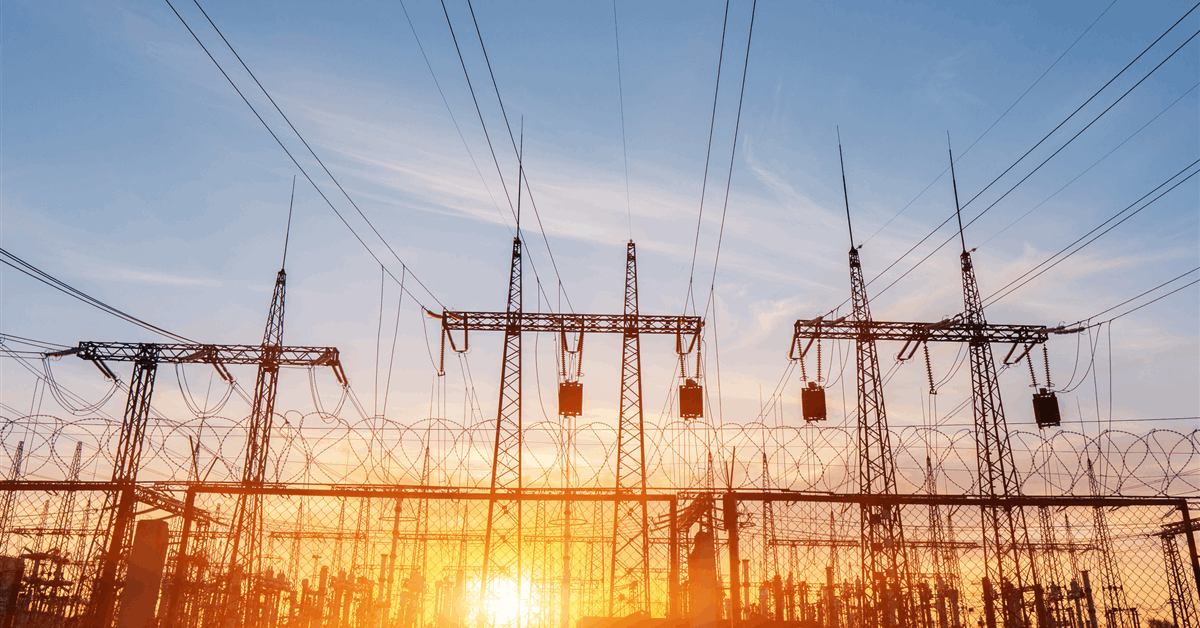
The U.S. Department of Energy’s recent emergency order, authorizing Unit 4 of the Wagner Generating Station to operate beyond its typical limits, serves as a stark reminder for oil and gas investors: while macro commodity prices may fluctuate, the fundamental imperative of energy security and grid reliability is escalating. This directive, effective from July 28, 2025, through October 26, 2025, signals a critical inflection point, highlighting systemic vulnerabilities in the nation’s electricity infrastructure and underscoring the enduring value of dispatchable power sources, particularly natural gas. For astute investors, this isn’t merely a localized operational adjustment; it’s a flashing red light on the dashboard of U.S. energy policy, signaling potential shifts in investment priorities and long-term demand dynamics across the energy complex.
The National Energy Emergency: A Policy Imperative
The DOE’s decision to permit PJM Interconnection and Talen Energy Corporation to exceed normal operational thresholds for Wagner Unit 4 is not an isolated incident. It is the fifth such emergency order signed by Secretary of Energy Chris Wright, following President Donald Trump’s Executive Order 14156 on January 20, 2025, which declared a National Energy Emergency. This declaration explicitly cited the country’s insufficient energy supply and outdated infrastructure as direct threats to U.S. energy security, contributing to elevated energy costs for consumers. Such high-level policy interventions, leveraging Section 202(c) of the Federal Power Act to supersede routine regulatory requirements, underscore a growing concern at the highest levels of government about the stability of the power grid. For investors, this signals a policy environment increasingly focused on maintaining operational capacity and ensuring reliability, potentially favoring existing, proven energy assets over purely aspirational transitions in the near to medium term. The duration of this specific order, spanning more than a year, further emphasizes the systemic and prolonged nature of the reliability challenge.
Grid Strain and the Dispatchable Power Gap
The emergency order directly addresses concerns raised by PJM Interconnection regarding resource adequacy. PJM’s February 2023 assessment highlighted significant reliability risks, attributing them to a critical mismatch between aggressive dispatchable resource retirements, escalating load growth, and the delayed entry of new generation capacity. The DOE’s own “Resource Adequacy Report” further solidified this grim outlook, warning that if current retirement and addition schedules persist, most regions could face severe reliability problems within five years, potentially leading to widespread grid failure to meet future demand. This structural imbalance creates a compelling investment thesis for companies involved in natural gas power generation, grid modernization, and energy storage solutions that can provide consistent, on-demand power. The market is clearly signaling a need for robust, reliable energy sources that can bridge the gap created by the rapid retirement of traditional assets and the slower-than-anticipated rollout of alternatives.
Market Volatility Amidst Structural Headwinds
While the DOE’s emergency order points to underlying demand and reliability pressures, the broader commodity markets tell a story of recent volatility. As of today, Brent crude trades at $90.38 per barrel, marking a significant 9.07% decline within the day, with its range spanning $86.08 to $98.97. Similarly, WTI crude has fallen to $82.59, down 9.41%, trading between $78.97 and $90.34. This daily downturn extends a broader trend, with Brent having dropped over $20 per barrel, or 18.5%, from $112.78 on March 30 to $91.87 on April 17. Gasoline prices have followed suit, currently at $2.93, down 5.18% today. This recent bearish sentiment in oil markets, influenced by various global factors, creates a fascinating dichotomy when juxtaposed with the urgent domestic need for power reliability. Investors are keenly asking about the future trajectory of oil prices, with a common query being: “What do you predict the price of oil per barrel will be by end of 2026?” The DOE’s action highlights that even as oil prices face downward pressure, the critical demand for consistent energy, often fueled by natural gas for electricity generation, remains robust and non-negotiable for national security and economic stability. This underlying demand for reliable energy sources could act as a floor for natural gas prices, even if crude oil experiences broader market headwinds.
Forward Implications for Oil & Gas Investors
The emergency order and the overarching National Energy Emergency declaration carry significant forward implications for oil and gas investors. The explicit prioritization of grid reliability suggests a potential increase in domestic natural gas consumption for power generation, especially during peak demand periods like the summer of 2025. This could provide a tailwind for natural gas producers and midstream companies with exposure to the PJM region and other stressed grids. Looking ahead, the immediate calendar is packed with events that will further shape market sentiment. The upcoming OPEC+ Joint Ministerial Monitoring Committee (JMMC) meeting on April 18 and the Full Ministerial meeting on April 19 will be critical for global supply decisions, directly impacting crude oil benchmarks. Any cuts or increases in production quotas will reverberate through the market, influencing investor outlooks for the remainder of 2026 – a key concern for our readers. Domestically, API and EIA weekly crude inventory reports on April 21 and 28, and EIA Petroleum Status Reports on April 22 and 29, will provide crucial insights into U.S. supply-demand dynamics. Additionally, the Baker Hughes Rig Count reports on April 24 and May 1 will offer leading indicators for future domestic production, particularly in natural gas basins. Investors should monitor these events closely, evaluating how global supply decisions and domestic production trends interact with the reinforced policy emphasis on energy security and grid reliability. The DOE’s directive suggests that domestic energy production, particularly dispatchable fuels, will likely receive continued, if not enhanced, policy support to avert future outages.
Investment Opportunities in a Stressed Grid Environment
The confluence of an official National Energy Emergency, persistent grid reliability warnings, and the DOE’s direct intervention creates a compelling landscape for strategic energy investments. Companies poised to benefit include those with significant natural gas production assets, particularly in regions supplying stressed grids like PJM. Midstream operators facilitating the transportation and storage of natural gas will also see sustained demand. Furthermore, the emphasis on “outdated infrastructure” points to opportunities in grid modernization technologies, including advanced transmission systems, smart grid solutions, and potentially large-scale battery storage, though the latter must prove its reliability and scalability. Investors should also consider firms involved in maintaining and upgrading existing thermal power generation plants, as these assets are increasingly vital as stop-gap measures. The long-term nature of the Wagner Unit 4 order, extending well into 2025, confirms that these are not transient issues but structural challenges requiring sustained capital allocation. For those asking about “what OPEC+ current production quotas” are, it’s important to remember that global crude supply decisions influence broader energy costs, but domestic grid stability is a distinct and increasingly urgent investment driver, creating unique opportunities irrespective of short-term crude price fluctuations.


