De-Risking the UK’s Carbon Capture Ambitions: A New Era for Energy Transition Investment
As the global energy landscape continues its dynamic shift, the UK is positioning itself at the forefront of carbon capture and storage (CCS) development, a critical technology for achieving net-zero emissions. The recent three-year contract awarded to DNV Inspection for quality assurance and control on the Net Zero Teesside Power (NZT Power) and Northern Endurance Partnership (NEP) projects marks a significant milestone. This commitment to robust oversight, encompassing everything from equipment inspection to on-site support, fundamentally de-risks these ambitious projects. For investors, this translates into greater confidence in project integrity, operational efficiency, and the long-term viability of what are arguably the foundational pillars of the UK’s industrial decarbonization strategy, backed by energy giants like bp, Equinor, and TotalEnergies.
Ensuring Project Integrity: The Cornerstone of CCS Investment
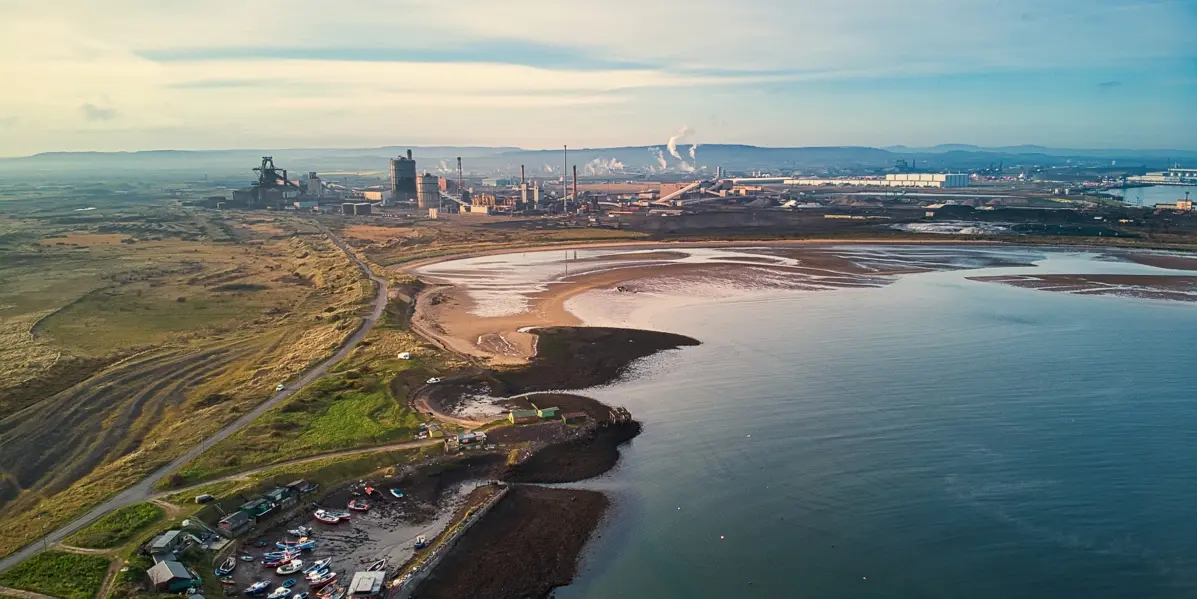
The successful deployment of large-scale CCS infrastructure hinges on meticulous planning, execution, and quality control. DNV Inspection’s comprehensive mandate for NZT Power and NEP directly addresses this imperative. Their role extends to the stringent inspection of materials and equipment, alongside continuous on-the-ground quality assurance as these facilities transition from construction through to operation. This level of oversight is paramount for projects of such complexity and scale. NZT Power, for instance, aims to be the UK’s inaugural gas-fired power station equipped with carbon capture, capable of generating up to 742 megawatts of low-carbon electricity – enough to power over 1 million UK homes. Meanwhile, NEP is building the essential infrastructure for transporting CO2 from the broader East Coast Cluster to secure North Sea storage. For investors, this robust QA/QC framework mitigates significant project risks, including potential delays, cost overruns, and operational inefficiencies, ensuring these critical assets meet performance targets and deliver anticipated returns. It signals a mature approach to energy transition investments, prioritizing reliability and long-term value creation.
Navigating Volatility: CCS as a Strategic Diversifier Amidst Shifting Oil Markets
The broader energy market currently presents a volatile picture, prompting investors to seek diversified and resilient portfolio components. As of today, Brent Crude trades at $90.38 per barrel, experiencing a notable daily decline of 9.07%, while WTI Crude stands at $82.59, down 9.41%. This intraday dip follows a challenging two-week period where Brent has shed $20.91, or 18.5%, from its $112.78 high on March 30th. Gasoline prices have also fallen, now at $2.93 per gallon, a 5.18% decrease. Such pronounced fluctuations underscore the inherent volatility of traditional commodity markets. In this environment, strategically de-risked investments in energy transition infrastructure like CCS gain significant appeal. While capital expenditure for these projects can be substantial, the long-term, often contract-based revenue streams derived from power generation, carbon capture, and storage services offer a counter-cyclical hedge against the variability of upstream and downstream earnings. For integrated energy companies like bp and Equinor, committed investments in high-standard CCS projects represent a critical pathway to future-proofing their asset bases and securing growth beyond hydrocarbons.
Investor Sentiment: Bridging the Gap Between Oil Prices and Future Energy Systems
Our proprietary reader intent data offers a clear window into current investor priorities, revealing a pronounced focus on traditional oil market dynamics. Investors are actively querying about the trajectory of oil prices by the end of 2026 and seeking clarity on current OPEC+ production quotas. These questions highlight the continued importance of crude pricing and supply-side management in investment decisions, alongside specific interest in the performance of integrated energy companies like Repsol. This strong emphasis on traditional oil underscores the challenge and opportunity for energy transition projects. The de-risking of major CCS ventures, exemplified by DNV’s involvement in NZT Power and NEP, becomes a crucial narrative bridge. It demonstrates how leading energy companies are strategically allocating capital, not just responding to immediate commodity price signals, but also building the infrastructure essential for a decarbonized future. By ensuring the operational integrity and financial viability of CCS, these projects offer a tangible answer to how companies will generate value and manage carbon risk in the long run, even as investors remain keenly attuned to the daily pulse of the oil market.
Strategic Foresight: Upcoming Events and Long-Term CCS Development
The coming weeks hold several key events that will undoubtedly influence the broader energy market, indirectly shaping the investment landscape for projects like NZT Power and NEP. The OPEC+ Joint Ministerial Monitoring Committee (JMMC) meeting on April 18th, immediately followed by the Full Ministerial meeting on April 19th, will dictate crude production quotas and, consequently, global oil prices. These decisions directly impact the financial health and capital allocation strategies of major integrated energy companies like bp, Equinor, and TotalEnergies, influencing their capacity and appetite for large-scale energy transition investments. Furthermore, the recurring API and EIA Weekly Petroleum Status Reports on April 21st, 22nd, 28th, and 29th, alongside the Baker Hughes Rig Count on April 24th and May 1st, will provide continuous updates on supply, demand, and drilling activity. While these events directly pertain to the hydrocarbon sector, the overall market sentiment and financial outlook they generate will influence the pace at which capital flows into emergent sectors like CCS. The UK’s commitment to industrial decarbonization, bolstered by robust QA/QC on projects of this scale, signals a long-term strategic play that transcends short-term market fluctuations, promising sustained growth and job creation within the low-carbon economy.