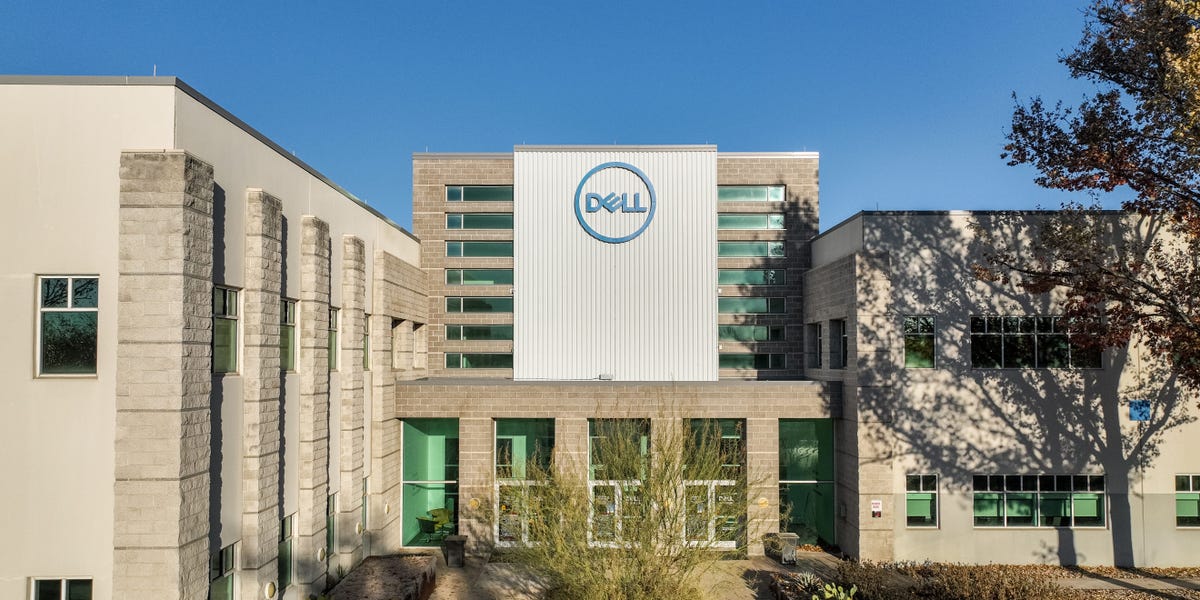
A discreet, internal initiative known as “Project Maverick” is underway at Dell, aimed at a sweeping overhaul of its operational backbone. While shrouded in secrecy, this isn’t about breakthrough hardware, but a critical effort to standardize systems, consolidate data, and streamline processes across the tech giant’s vast infrastructure. Dell views this transformation as absolutely “critical” for its future AI strategy and overall success, bringing in external consultants to guide the process. For discerning investors in the oil and gas sector, this internal repositioning by a major technology player signals a profound and unavoidable strategic imperative that demands attention and capital allocation.
The Imperative for Foundational Digital Overhaul in Energy
Dell’s internal documents paint a picture of an organization hampered by its own success and growth. Operating on approximately 4,700 applications, managing 70,000 servers, and navigating over 10,000 databases, much of it inherited from its 2015 acquisition of EMC, the company admits its environment is “severely outdated” and “holding us back.” This tangled IT sprawl forces staff into “manual processes and excessive reporting,” diverting crucial energy away from innovation. This narrative resonates deeply within the oil and gas industry, where decades of mergers, acquisitions, and organic growth have often resulted in a similarly fragmented and complex digital landscape. Many supermajors and independents grapple with siloed data, disparate legacy systems, and cumbersome workflows that actively hinder agility and innovation. Dell’s proactive and significant investment in modernizing its core operations, despite its scale, serves as a powerful testament to the non-negotiable requirement for O&G firms to embark on their own comprehensive digital transformations to remain competitive and unlock future growth.
Architecting AI Readiness: Data as the New Crude
Dell explicitly states that Project Maverick is “critical” for its AI strategy. This connection is paramount for O&G investors. Artificial intelligence, whether deployed for optimizing drilling operations, enhancing seismic interpretation, predicting equipment failures, or managing emissions, is only as effective as the data it consumes. Fragmented, inconsistent, or inaccessible data turns AI initiatives into costly, inefficient exercises. Our proprietary reader intent data underscores this exact point, revealing a strong investor focus on the underlying mechanics of AI; queries like “What data sources does EnerGPT use?” and “What APIs or feeds power your market data?” highlight a sophisticated understanding that AI’s true power is rooted in clean, standardized, and integrated data pipelines. For O&G companies, this means that before the promise of AI can be fully realized, significant investment in data governance, data lake construction, and enterprise-wide data standardization is a prerequisite. As of today, Brent Crude trades at $90.38, down a sharp 9.07% within a day range of $86.08 to $98.97. WTI Crude mirrors this volatility, sitting at $82.59, a 9.41% decline. This pronounced downturn, following a 14-day trend that saw Brent fall over $20 from $112.78 to $91.87, underscores the urgent need for operational efficiencies that AI promises. When prices are this volatile, every percentage point of efficiency gained through digital transformation directly impacts the bottom line, making the investment in AI readiness non-negotiable.
Navigating Market Swings with Strategic Tech Investments
The current market snapshot highlights significant volatility that demands strategic foresight from O&G investors. Beyond the daily drops, the 14-day trend for Brent, plummeting from $112.78 to $91.87, illustrates a challenging macro environment. Even gasoline prices are feeling the pressure, sitting at $2.93, a 5.18% decline. Against this backdrop, the upcoming OPEC+ Joint Ministerial Monitoring Committee (JMMC) meeting tomorrow, April 18th, followed by the full Ministerial Meeting on Sunday, are critical events. Our reader questions indicate investors are keenly asking about “OPEC+ current production quotas” and their potential impact on prices. While these meetings, alongside the API Weekly Crude Inventory reports on April 21st and 28th, and the EIA Weekly Petroleum Status Reports on April 22nd and 29th, will undoubtedly influence short-term market sentiment, Dell’s “Project Maverick” offers a crucial lesson: foundational digital transformation is a strategic anchor, not a discretionary expense. Its massive internal investment, even in a fluctuating economic landscape, signals that operational agility and data-driven decision-making are paramount for long-term resilience, independent of commodity price oscillations. The periodic Baker Hughes Rig Count updates on April 24th and May 1st will provide insights into drilling activity, but the underlying efficiency of those operations will increasingly depend on the digital investments made today.
The Investment Horizon: Opportunities in O&G Digital Transformation
Dell’s bold move to modernize its infrastructure provides a clear signal for where significant investment opportunities lie within the oil and gas technology sector. For investors seeking to capitalize on this trend, the focus should be on companies enabling similar transformations within the energy industry. Firstly, look for firms specializing in enterprise architecture, data integration, and platform standardization. These are the companies capable of untangling the complex IT landscapes that plague many O&G majors, much like Deloitte is assisting Dell. Secondly, consider AI and machine learning solution providers that offer specialized applications for O&G, particularly those with a proven track record of integrating with diverse data sources and legacy systems. Thirdly, investment in cloud migration and advanced data management solutions is crucial, as the shift to scalable, flexible cloud infrastructure is a foundational step for modern data strategy. While some investors are focused on “what do you predict the price of oil per barrel will be by end of 2026?”, the more robust investment thesis, inspired by Dell’s strategic commitment, lies in the companies that will drive efficiency, reduce operational expenditures, and unlock new value streams regardless of the exact price point. Investing in the digital transformation enablers for the oil and gas sector offers a compelling pathway to growth, leveraging a fundamental shift in how the industry operates and innovates.


