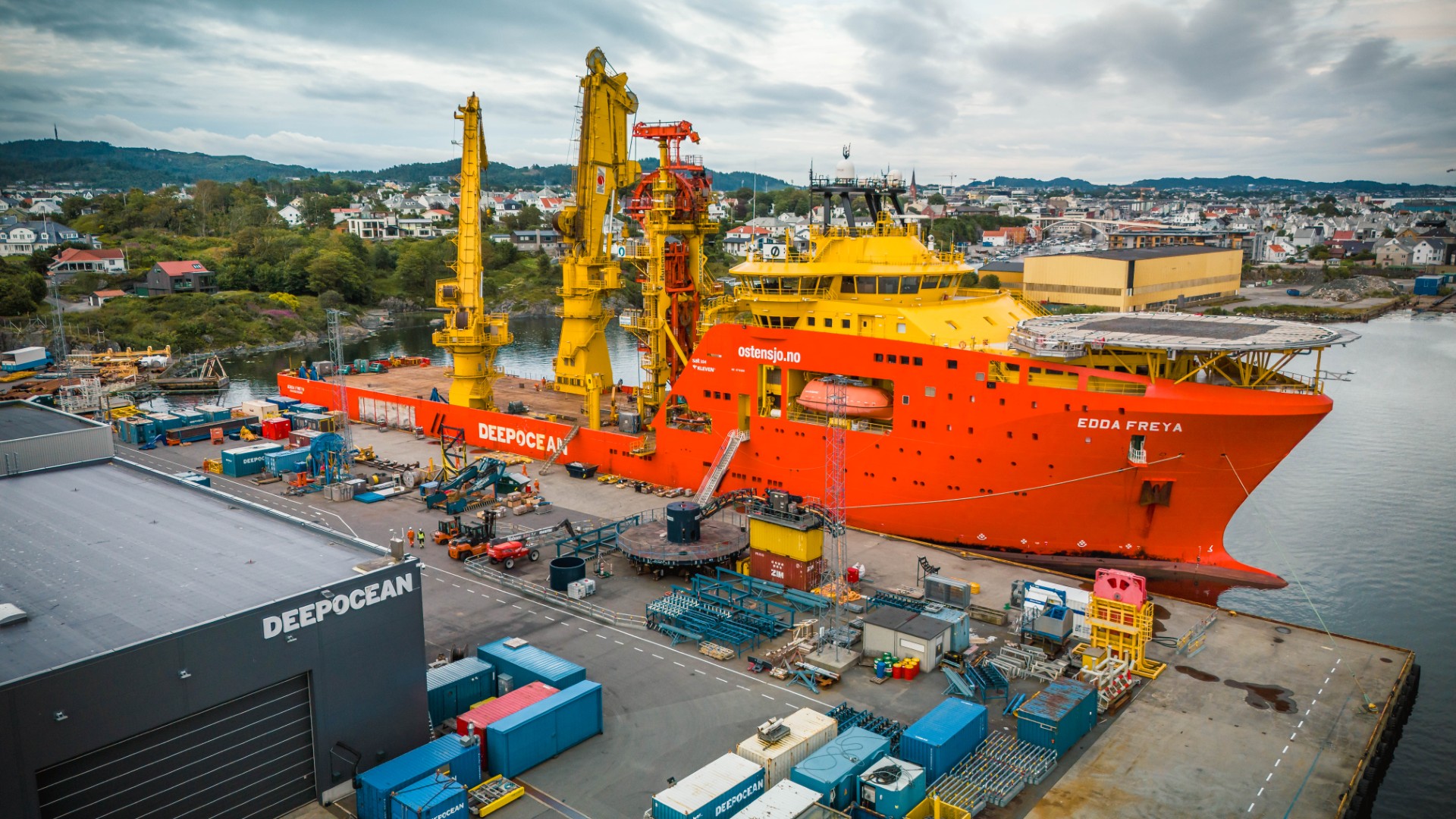
In a volatile energy market increasingly characterized by rapid price swings and geopolitical uncertainty, the stability offered by long-term service contracts becomes a critical indicator for investors. DeepOcean’s latest award from Equinor for simultaneous marine operations and production (SIMOPRO) on the Norwegian Continental Shelf is more than just a routine contract win; it’s a testament to specialized expertise and a significant bolster to their project backlog through 2026. For investors looking beyond daily commodity fluctuations, these types of strategic service agreements highlight the underlying operational demands of major energy producers and the sustained need for high-skill offshore execution, even as broader market sentiment shifts.
Offshore Complexity Drives Backlog Stability
The contract awarded to DeepOcean by Equinor covers intricate subsea operations across two pivotal fields: Åsgard in the Norwegian Sea and Visund in the North Sea. At Åsgard, the scope is comprehensive, involving the removal of existing risers, installation of a new production riser, dynamic umbilical connections for the Berling subsea assets, two static infield bypass umbilicals, flying leads, and protection covers. Meanwhile, at Visund, the focus is on the crucial replacement of an existing production riser. These are not simple tasks; they fall under the “SIMOPRO” designation, meaning marine construction and installation activities will occur concurrently with ongoing hydrocarbon production. This high-stakes environment demands exceptional coordination, advanced safety planning, and proven operational prowess, precisely the capabilities DeepOcean has demonstrated historically with Equinor. The work, scheduled for the summer season of 2026 utilizing the construction vessel Edda Freya, provides DeepOcean with clear revenue visibility well into the future, supplementing their project management, engineering, and procurement services.
Navigating Current Market Headwinds with Strategic Contracts
The importance of a robust, long-term backlog is underscored by the current state of the global energy markets. As of today, Brent Crude trades at $90.38 per barrel, reflecting a sharp 9.07% decline in a single trading session, with its day range spanning from $86.08 to $98.97. Similarly, WTI Crude has fallen to $82.59, down 9.41% for the day. This recent volatility follows a significant downturn over the past two weeks, where Brent plummeted from $112.78 on March 30th to its current level, representing a nearly 20% drop. Such dramatic price movements can send ripples through the entire sector, affecting everything from E&P investment decisions to refining margins, with gasoline prices also seeing a 5.18% drop to $2.93. In this environment, service providers like DeepOcean, securing contracts that extend years into the future, offer a degree of insulation from immediate commodity price shocks. Investors assessing companies in the offshore services segment will increasingly value firms with diversified, multi-year backlogs that promise stable earnings regardless of short-term crude price fluctuations.
Upcoming Catalysts and the Long-Term Outlook
While DeepOcean’s contract provides a multi-year horizon, the broader energy market remains acutely sensitive to upcoming events that could dictate the near-term trajectory of crude prices. This Sunday, April 19th, marks a critical OPEC+ Ministerial Meeting. Investors are keenly awaiting signals regarding production quotas, especially given the recent price slide. Any adjustments or reaffirmations of current policy will significantly influence global supply expectations. Following this, the market will turn its attention to the weekly inventory reports from the API (April 21st, April 28th) and the EIA (April 22nd, April 29th), which offer crucial insights into U.S. supply and demand dynamics. Additionally, the Baker Hughes Rig Count on April 24th and May 1st will provide a snapshot of drilling activity, an indicator of future production capacity. For DeepOcean and its peers, while these events don’t directly impact their 2026 contract work, they shape the investment climate and the long-term appetite for new offshore development, which will drive subsequent service contract awards. A stable or rising oil price environment post-OPEC+ meeting could encourage further FIDs (Final Investment Decisions) on projects that DeepOcean and others are well-positioned to serve in the future.
Addressing Investor Concerns: Stability in a Shifting Landscape
Our proprietary reader intent data reveals that investors are deeply concerned about the future trajectory of oil prices, with many asking “what do you predict the price of oil per barrel will be by end of 2026?” and seeking clarity on “OPEC+ current production quotas.” This reflects a pervasive uncertainty that makes long-term investment decisions challenging. The DeepOcean-Equinor contract offers a valuable perspective on how to approach this uncertainty. Rather than betting solely on commodity price appreciation, investors can identify companies whose services are indispensable to ongoing production and field maintenance, regardless of the daily price. DeepOcean’s demonstrated ability to secure complex SIMOPRO contracts from a major operator like Equinor, a repeat customer, signals a high barrier to entry and specialized expertise that commands a premium. This type of revenue visibility, stretching to 2026, provides a degree of predictability in earnings that can be particularly attractive when commodity prices are volatile. For investors, it’s about identifying the bedrock of the energy industry – the essential services that must be performed to keep the lights on, literally and figuratively.
DeepOcean’s Strategic Positioning and Future Outlook
The success in securing such a complex and critical contract from Equinor further solidifies DeepOcean’s standing as a premier subsea service provider. The emphasis on detailed planning, including onshore simulator training for vessel crews, highlights a commitment to safety and operational excellence that resonates with major operators. This isn’t just about having the right vessels; it’s about the intellectual capital, project management capabilities, and a proven track record of safe and efficient execution in challenging environments. For investors, this contract reinforces DeepOcean’s competitive moat, ensuring they remain a preferred partner for sophisticated subsea projects. As the global energy transition progresses, the need for efficient maintenance and optimization of existing hydrocarbon assets will not diminish overnight. Companies like DeepOcean, with their specialized capabilities in extending the life and efficiency of critical offshore infrastructure, are well-positioned to capture significant market share and deliver consistent value, irrespective of the unpredictable short-term swings in the commodity markets.


