Deep Sky’s Airbus Deployment: A Beacon for Carbon Removal Investment
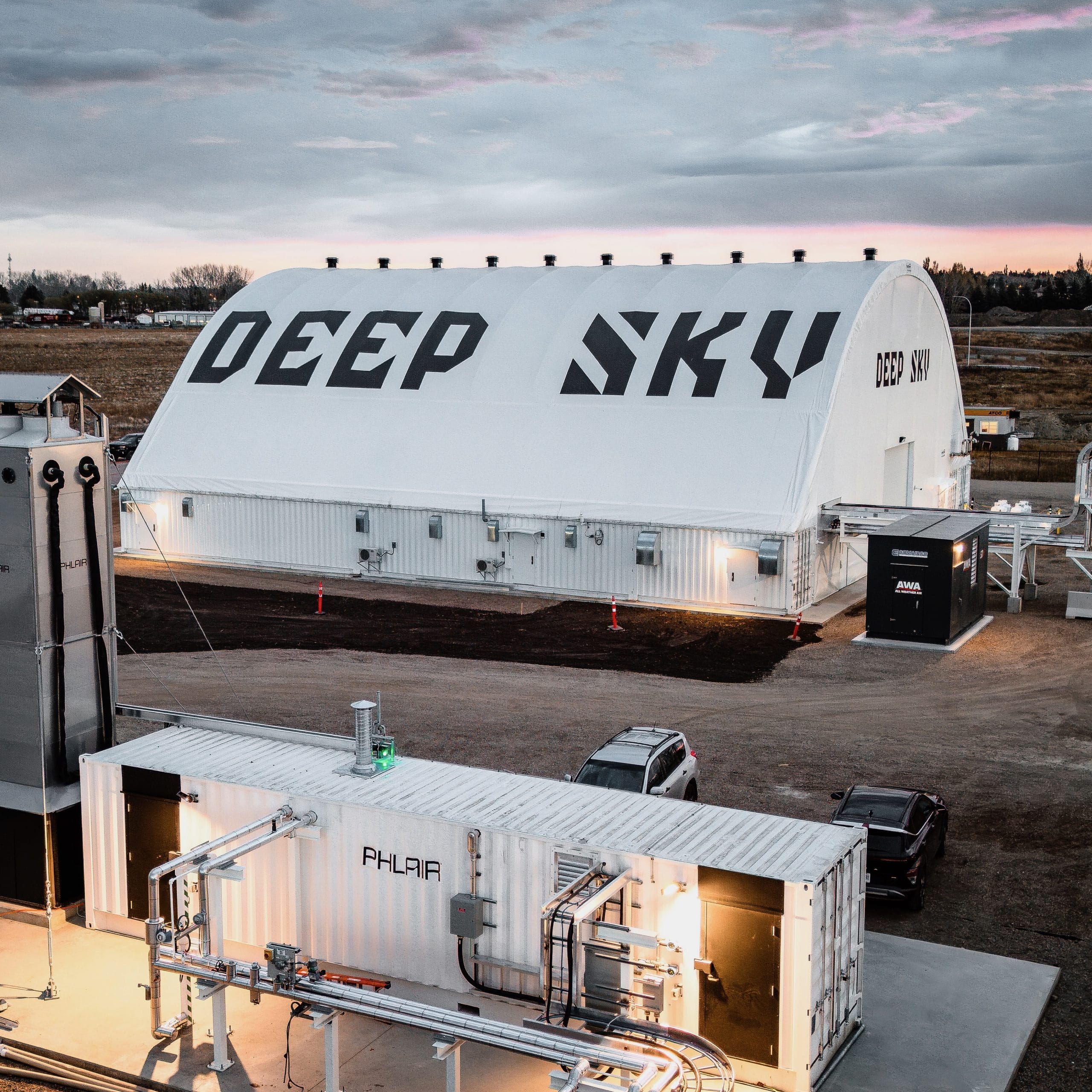
The recent deployment of an Airbus-engineered Direct Air Capture (DAC) unit at Deep Sky Alpha marks a significant milestone in the nascent, yet rapidly maturing, carbon removal industry. This development is not merely a technical achievement but a critical signal for investors eyeing the energy transition landscape, particularly as traditional oil and gas markets navigate persistent volatility. Deep Sky’s facility in Western Canada is quickly becoming a global proving ground, attracting cutting-edge technologies and substantial corporate backing, positioning itself at the forefront of scalable carbon removal solutions that demand serious consideration from forward-thinking portfolios.
Deep Sky Alpha: De-risking the DAC Investment Thesis
Deep Sky Alpha is emerging as a unique aggregation point for carbon removal innovation, offering a rare comparative environment for a technology sector crucial to meeting global climate targets. The Airbus unit, capable of capturing 250 tons of CO2 annually using aerospace-derived life-support technology, is the latest addition, joining systems from Airhive, Phlair, MissionZero, Skyrenu, Skytree, Carbon Capture Inc., and GE Vernova. For investors, this concentration of diverse DAC designs at a single, operational site provides an unparalleled opportunity to assess critical performance metrics such as energy efficiency, operational costs, and scalability trajectories. This comparative analysis is vital for de-risking investments in a sector still in its early commercialization phases. The ability to witness these systems in action, generating verifiable carbon removal credits, offers a level of transparency and validation that is often elusive in emerging technologies. Deep Sky’s strategic positioning aims to accelerate the transition from pilot projects to industrial-scale deployment, a key factor for any investor seeking meaningful returns in climate tech.
Financial Momentum and Corporate Demand: The Bedrock of Scalability
The financial underpinnings of Deep Sky’s operations further solidify its investment appeal. The US$40 million grant commitment from Breakthrough Energy Catalyst, the program’s first Canadian and DAC-specific investment, underscores the growing institutional confidence in carbon removal. More importantly for long-term investors are the long-term offtake agreements secured with major corporate buyers like RBC and Microsoft. These agreements are instrumental in providing revenue visibility and de-risking the substantial upfront capital expenditures inherent in large-scale climate infrastructure. Investors are increasingly asking about the long-term viability and profitability of new energy ventures, especially in light of the often unpredictable nature of commodity markets. These multi-year corporate commitments offer a crucial answer, demonstrating a tangible market for carbon removal credits driven by corporate ESG mandates and the broader push for net-zero emissions. Such pre-sold capacity provides a stable revenue stream, making projects like Deep Sky’s a compelling proposition for those seeking predictable returns outside of traditional energy cycles.
Navigating Market Volatility: DAC as a Diversification Play
While the long-term prospects of carbon removal look robust, the immediate energy markets continue their characteristic volatility, highlighting the appeal of diversification. As of today, Brent Crude trades at $95.03, down 0.47% from its opening, and has seen a significant decline of nearly 20% over the last two weeks, plummeting from $118.35 on March 31st to $94.86 on April 20th. WTI Crude similarly reflects this instability, currently at $86.8, down 0.71%. This sharp correction in crude prices, alongside the perennial question from investors asking “is WTI going up or down,” underscores the inherent unpredictability of fossil fuel commodity markets. For investors seeking to hedge against this volatility and align their portfolios with the global energy transition, investments in the carbon removal sector, anchored by long-term corporate offtake agreements, offer a compelling alternative. The revenue streams generated by selling verified carbon removal credits are less exposed to the geopolitical and supply-demand shocks that frequently rock traditional oil and gas, providing a measure of stability and growth decoupled from conventional energy market dynamics.
Forward Outlook: Upcoming Events and Policy Tailwinds
The trajectory of the carbon removal market, while distinct from traditional energy, is indirectly influenced by broader energy policy and market signals. Several key upcoming events on the energy calendar bear watching, as they will shape the environment in which DAC technologies operate. The OPEC+ JMMC Meeting on April 21st, alongside the EIA Weekly Petroleum Status Reports on April 22nd and 29th, and the Baker Hughes Rig Counts on April 24th and May 1st, will offer fresh insights into global oil supply, demand, and production trends. More critically, the EIA Short-Term Energy Outlook (STEO) due on May 2nd will provide crucial forecasts for global energy consumption and prices. These traditional reports, while focused on fossil fuels, indirectly influence the urgency and economic viability of carbon removal. Continued high or volatile oil prices, as well as evolving policy discussions, can accelerate the push for decarbonization and carbon management solutions like DAC. Investors should recognize that government incentives, carbon pricing mechanisms, and corporate net-zero pledges are increasingly robust tailwinds for this sector, making it an essential component of a diversified, forward-looking energy portfolio. The convergence of technological innovation, strong financial backing, and a clear market signal for carbon removal positions Deep Sky and its partners as key players in a market poised for exponential growth.


