Decoding Supply Chain Risks for Oil & Gas Investors
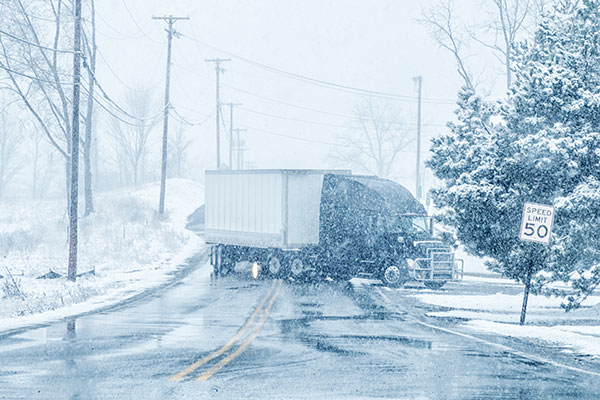
The oil and gas sector, inherently global and capital-intensive, stands uniquely exposed to the myriad disruptions that plague modern supply chains. From geopolitical tremors to natural catastrophes and the insidious creep of cyber threats, the last two decades have served as a stark blueprint for the vulnerabilities embedded within our interconnected energy ecosystem. For discerning investors, understanding these past upheavals is not merely an academic exercise; it is a critical lens through which to evaluate current portfolio resilience and anticipate future market movements. As we look ahead, the lessons from events that reshaped global logistics and shifted sourcing patterns offer invaluable insights into building robust investment strategies in an increasingly volatile world.
The Persistent Echoes of Disruption: A Two-Decade Retrospective
Analyzing the significant supply chain disruptions of the 21st century reveals a consistent pattern: unexpected events can inflict swift and profound damage on energy flows and infrastructure. Consider the 2005 devastation wrought by Hurricane Katrina on the Port of South Louisiana, a critical artery for U.S. crude and refined products, which highlighted the direct impact of natural disasters on commodity flows and sparked a deeper interest in business interruption insurance across the industry. Similarly, the 2011 Tohoku Earthquake and Tsunami, while initially impacting Japan’s auto sector, triggered ripple effects across global production networks for specialized components vital to energy technology. Geopolitical shifts, such as the 2018-2019 U.S.-China Trade War, forced a reevaluation of China-heavy sourcing strategies, directly affecting the procurement of steel, equipment, and other materials for energy projects. Even seemingly isolated incidents, like the 2015 Tianjin Port Explosion, which crippled one of the world’s largest ports, underscored the fragility of key logistical hubs and the potential for prolonged delays in the movement of essential goods. These events, alongside the more recent Suez Canal blockage by the Ever Given in 2021, demonstrate how quickly localized incidents can escalate into global energy market disruptions, impacting everything from drilling schedules to refining operations and product delivery.
Navigating Volatility: Current Market Dynamics and Supply Resilience
The current market landscape, while reflecting some recent softening, underscores the inherent volatility that supply chain pressures can exacerbate. As of today, Brent crude trades at $90.38, marking a 9.07% decline within the day, with WTI crude similarly down 9.41% to $82.59. Gasoline prices have also seen a notable drop of 5.18% to $2.93. This recent downtrend, contrasting with Brent’s decline of nearly 18.5% from $112.78 just two weeks ago, might suggest an easing of immediate supply fears. However, for sophisticated investors, this dip presents an opportune moment to assess underlying risks rather than become complacent. The market’s sharp reactions to perceived changes in supply-demand fundamentals are magnified by the inherent fragility of global energy supply chains. A significant disruption, whether a cyberattack on critical infrastructure or renewed geopolitical tensions threatening key shipping lanes, could swiftly reverse these price trends, driving premiums higher as market participants scramble to secure supplies. The agility of supply chains directly influences the market’s ability to absorb shocks, dictating the duration and intensity of price spikes.
Proactive Strategies and Upcoming Catalysts for Energy Investors
Forward-looking investors must integrate the evolving risk landscape into their strategic planning, particularly given the confluence of anticipated events and persistent threats. Geopolitical instability and cyber threats remain paramount concerns, as highlighted by expert analysis of future supply chain risks. The oil and gas sector, with its critical infrastructure and reliance on complex digital systems, is a prime target. Investors should pay close attention to upcoming events that could provide clarity or introduce new variables. The OPEC+ Joint Ministerial Monitoring Committee (JMMC) meeting on April 18th, followed by the full Ministerial meeting on April 19th, will be crucial. Any decisions on production quotas made here will be weighed against the backdrop of global supply chain stability. An unexpected disruption could pressure OPEC+ to adjust output, or conversely, a lack of supply flexibility could amplify price volatility. Furthermore, the API Weekly Crude Inventory reports on April 21st and 28th, along with the EIA Weekly Petroleum Status Reports on April 22nd and 29th, will offer granular insights into crude and product stock levels. Supply chain bottlenecks or disruptions to port operations could lead to unanticipated inventory builds or draws, providing early indicators of stress. Finally, the Baker Hughes Rig Count on April 24th and May 1st, while reflecting drilling activity, can also be indirectly influenced by supply chain efficiency in sourcing specialized equipment and personnel. These scheduled events, when viewed through the lens of potential supply chain vulnerabilities, offer critical inflection points for investment decisions.
Investor Focus: Addressing Key Concerns on Supply Stability
Our proprietary market intelligence indicates that investors are keenly focused on specific questions concerning the future of oil and gas, all of which are inextricably linked to supply chain resilience. Queries regarding the performance of individual companies, such as “How well do you think Repsol will end in April 2026?” underscore the need to evaluate a company’s unique exposure and mitigation strategies for supply chain risk. Companies with diversified asset bases, robust procurement networks, and advanced digital security protocols are better positioned to weather disruptions and maintain operational continuity, translating directly into stronger financial performance. Similarly, the widespread interest in “what do you predict the price of oil per barrel will be by end of 2026?” clearly demonstrates that long-term price forecasts are heavily influenced by the perceived stability of global supply. While demand dynamics play a role, the capacity of the supply chain to reliably deliver crude and products to market is a fundamental determinant of price ceilings and floors. Finally, questions like “What are OPEC+ current production quotas?” highlight investor focus on the immediate levers of global supply. However, even OPEC+’s ability to meet quotas can be undermined by internal logistical challenges or external supply chain disruptions affecting member states. For investors, integrating a granular analysis of supply chain vulnerabilities into their due diligence process for both individual companies and broader market outlooks is no longer optional; it is a prerequisite for informed capital allocation in the energy sector.