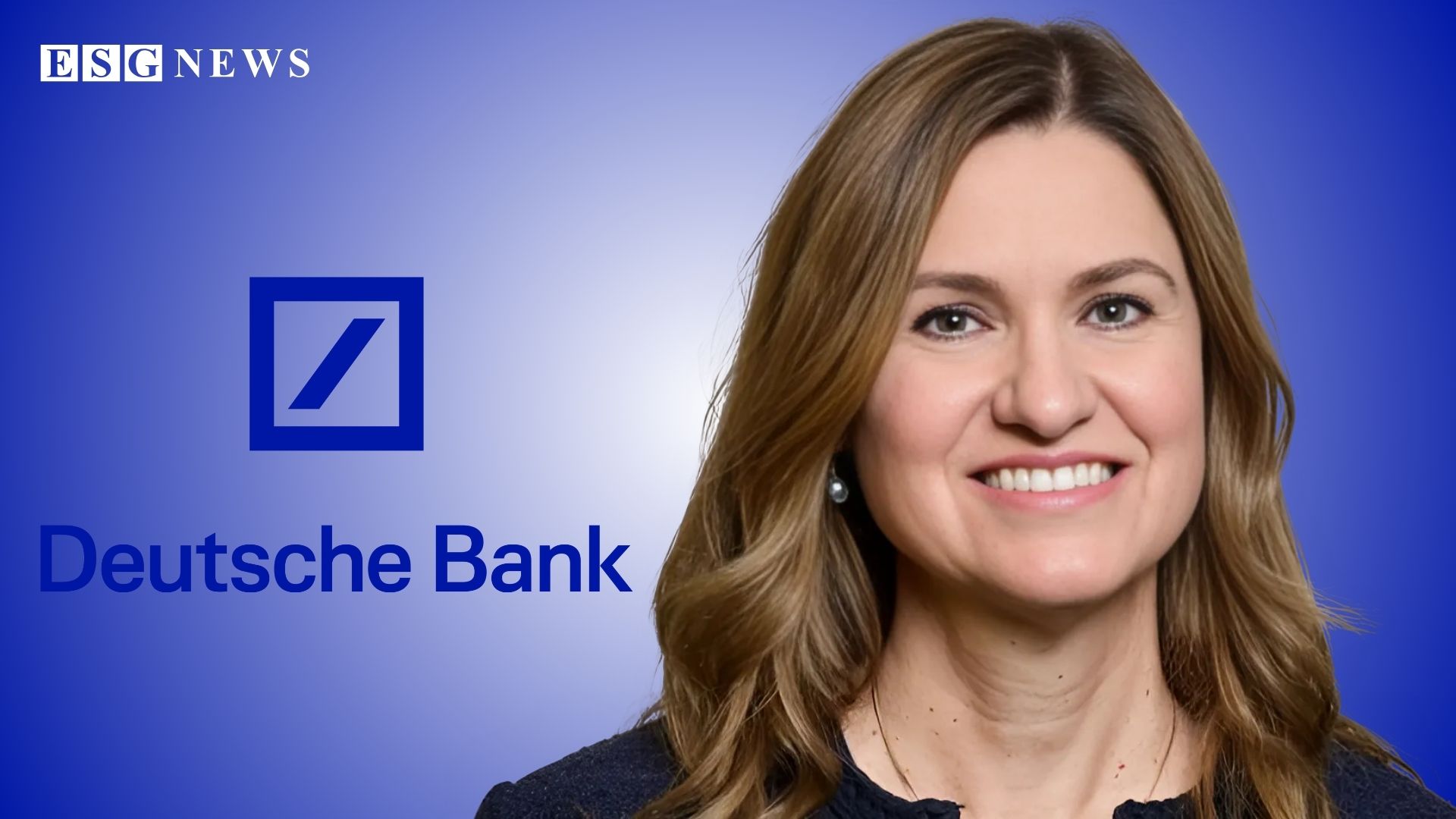
Deutsche Bank Elevates Sustainable Finance with New Global Leadership
In a powerful signal to global capital markets, Deutsche Bank has established a dedicated executive leadership role focused on expanding its sustainable finance initiatives worldwide. This strategic move sees Esra Turk appointed as the bank’s inaugural Global Head of Sustainable Finance, directly reporting to Chief Sustainability Officer Jörg Eigendorf. The appointment underscores a significant institutional commitment to the energy transition, a shift that carries profound implications for investors across the entire energy spectrum, including traditional oil and gas.
Turk’s elevation comes at a pivotal moment, coinciding with Deutsche Bank’s strongest quarter for sustainable finance since 2021. The second quarter of 2025 witnessed the bank facilitating a remarkable €28.4 billion in sustainable transactions, a clear indicator of robust client demand and the accelerating pace of capital reallocation towards green solutions. For investors tracking the evolution of energy markets, this scale of commitment from a major global financial institution highlights the growing financial infrastructure dedicated to a low-carbon future.
A Seasoned Leader for a Critical Mandate
Esra Turk brings extensive experience to her new mandate. Having joined Deutsche Bank in 2021, she previously spearheaded the CEEMEA Institutional Client Group and chaired the Investment Bank for the Middle East and Africa. Her career also includes 18 years at Barclays, where she held various senior commercial positions. This deep background in managing complex client relationships and navigating diverse regional markets positions her uniquely to drive Deutsche Bank’s sustainable finance strategy forward. Her leadership is expected to be instrumental in channeling significant capital towards projects that align with environmental, social, and governance (ESG) criteria.
Chief Sustainability Officer Jörg Eigendorf emphasized the urgency of the bank’s mission, stating that financial institutions play a crucial role in enabling companies and governments worldwide to transition towards a less carbon-intensive economic model. He highlighted the unprecedented speed at which this global transformation must occur, noting Deutsche Bank’s determination to facilitate this fundamental change wherever feasible. Eigendorf also underscored Turk’s suitability for the role, citing her profound understanding of client needs and her extensive experience in Fixed Income & Currencies (FIC) coverage across Central & Eastern Europe, the Middle East, Africa, and Latin America. This expertise will be vital in scaling the bank’s sustainable finance franchise globally.
Surging Capital Flows into Green Initiatives
The €28.4 billion in sustainable finance delivered in Q2 2025 represents more than just a quarterly high; it reflects a sustained growth trajectory in investor and corporate appetite for environmentally conscious financial products. This substantial figure was propelled by a combination of significant sovereign deals and landmark infrastructure financing projects. For oil and gas investors, this trend signifies an increasingly competitive landscape for capital, as traditional financing mechanisms face pressure from a rapidly expanding sustainable finance ecosystem.
Deutsche Bank’s strategic focus extends particularly to emerging markets. These regions present a dual opportunity: high demand for renewable energy solutions, coupled with significant infrastructure deficits that require substantial investment. By targeting these areas, the bank aims to bridge critical financing gaps while simultaneously capitalizing on the immense growth potential of nascent green economies. This geographical emphasis signals where future energy capital deployments are likely to concentrate, potentially redirecting funds that might otherwise have flowed into conventional energy projects.
Showcasing Transformative Transactions
The bank’s recent activities illustrate the breadth and depth of its sustainable finance operations:
- Corporate Bank’s Pioneering Infrastructure: The Corporate Bank played a pivotal role in financing Australia’s inaugural Renewable Energy Zone (REZ) transmission network. This monumental project is engineered to deliver electricity to over two million homes annually, underscoring the scale of renewable energy infrastructure now attracting major institutional backing.
- Investment Bank’s Renewable Debt Expertise: The Investment Bank acted as global coordinator for a €1.4 billion debt financing package for NeXtWind, a prominent German renewable energy firm. This transaction highlights the substantial private capital now flowing into the renewable sector, offering robust alternatives to traditional energy investment.
- Capital Markets’ Innovative Green Bonds: Deutsche Bank’s Capital Markets division served as Joint Lead Manager for Slovenia’s initial €1 billion 10-year sustainability-linked bond. Furthermore, it supported Iberdrola in issuing the first EU Green Bond by a Spanish company. These moves demonstrate the increasing sophistication and acceptance of sustainability-linked debt instruments across both sovereign and corporate issuers.
- Private Bank’s ESG Expansion: The Private Bank witnessed an addition of €5 billion in ESG assets under management and new lending. This growth reflects a broader trend among private clients seeking to align their investment portfolios with sustainability objectives, further driving demand for ESG-compliant financial products.
Implications for the Energy Investment Landscape
This comprehensive push into sustainable finance by a banking giant like Deutsche Bank is more than just a corporate initiative; it represents a fundamental recalibration of global financial priorities. For investors in the oil and gas sector, these developments signal several key trends:
Firstly, the cost of capital for traditional energy projects may face upward pressure as more financial institutions prioritize sustainable investments. Secondly, the increasing availability and attractiveness of green financing options will accelerate the energy transition, potentially impacting the long-term valuations of fossil fuel assets. Finally, the integration of sustainability indicators into financial performance, as noted by Eigendorf, is rapidly becoming a standard expectation for businesses. Companies that effectively link their performance to decarbonization goals will likely find it easier to access capital and attract investor interest.
The message from Deutsche Bank is clear: sustainable finance is not a niche market but a core strategic imperative that is reshaping the global financial architecture. Investors, particularly those with exposure to the energy sector, must closely monitor these shifts to adapt their strategies and capitalize on the evolving landscape of capital allocation in the coming decade.


