The Unprecedented Digital Power Rush Reshaping US Gas Demand
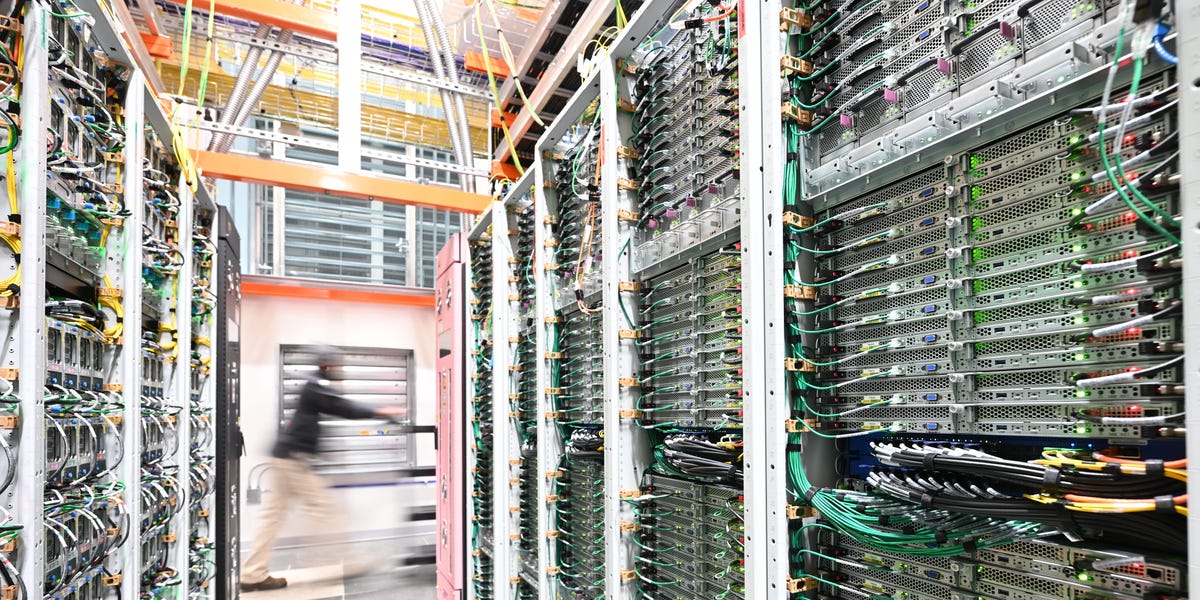
The energy landscape is undergoing a profound transformation, driven not by traditional industrial growth, but by the burgeoning demands of the artificial intelligence revolution. As an investment analyst covering oil and gas, it’s critical to look beyond conventional metrics and recognize the emergence of new, powerful demand drivers. Recent data reveals that US data center construction spending reached an astonishing $40 billion annually in June, marking a 28% increase from the previous year. This isn’t merely a cyclical uptick; it represents a structural shift fueled by an unprecedented capital expenditure spree from the world’s largest tech companies. Amazon, Microsoft, Google, and Meta are collectively planning over $1 trillion in capital expenditures in the coming years, with Bank of America Global Research estimating an annual spend of $385 billion on AI infrastructure alone between 2025 and 2028. This digital arms race translates directly into a surging demand for reliable, scalable power, with significant implications for the natural gas sector.
Big Tech’s Billion-Dollar Bet: A New Era of Energy Consumption
The scale of investment in AI infrastructure is truly staggering, extending beyond the usual suspects. While Amazon, Microsoft, Google, and Meta lead the charge, even companies historically less focused on data center build-outs are joining the fray. Apple, for instance, reported spending $9.5 billion in the first three quarters of the current year, a substantial 50% increase from the same period in 2024. Perhaps most indicative of the rapid acceleration is Oracle’s recent guidance: a projected $35 billion in capital expenditures for the fiscal year, a remarkable 65% jump from the prior year. This aggressive expansion is underpinned by a massive $317 billion in new AI contracts secured in just the last quarter, a testament to the immense commercial potential and competitive pressures driving this build-out. These figures underscore a fundamental truth for energy investors: the digital economy, powered by AI, is rapidly becoming one of the most significant new sources of electricity demand in the United States, with direct consequences for natural gas consumption.
Natural Gas: Fueling the AI Revolution
The link between massive data center expansion and natural gas demand is direct and compelling. Data centers, by their very nature, require colossal amounts of uninterrupted, reliable electricity to power servers, cooling systems, and networking equipment. In the United States, natural gas remains a dominant and cost-effective fuel source for electricity generation, offering both baseload power and the flexibility to ramp up quickly. As these tech giants expand their footprints, often choosing locations with robust grid infrastructure and affordable energy, they are implicitly driving up demand for natural gas. This is not a speculative forecast; it’s a direct consequence of multi-billion dollar investment decisions already underway. Investors should recognize this as a powerful, sustained demand pull for natural gas, potentially offsetting or mitigating other demand pressures and providing a strong floor for prices in the medium to long term. The sheer volume of new computational power coming online necessitates a commensurate increase in power generation, making natural gas producers and associated infrastructure vital beneficiaries.
Market Dynamics: Navigating Crude Volatility Amidst New Demand Drivers
As of today, Brent crude trades at $98.27, reflecting a 1.13% decline, moving within a day range of $97.92 to $98.67. Similarly, WTI crude stands at $89.88, down 1.41%, trading between $89.57 and $90.26. This recent price action follows a notable downtrend, with Brent having fallen by $14, or 12.4%, from $112.57 just two weeks ago. Meanwhile, gasoline prices remain stable at $3.09. Many investors are keenly focused on these daily and weekly fluctuations, and rightfully so, as questions about current crude prices and OPEC+ production quotas frequently arise. The upcoming OPEC+ JMMC meeting on April 18th, followed by the Full Ministerial meeting on April 20th, will undoubtedly be key events for crude markets, with participants scrutinizing any signals regarding output levels. However, for astute energy investors, it’s crucial to contextualize this short-term crude volatility against the backdrop of emerging, structural demand drivers. While crude markets react to geopolitical tensions and inventory shifts, the burgeoning electricity demand from AI data centers represents a distinct, powerful, and growing tailwind for natural gas that warrants significant attention.
Strategic Implications for Energy Investors: Beyond the Barrel
For investors seeking opportunities in the evolving energy landscape, the data center boom presents a compelling narrative for natural gas. While traditional oil and gas investment decisions often center on crude supply-demand balances, refining margins, and geopolitical risks, the AI-driven surge in electricity demand introduces a robust new layer of analysis. Those asking about the fundamental drivers beyond daily price movements should consider the long-term implications of multi-trillion dollar tech investments directly translating into sustained natural gas demand growth. Companies involved in natural gas production, transport, and power generation are poised to benefit significantly. Upcoming data points, such as the API Weekly Crude Inventory reports on April 21st and 28th, and the EIA Weekly Petroleum Status Reports on April 22nd and 29th, will continue to provide insights into overall energy balances. However, the consistent, record-breaking capital expenditures from Big Tech signal a foundational shift, creating a durable demand floor for natural gas that could prove more resilient than many expect. Investors should shift their focus to identifying natural gas plays that are strategically positioned to capitalize on this digital energy future, moving beyond a sole reliance on crude price signals to understand the broader energy matrix.


